When autumn arrives in Ehime, one of the traditional local dishes you will hear often is Imotaki. This week, I had an opportunity to make Imotaki at home. Therefore, I’m going to share with you what kind of dish it is, how to make it and what this dish means for us.
Introduction – What is Imotaki?
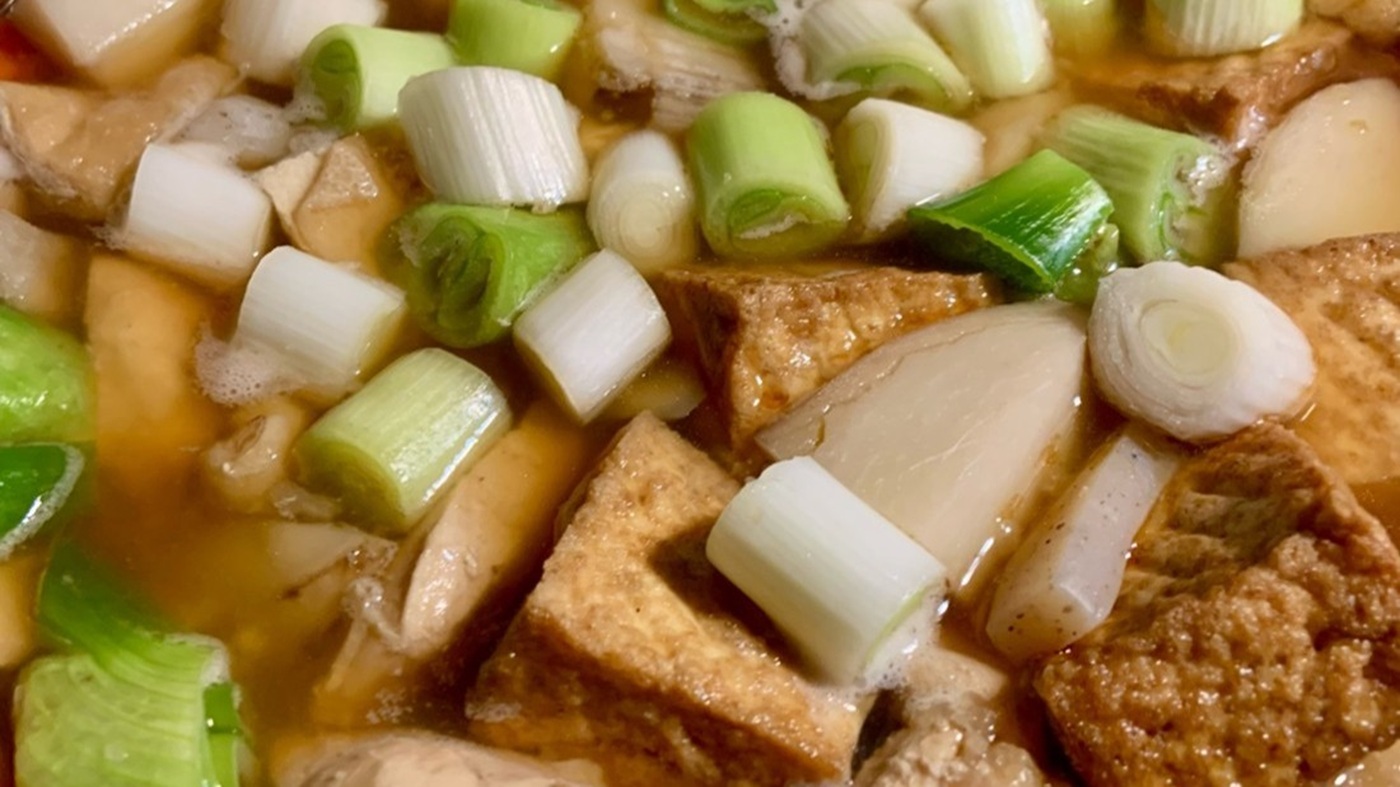
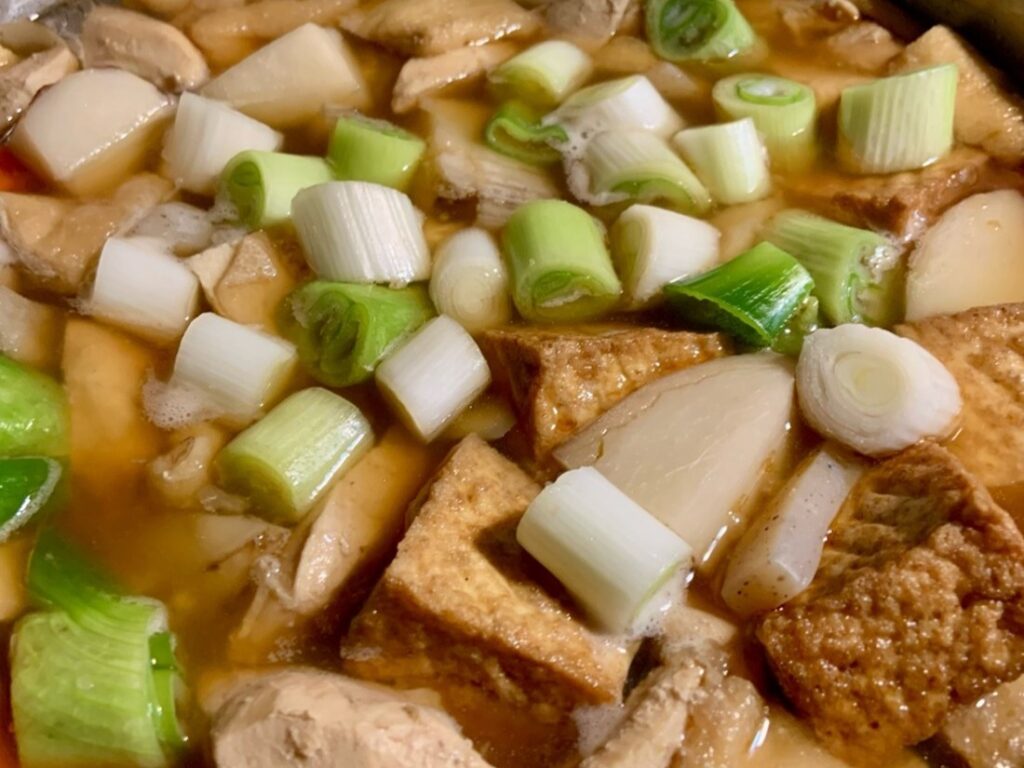
Imotaki is a comforting Japanese hot pot dish that has been enjoyed for generations. It is made with taro (satoimo), chicken, konnyaku, mushrooms and seasonal vegetables, all simmered together in a flavourful broth. It is particularly popular in Ehime prefecture, where people traditionally gather with family and friends to enjoy and feel the change of seasons. Some people gather outdoors by riversides, bringing large pots and sharing Imotaki with family, friends and neighbours. For me, it is more than just a meal. It is a dish that brings people together and reminds us of the beauty of the autumn season.
Ingredients – What goes into Imotaki?
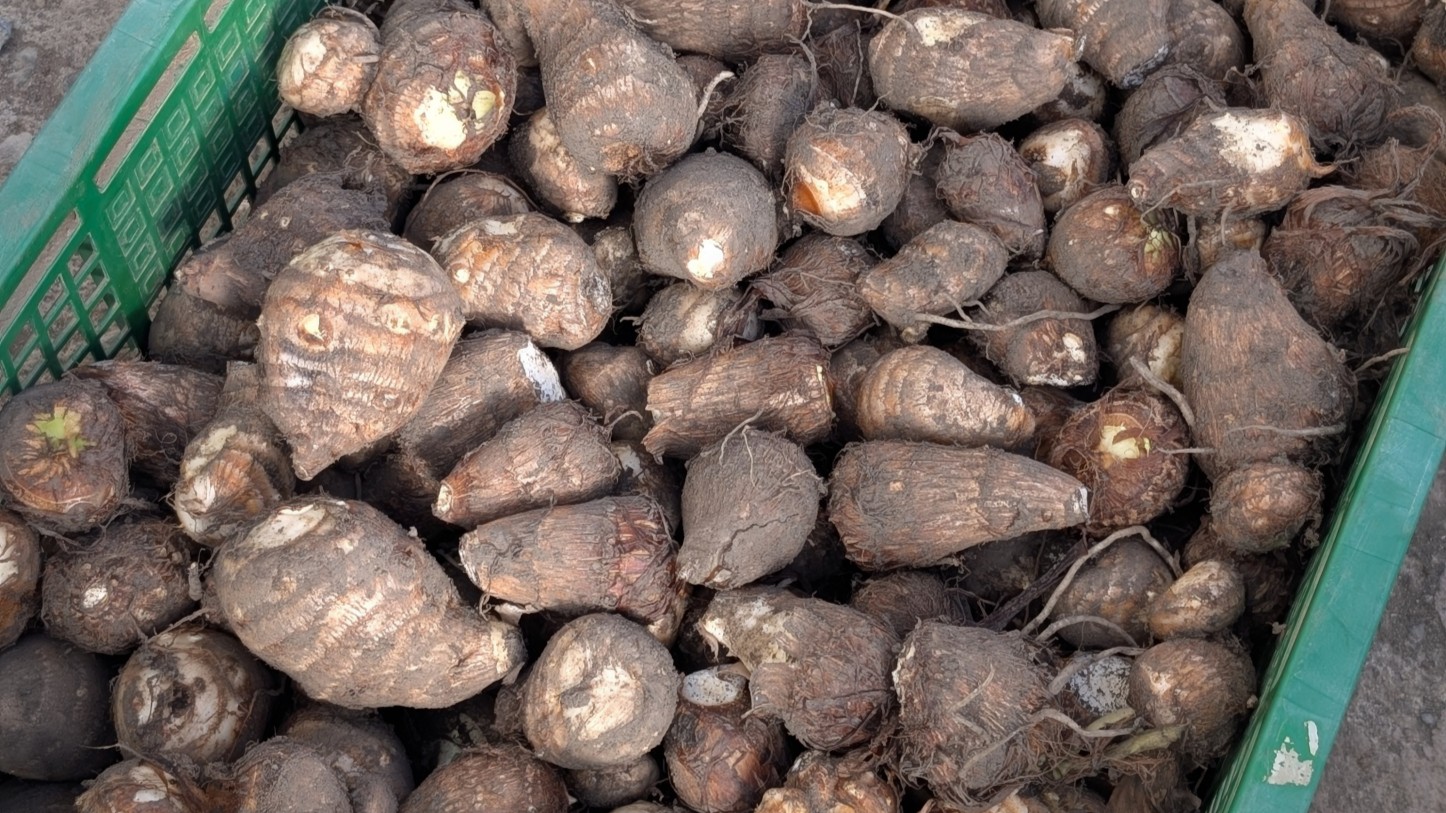
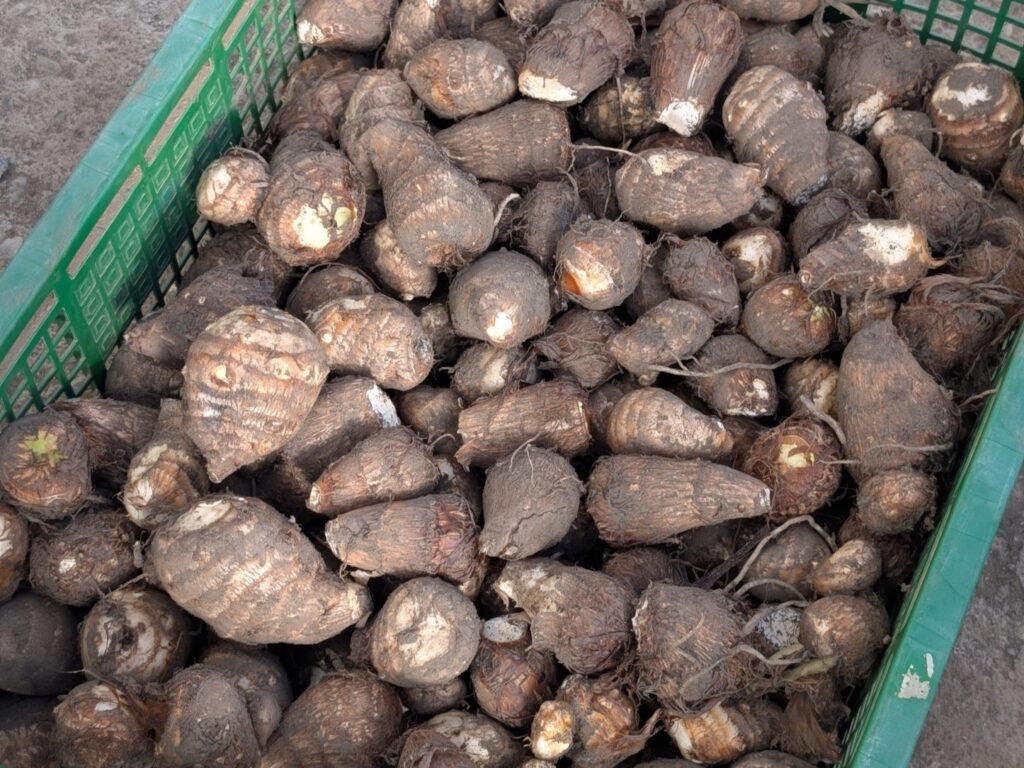
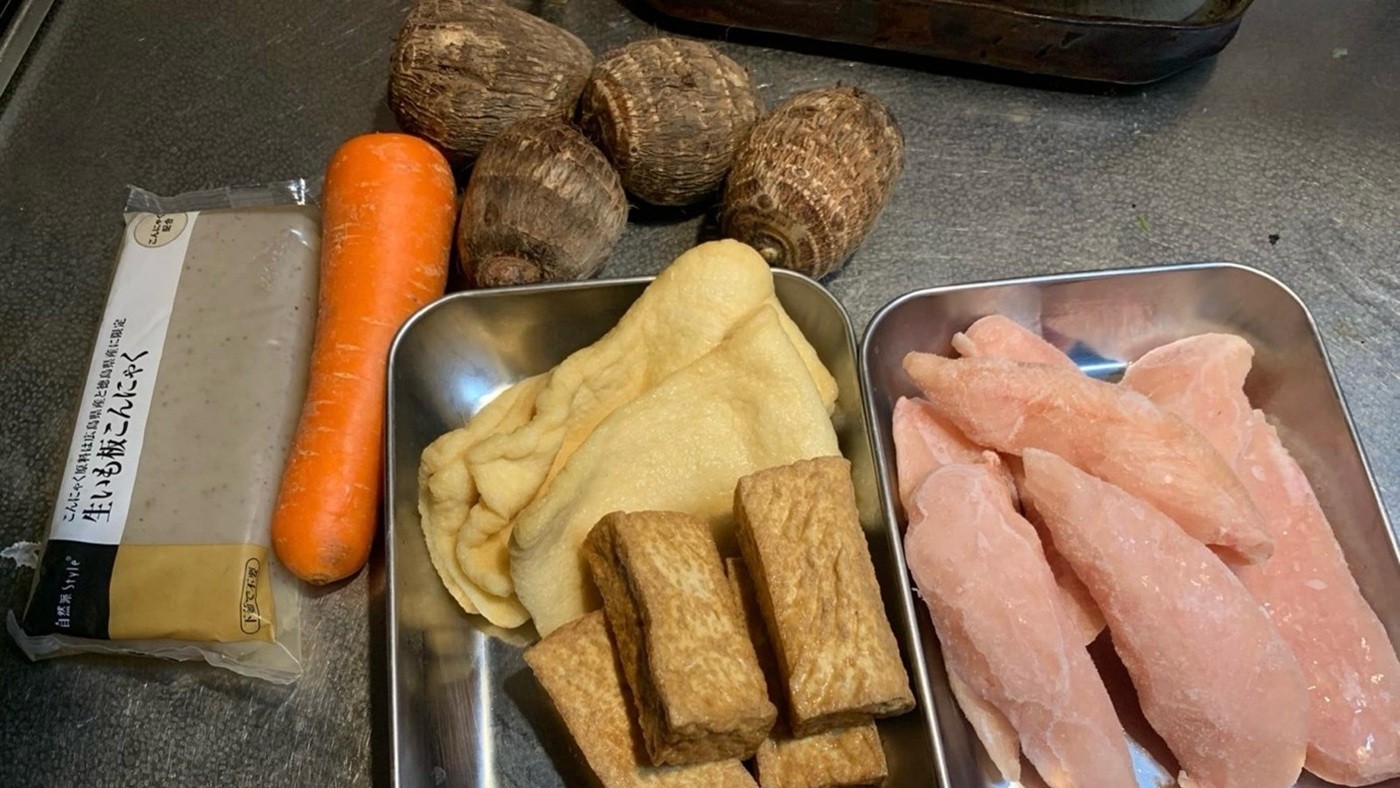
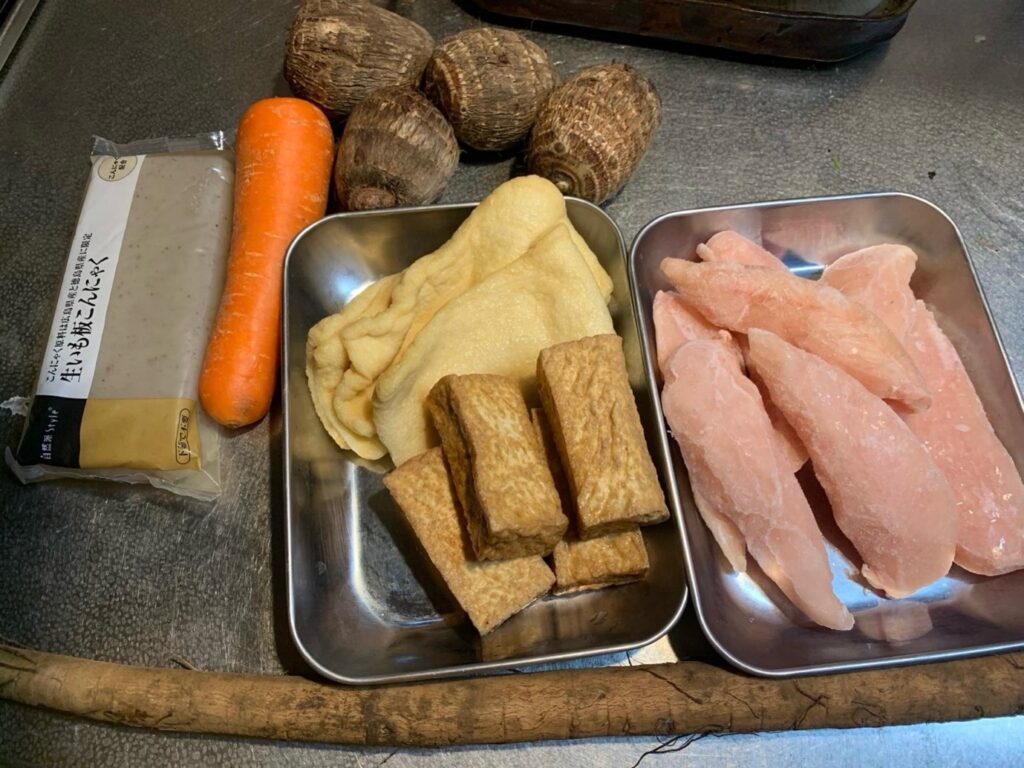
The main ingredients we use is taro that has a soft, slightly sticky texture and a naturally mild flavour. The other ingredients include chicken, konnyaku, burdock roots, carrots, fried tofu pouch, and green onions. These ingredients add different textures and flavours, making the dish both hearty and satisfying.
Let’s make Imotaki!
Step 1: Prepare the ingredients.
Peel the taro and wash off the slimy texture. Wash the vegetables. Cut the konnyaku, chicken, carrot, burdock root and tofu into bite-sized pieces.
ingredients list
- Taro (satoimo), peeled and washed
- Konnyaku
- Chicken
- Carrot
- Burdock root
- Fried tofu (aburaage)
- Fried tofu pieces (atsuage)
- 1 litre of Japanese soup stock (dashi)
- 2 tablespoons of sugar
- 2 tablespoons of mirin
- 3 tablespoons of soy sauce
- 1 teaspoon of salt
- Green onions
Step 2: Add the ingredients to the pot.
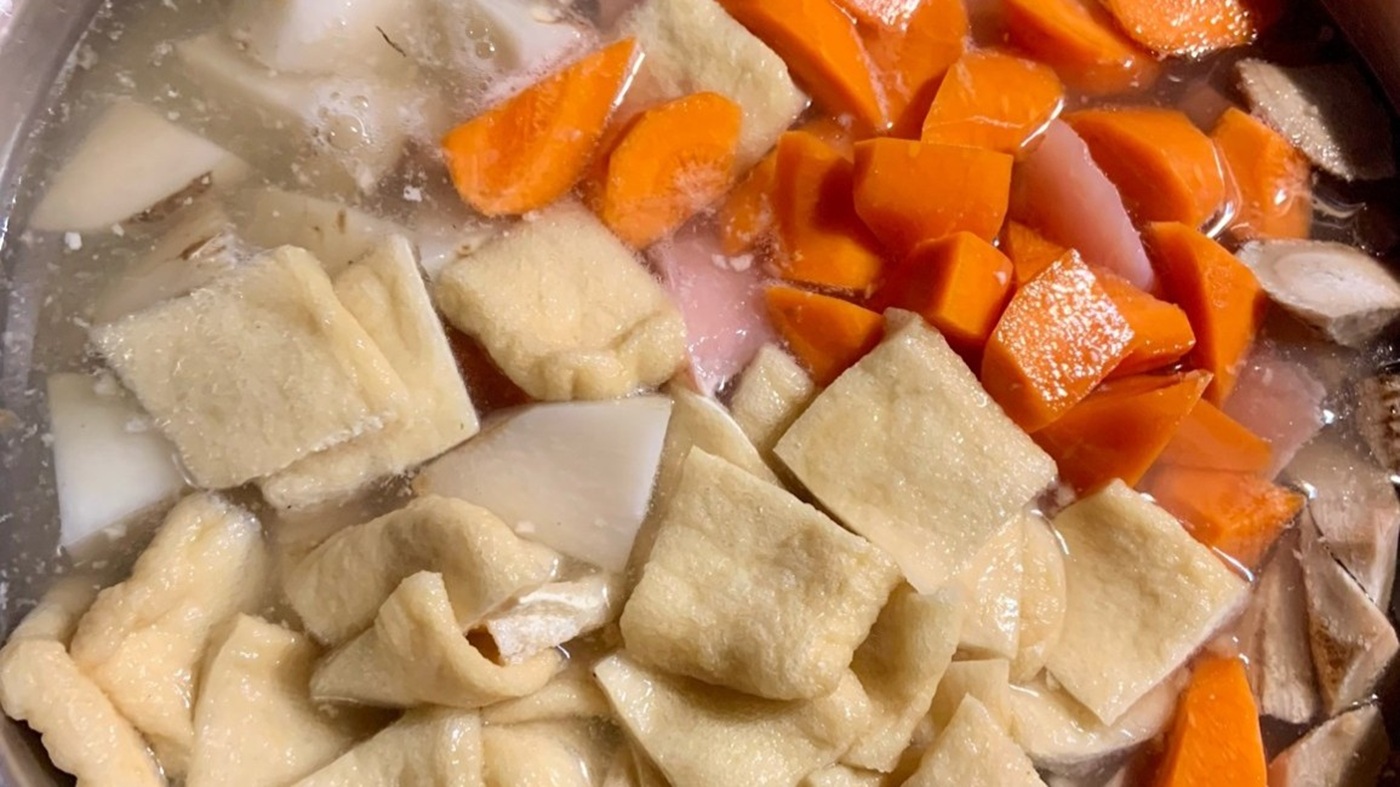
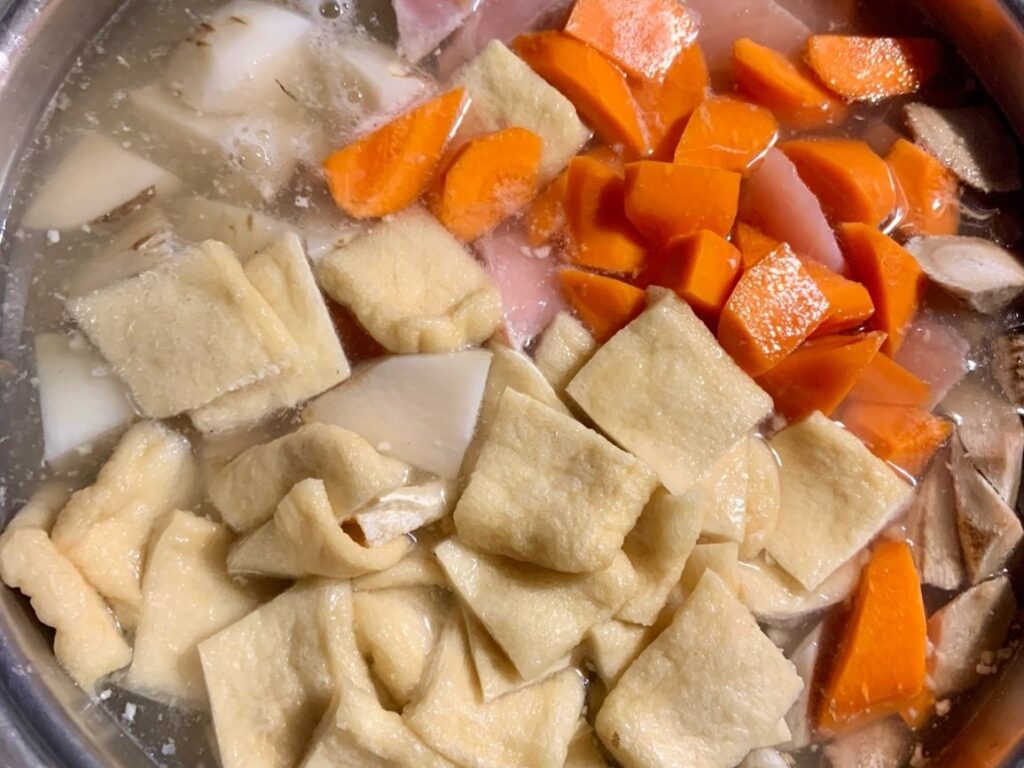
Pour 1 litre of dashi stock into a large pot and bring it to a boil. Add the chicken, taro and vegetables.
Step: 3 Simmer slowly.
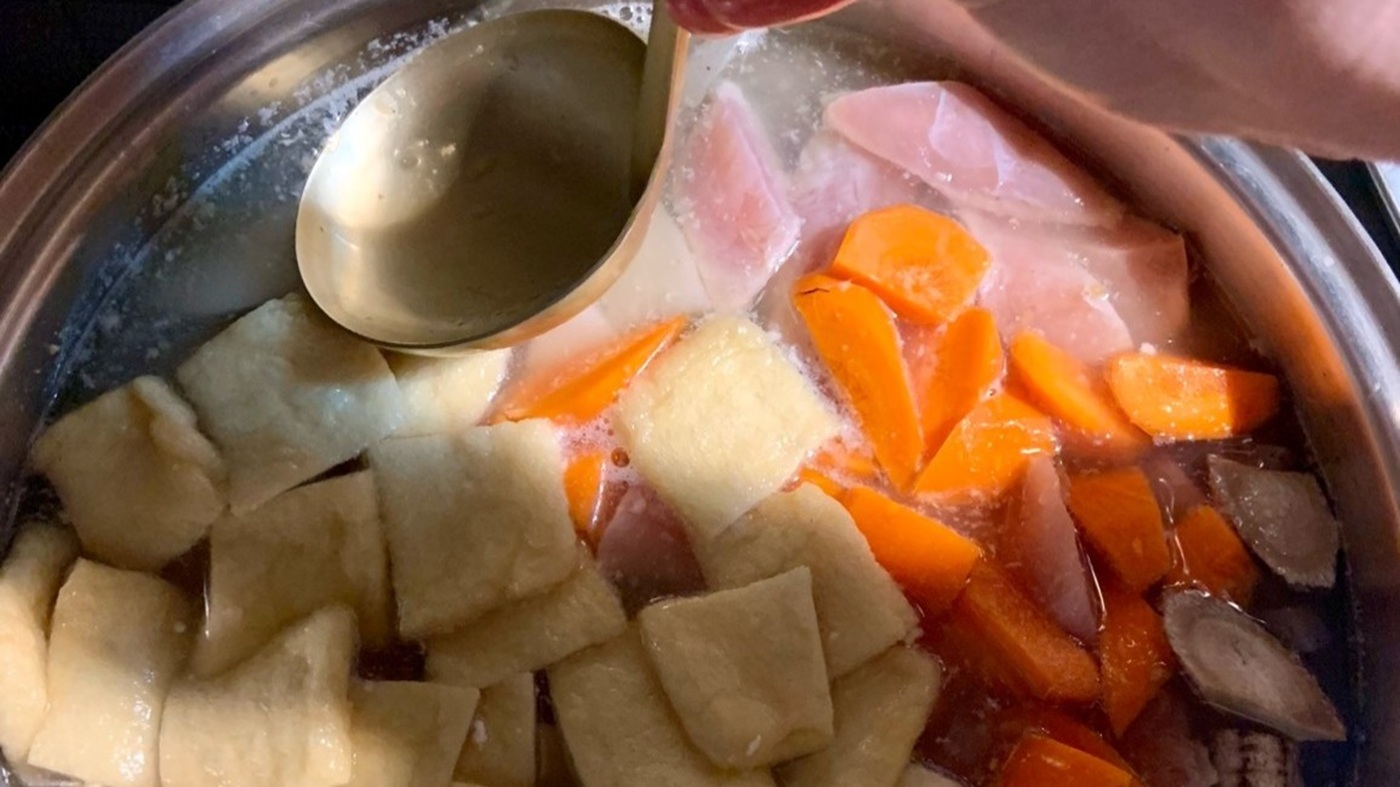
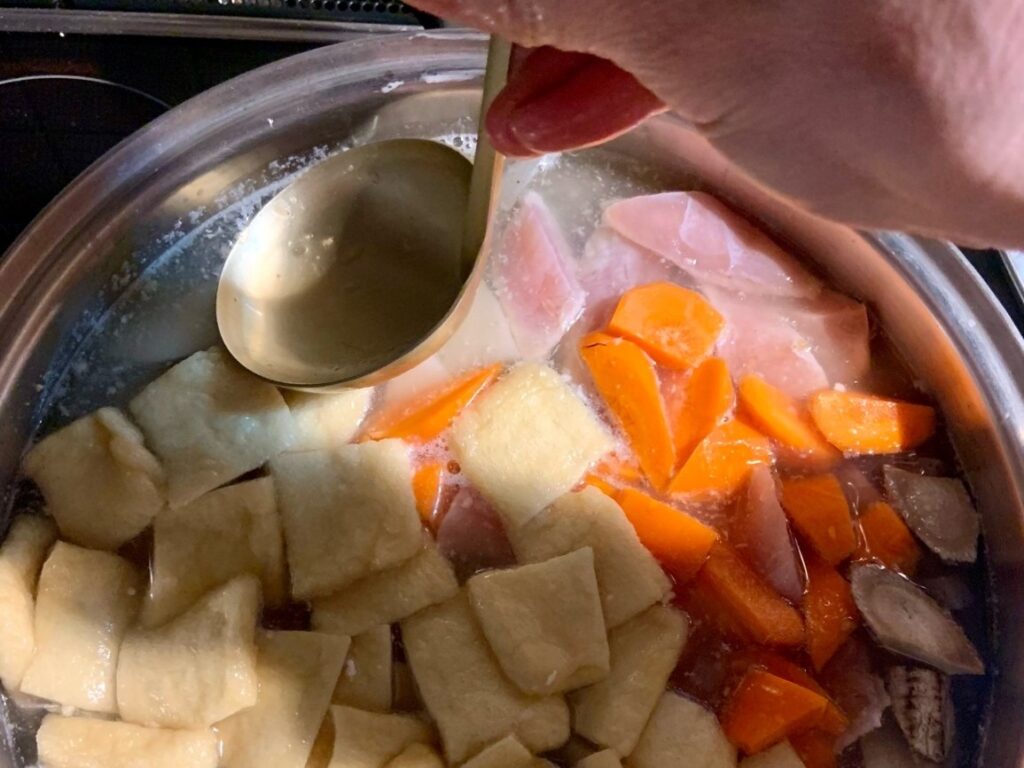
Let everything simmer until the taro becomes tender and the flavours blend together. Skim the scum off the top of the soup. The delicious aroma gradually fills the kitchen.
Step 4: Add the seasonings.
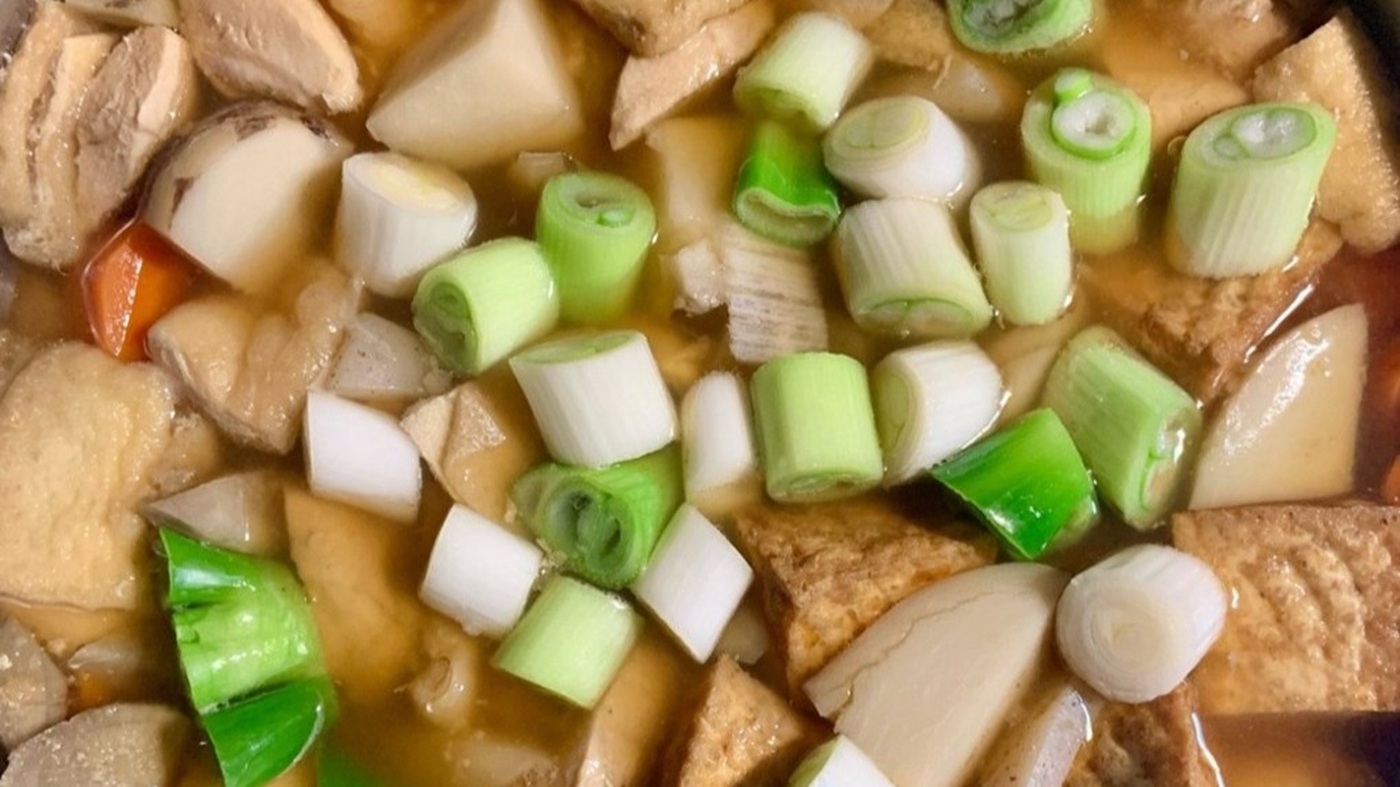
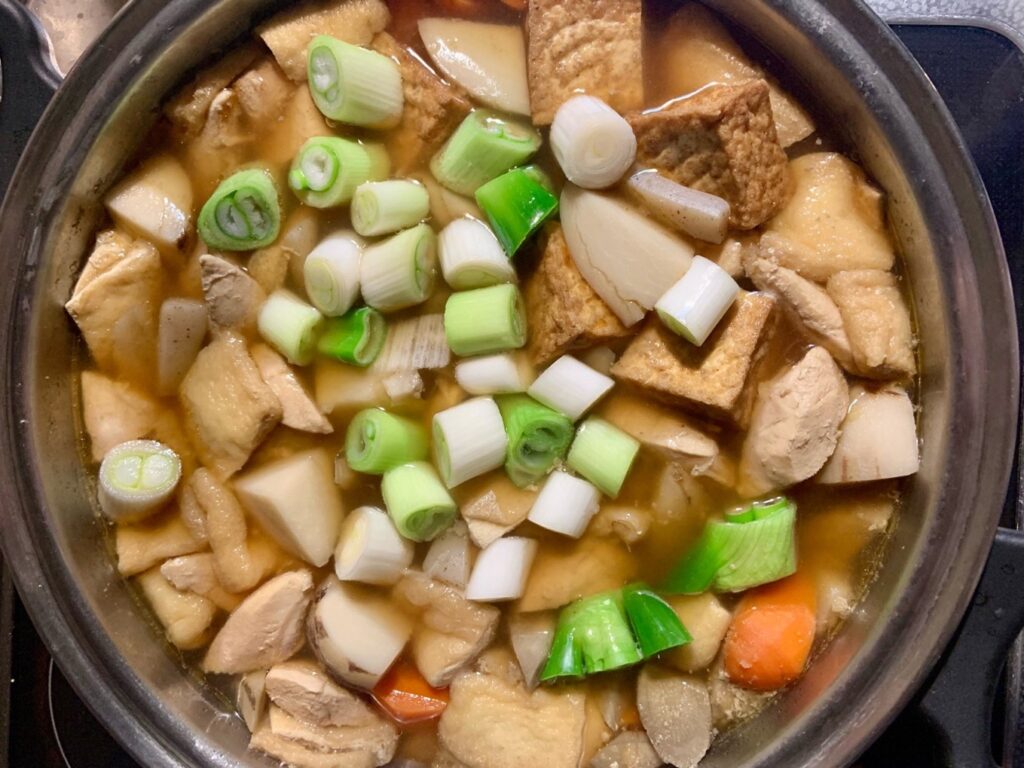
Add 2 tablespoons of sugar and simmer over low heat for about 10 minutes. Then add the mirin, soy sauce and salt. Continue simmering until the ingredients are tender and have absorbed the delicious flavours of the broth. Add the chopped green onions.
Step 5: Ready to serve.
Once everything is cooked, serve it hot in bowls. Sprinkle with shichimi togarashi (Japanese seven-spice chilli pepper) for an extra kick of flavour. Enjoy the warm and comforting tastes and flavours of autumn!
A taste of autumn
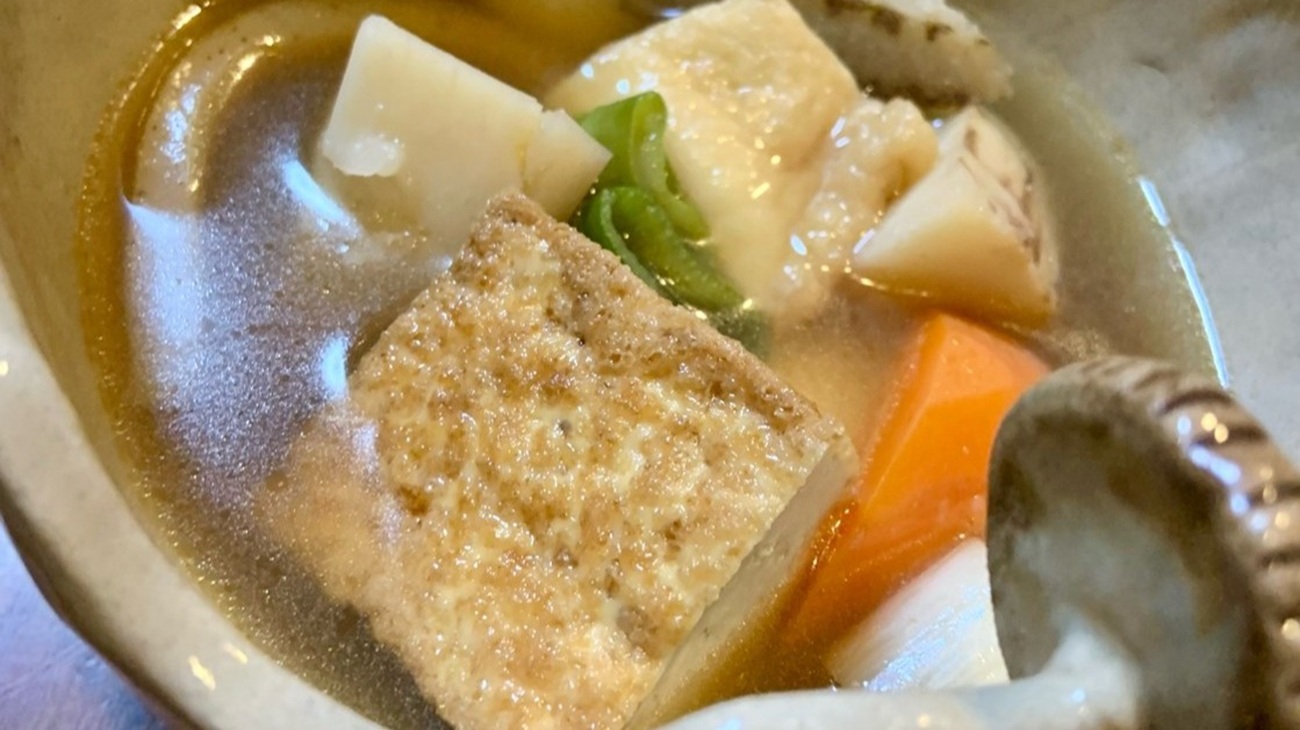
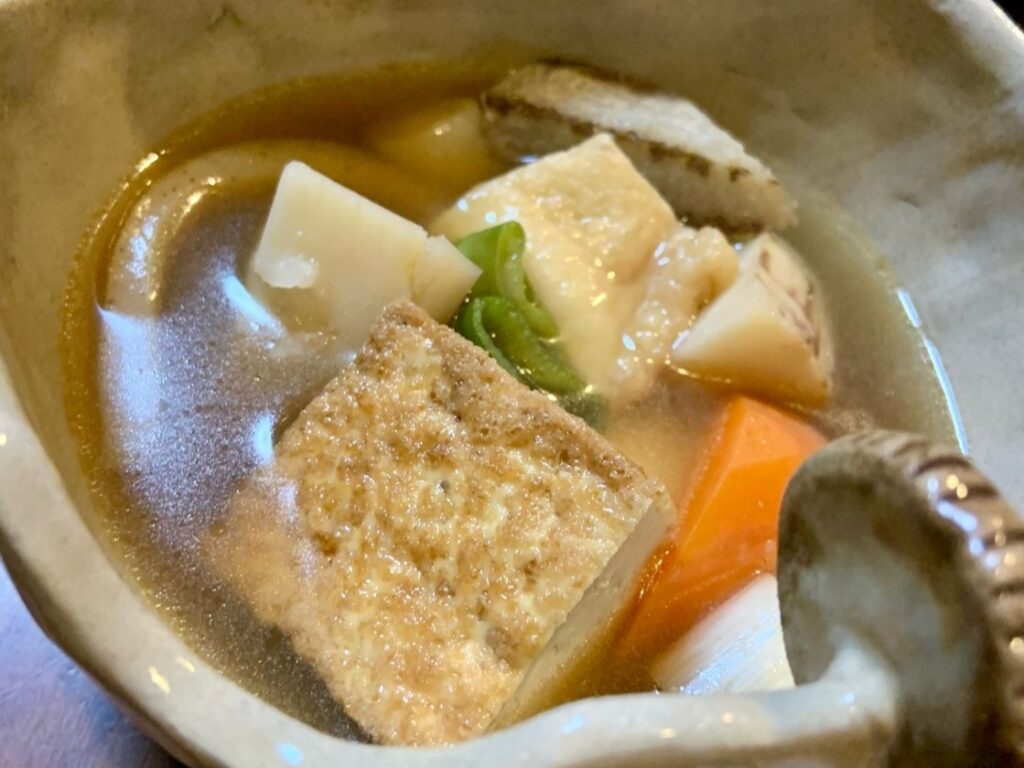
I love how simple and seasonal ingredients can create such a heartwarming dish. As the weather gets cooler, there is something special about sitting around a warm pot and sharing food with others. I believe Imotaki represents a beautiful part of life in the Japanese countryside, appreciating seasonal ingredients, local traditions and the simple joy of eating together.

■Role:
Local Contributor, Ehime
I’m excited to share little glimpses of my everyday life in Shikoku, from local food and cafes to beautiful places, seasonal specialities, and the simple joys of countryside living.
■Role:
Local Contributor, Ehime
I’m excited to share little glimpses of my everyday life in Shikoku, from local food and cafes to beautiful places, seasonal specialities, and the simple joys of countryside living.