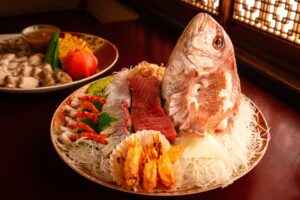
Shikoku is known for its mountains, rivers, and slow, gentle way of life—but along the coast, there is a dish that burns with dramatic energy: Katsuo no Tataki, bonito seared over blazing straw.
Long before refrigeration, Kochi’s fishermen found that a fast, fierce straw flame could seal in the freshness of the day’s catch while leaving the heart of the fish raw. What visitors see as theatre, locals know as heritage. Here is the story behind the flames—and how to bring it to your own table.
Born from Fishermen and Fire


Long before refrigeration, Kochi fishermen needed a way to enjoy their catch immediately. They burned straw—fast, hot, and aromatic—to sear only the surface of the fish. This preserved freshness while adding a smoky fragrance that became the signature of Shikoku cuisine.
Even today, restaurants perform warayaki like a ritual: flames rising, sparks flying, the scent of the sea mixing with smoke.
A Philosophy of Simplicity


Tataki reflects a Japanese cultural value: “Let the ingredient speak.”
No heavy sauces. No complicated spices. Just salt, citrus, garlic, ginger, and the pure flavor of the ocean.
In Kochi, tataki is not eaten quietly. People gather, talk loudly, laugh loudly, and share slices from one plate. It’s a warm, communal style of dining that surprises many foreign visitors.
Tataki is more than food—it’s a celebration.
Katsuo no Tataki — Recipe
You don’t need a straw fire or a Kochi harbour to taste it. Here is a version you can make in your own kitchen — give Katsuo no Tataki a try.

Pat the bonito dry with paper towels and sprinkle salt evenly over all sides.
Using a kitchen torch or very hot pan, sear the surface quickly until browned but keep the inside raw.
Place the seared bonito in ice water for 10–20 seconds to tighten the surface, then pat dry.
Cut into thick slices (about 1–1.5 cm).
Arrange slices over a bed of thinly sliced onions.
Top with garlic, ginger, and green onion.
Drizzle with ponzu or squeeze fresh citrus over the top before eating.