From Japan’s high-tech cities to its quiet countryside, signs of Japanese spirituality are everywhere. Even in the concrete maze of Tokyo, stone Buddha statues and neighborhood shrines are spaces of quiet among the hustle and bustle. And of course, no visit to Japan is complete without visiting Japan’s mesmerizing temples and shrines. But the Japanese religious landscape is deeply layered and complex, and it takes some context to decode what you see during your travels. Here we explore the roots of Japan’s spirituality in interacting with nature, and how that outlook continues to inform the country’s customs today.
Japanese Spirituality: A Survival Tool
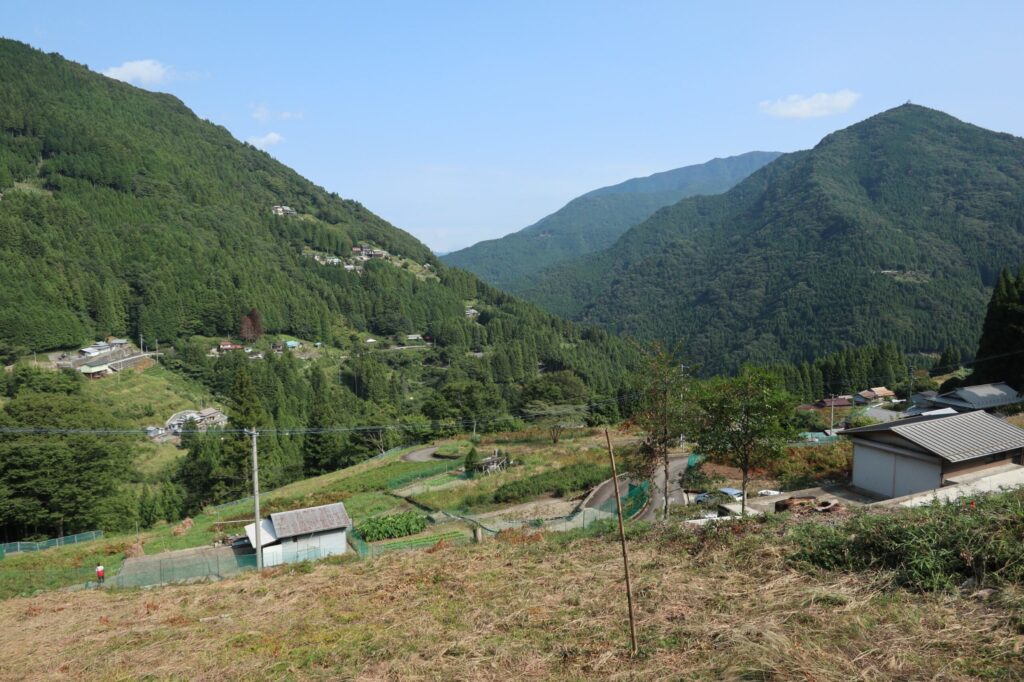
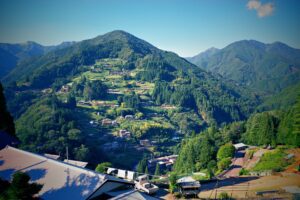
Deep in the mountains of eastern Shikoku’s Iya Valley, people farm slopes so steep that, as locals joke, farmers have trouble walking on flat ground. The hills are too extreme for rice terraces, so buckwheat replaces paddy fields. Towering peaks on either side of the valley make sunlight a precious commodity. Dry soil demands careful use of composted pampas grass as fertilizer. Long, frigid winters turn every growing season into a race against time.
In many parts of the world, communities living in such environments are described as fighting a “battle against nature.” Human ingenuity and grit are pitted against harsh, unfeeling elements. In Iya, however, farmers approach their relationship with the land very differently.
Rather than conquest, they emphasize communication.
Yama no Kami: Roots of Japanese Spirituality
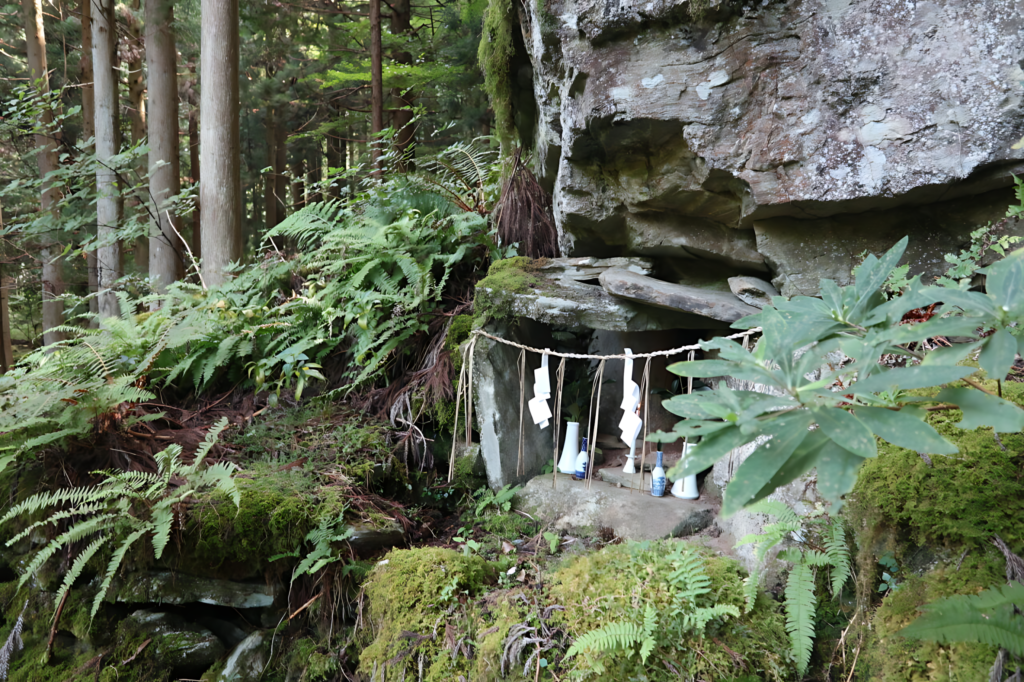
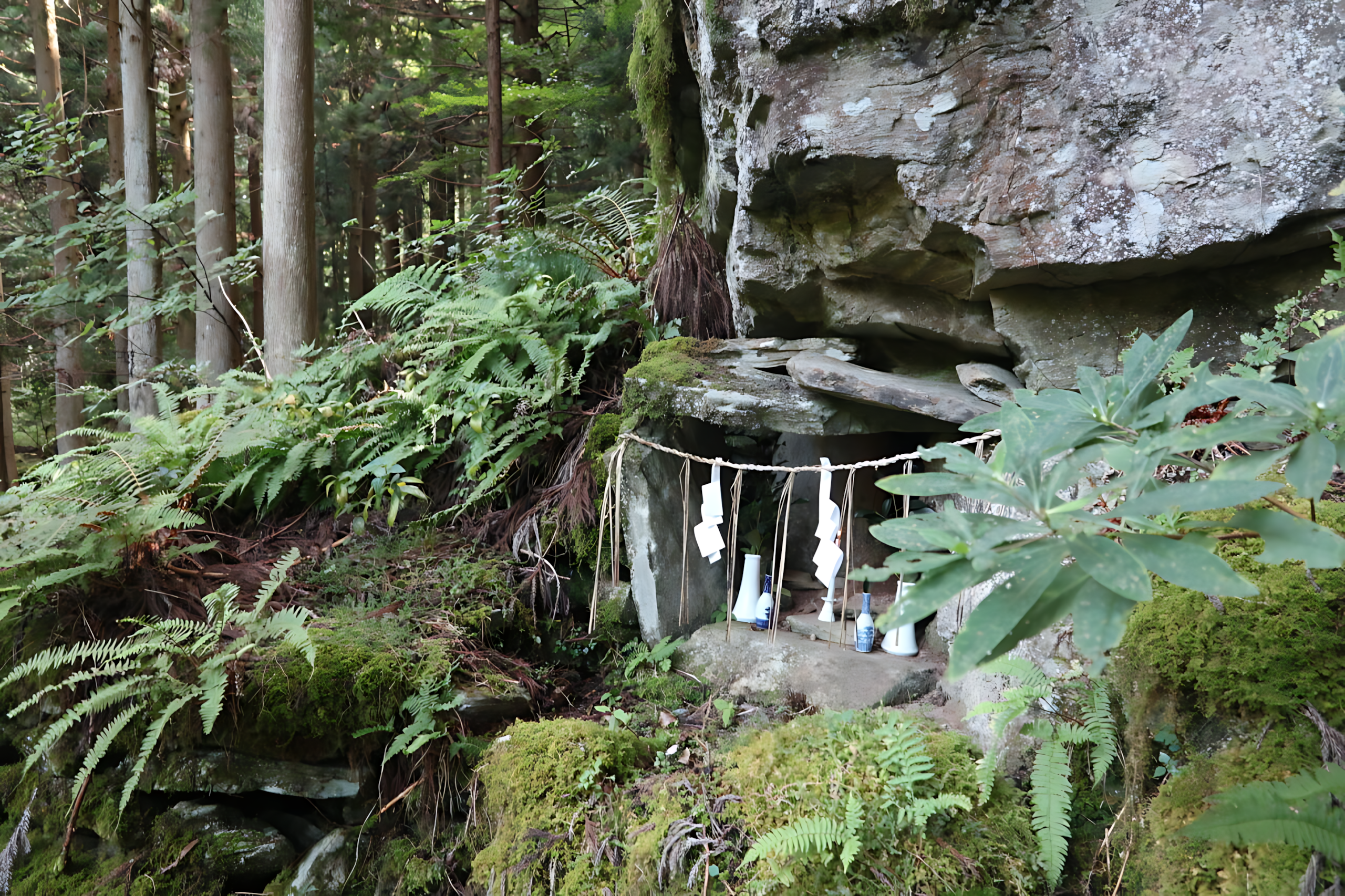
In the village of Shigesue, for example, each household has its own shrine to Yama no Kami, the Deity of the Mountain. This can be a boulder, an ancient tree, or a purpose-built miniature shrine. Each serves as a point of contact, a window for communication between the household and the natural world around them.
The word Kami is usually translated as “deity,” but its meaning is broader and more flexible. Depending on context, kami can also mean “that which is above.” A Kami, in this sense, is anything beyond human control, whether a mountain, the sea, a storm, or the spirits of ancestors.
As Ishikawa-san, a young farmer and guesthouse operator in Shigesue, explains:
“This where we come to express gratitude to the mountain and to pray for safety and success every year.”
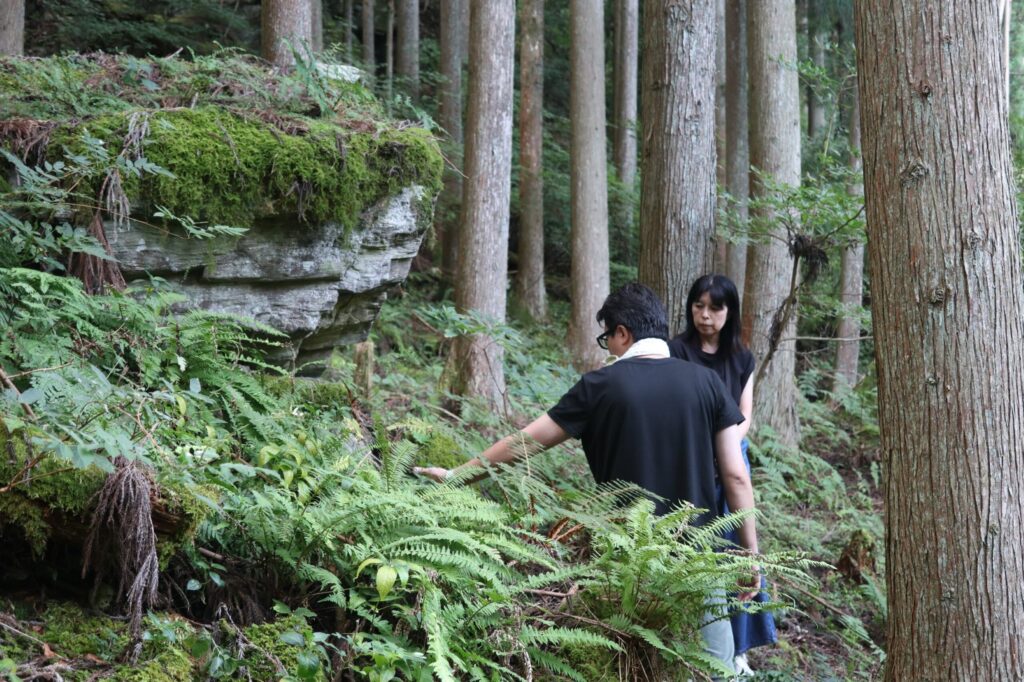
As part of their ritual for honoring the Yama no Kami, the Ishikawa family offers mochi and sake, which they then enjoy themselves. They now welcome visitors to pray at their Yama no Kami year-round.
In this deepest layer of Japanese spirituality, practice isn’t a matter of enlightenment or cosmic understanding. It’s a matter of survival, of respectful engagement with the natural forces that make life possible.
Shinto: The Way of the Kami
This give-and-take relationship with nature shaped spiritual life throughout the Japanese islands. As communities developed in different environments, local traditions emerged through direct negotiation the nature around them.
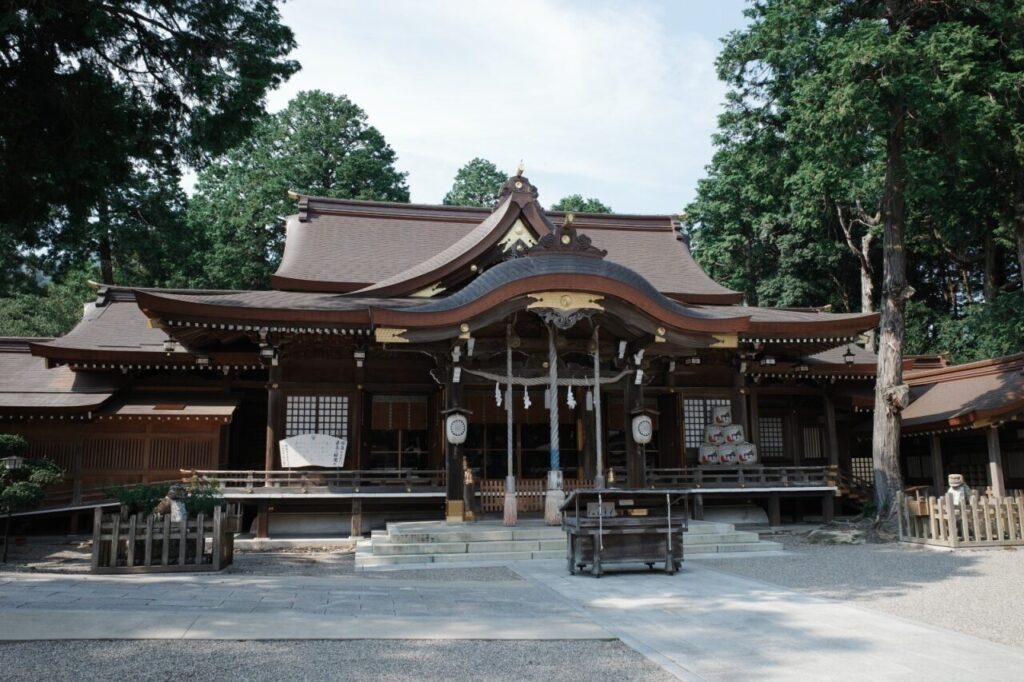
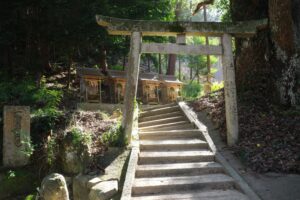
While in remote Iya each family has their own “window” to nature in the form of Yama no Kami sites, in other parts of Japan communities built larger Shrines (Jinja) to their local Kami. These eventually grew into huge complexes like Oasahiko Shrine in eastern Tokushima. Behind the serene grounds of the shrine looms the triangular peak of Mt. Oasa, a source of water for the surrounding farmland. Though the scale is bigger, the dynamic remains the same. At the shrine people offer food, drink, music, and dance to the mountain deity whose cooperation makes or breaks their harvest.
From these local, land-based practices developed what we now call Shinto, “the Way of the Kami.” In its early form, Shinto was not a centralized religion but a collection of regional traditions shaped organically by place. Each locale has an Ujigami, the shrine of a tutelary deity. Here parents traditionally present children and get the Kami’s affirmation for the baby’s name. Parents also take their kids to shrines at the ages of three, five, and seven to thank the deity for the child’s health.
In general, shrines are also associated with purification. Japanese custom holds that kegare, spiritual impurities that accumulate in everyday life, can cause misfortune. People who have had a run of bad luck or suffered some misfortune may visit a shrine for Oharai, cleansing by the shrine priest in an elegant ceremony that dates back centuries.
Because of Shinto’s association with stages of transition, it remains a vital presence in Japanese spirituality.
Buddhism Enters the Scene
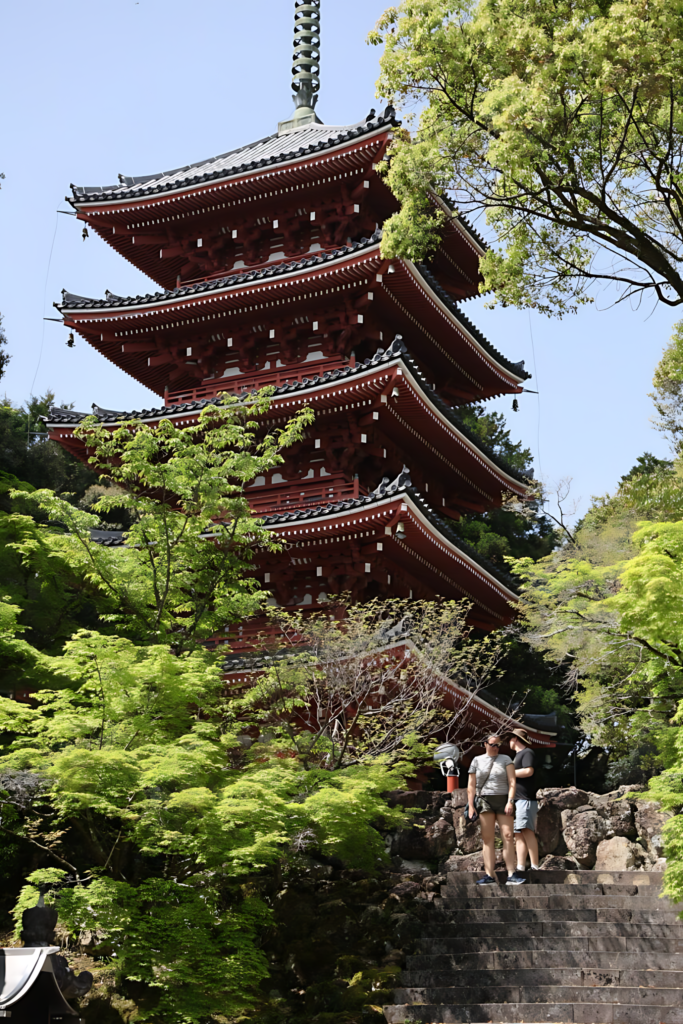
Buddhism broke onto this scene in the 600s AD, completely revolutionizing Japan’s religious landscape. Like earlier agricultural technology and traditions, it came via sea routes from China and the Korean Peninsula. While orthodox temples flourished under imperial sponsorship in Nara and Kyoto, independent wandering monks often sought out mountains and caves in which to meditate away from prying eyes. These were, of course, the same places of power that farmers venerated as abodes of Kami.
These monks also taught people of the power of Buddhist deities. Kannon, the deity of compassion grew popular early on. For rural communities, these figures were recipients of prayer, protectors of health, and sources of practical benefit – just like the Kami that came before them. However, their compassion earned them reputations as effective, generous, and often less fickle than the forces of nature.
Buddhism came to Japan with highly-developed philosophy and teachings about death and the afterlife. Buddhist teachings propose that people can share the merit of their good deeds with their deceased ancestors. Since ancestor veneration was already an important part of Japanese spirituality, this aspect of Buddhism became a vital aspect of Japanese spirituality. Today, the vast majority of funerals and memorial services happen in Buddhist temples.
Shugendo: Practicing in Heaven, On Earth
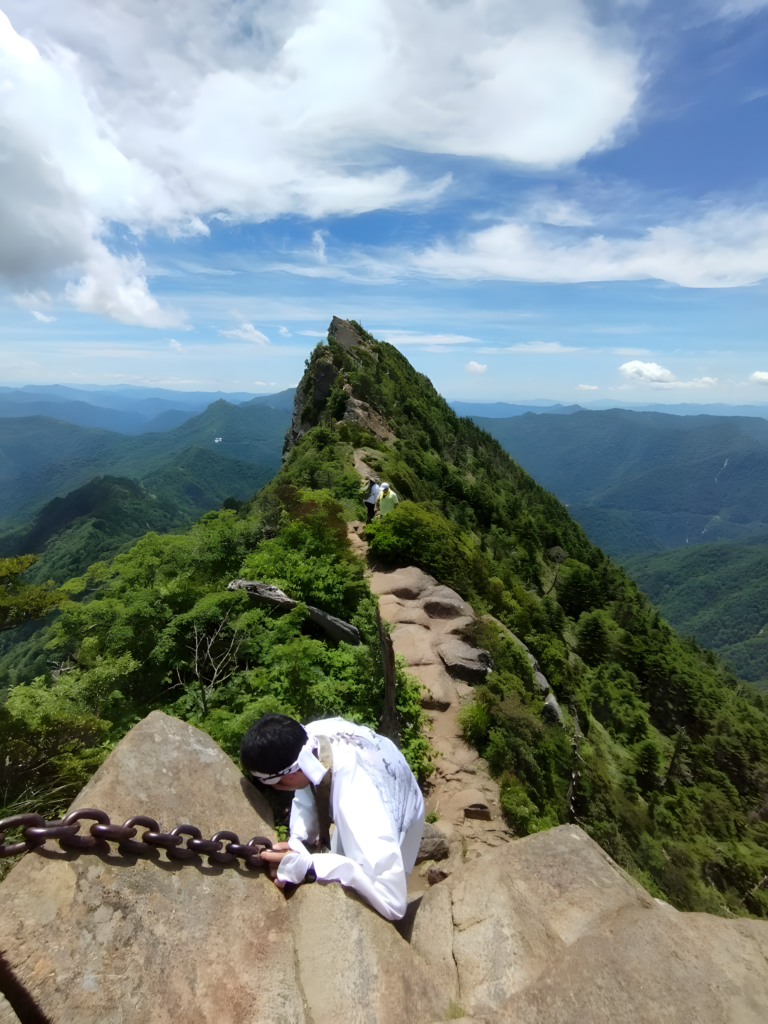
Japanese spirituality quickly fused into a religious culture that seamlessly included both Shinto and Buddhism. Buddhist Temples frequently enshrined local deities, and Shinto Shrines often housed Buddhist images and implements. Theories emerged that perhaps Japanese Kami were expressions of more universal Buddhist deities, adapting themselves to Japan’s landscape and people. Others pushed back saying it was the opposite; Buddhas and their rituals were merely echoes of the spiritual heartbeat that pulsed through the Japanese islands.
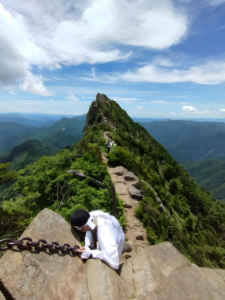
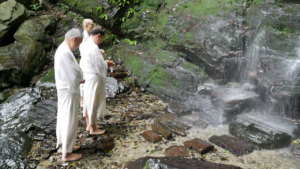
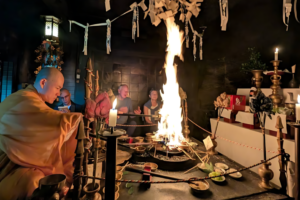
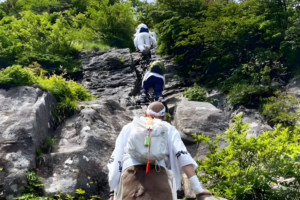
This spiritual symbiosis reached its apex in the tradition called Shugendo. Yamabushi, or Shugendo practitioners, immerse themselves in the divine world of nature. They imbibe and embody the spiritual power of mountains and rivers, then share the benefits of their practice with their communities. In Shikoku, high peaks like Mt. Tsurugi and Mt. Ishizuchi remain central to this living tradition.
Until the 19th century, this fusion between indigenous Kami traditions and Buddhism was a matter of course throughout Japan. For example, the Shikoku 88 Temple Pilgrimage (or Henro) is centered on a Buddhist saint, Kukai. However, it once included a number of shrines among its sacred sites. At both temples and shrines, pilgrims originally chanted Buddhist mantras and singing vernacular poems influenced by Shinto aesthetics.
The Bulldozer of Reform
This equilibrium changed dramatically during Japan’s modernization in the late nineteenth century. In an effort to build a centralized nation-state, the government enforced a policy known as Shinbutsu Bunri, mandating the separation of Shinto and Buddhism. Syncretic sites were forced to choose an identity, Shugendō was outlawed entirely, and shrine rituals were standardized at the expense of regional diversity.
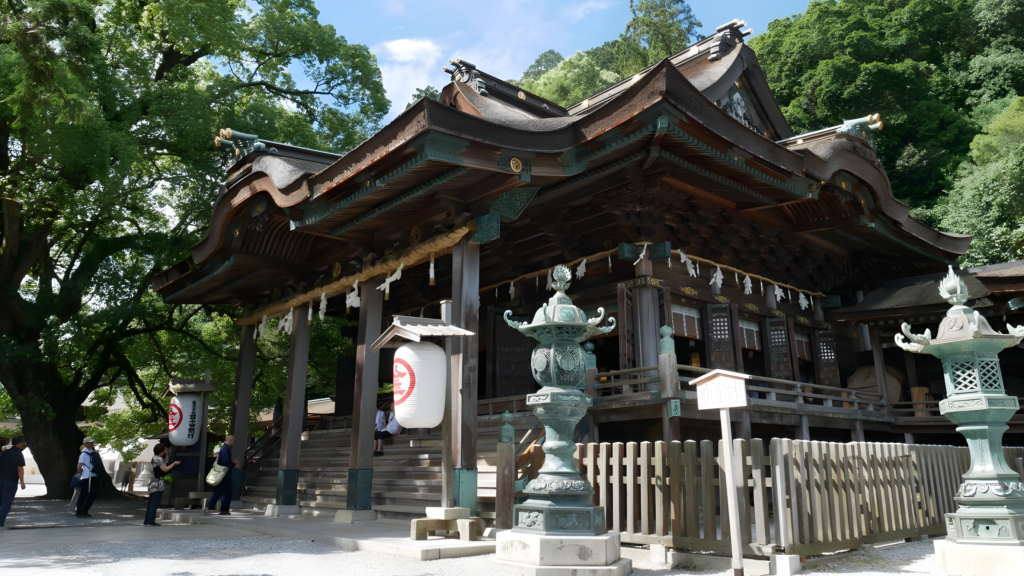
Few places illustrate this shift more clearly than Kotohira Shrine in Kagawa Prefecture. The mountain on which it stands has been revered since prehistoric times. Over centuries, local agrarian beliefs merged with Buddhist devotion, and a thriving Shugendō tradition developed around the site. By the early nineteenth century, visitors encountered a vibrant mix of Buddhist and Shinto imagery, with monks performing many of the shrine’s core functions. The shrine came to be affectionately known as Kompira-san after the Buddhist deity Kumbhira, with whom the mountain deity was identified.
Following Shinbutsu Bunri, however, the shrine was compelled to align itself with State Shinto. Buddhist elements were removed with striking thoroughness, replaced by the imposing shrine architecture seen today. This was the case for many important shrines and temples across Japan, including Kyoto’s popular Fushimi Inari Shrine. Though it happened over a century ago, Japanese spirituality continues to follow boundaries drawn in this period.
Spirituality on Nature’s Terms
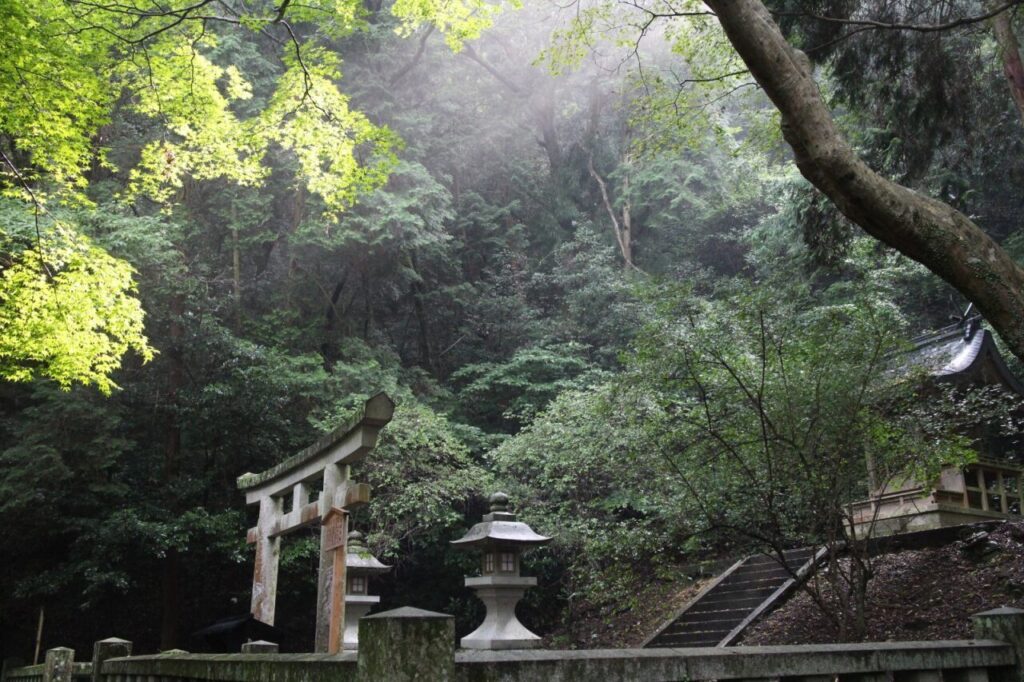
Even so, those who venture beyond the main shrine grounds to the Okunomiya, the “Inner Shrine,” or climb higher still to the summit, where views of farmland, mountains, and sea spread out below, often find that the sacred reveals itself not through history or religious form, but through the immediacy of the landscape itself.
This sense of meeting nature, of engaging directly with the world rather than observing it from a distance, flows quietly through Japanese spirituality and traditional culture. In Shikoku, it remains a living experience, open to anyone willing to slow down and step into it.
Exploring Japanese Spirituality with Shikoku Tours
For those interested in encountering these landscapes and traditions firsthand, Shikoku Tours arranges custom tours on which we explore many of the places and practices described above through sacred walks, shared experiences, and time spent in the regions where they developed. Expert guides accompany clients to provide context and facilitate conversations with lineage holders and practitioners throughout the island. Our expertise and attention to detail ensures that you experience Japanese spirituality in Shikoku not as a thing of the past, but as living traditions that adapt to new challenges.
Please contact us to start planning your journey to Shikoku.