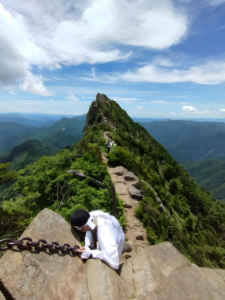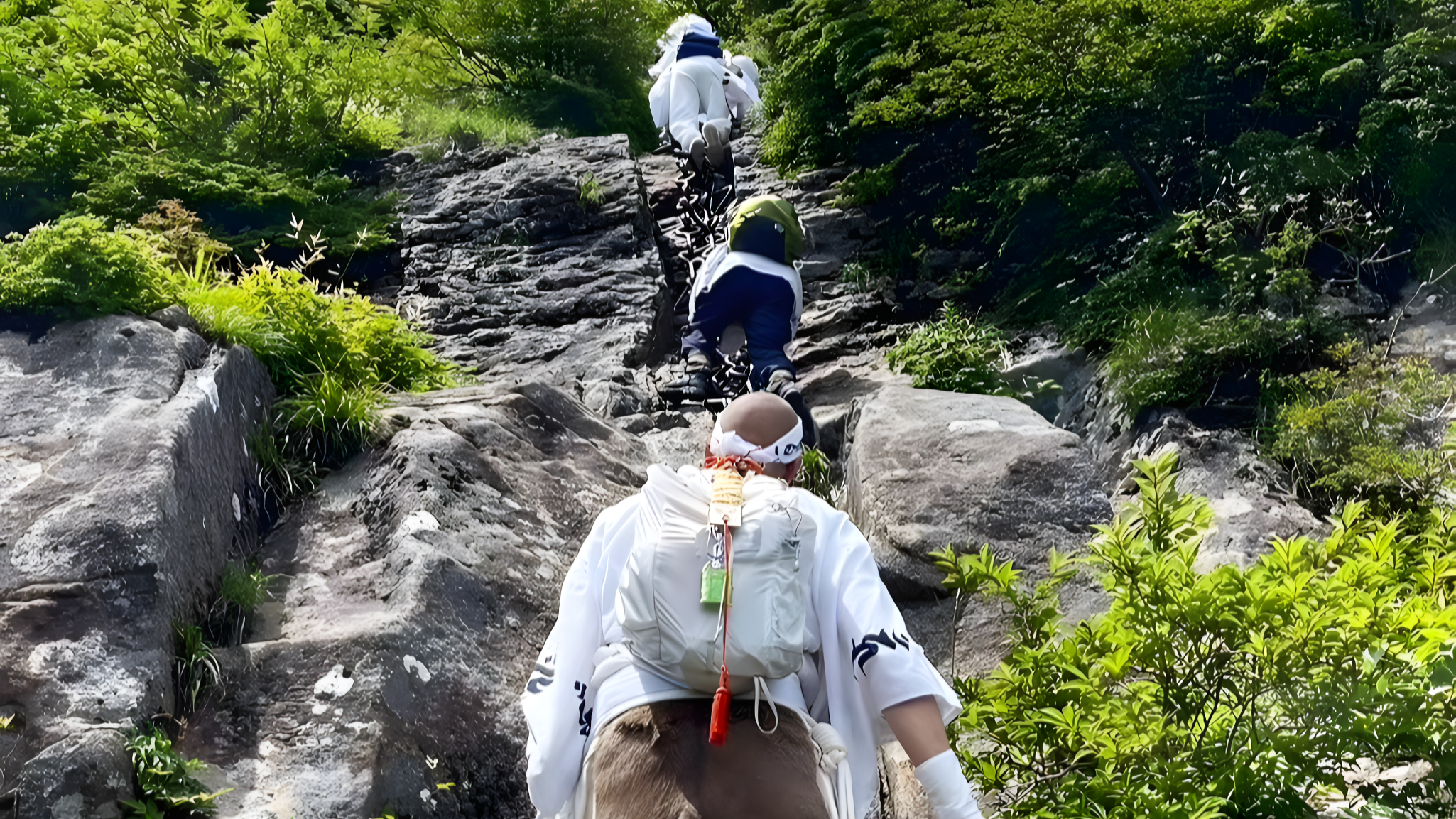
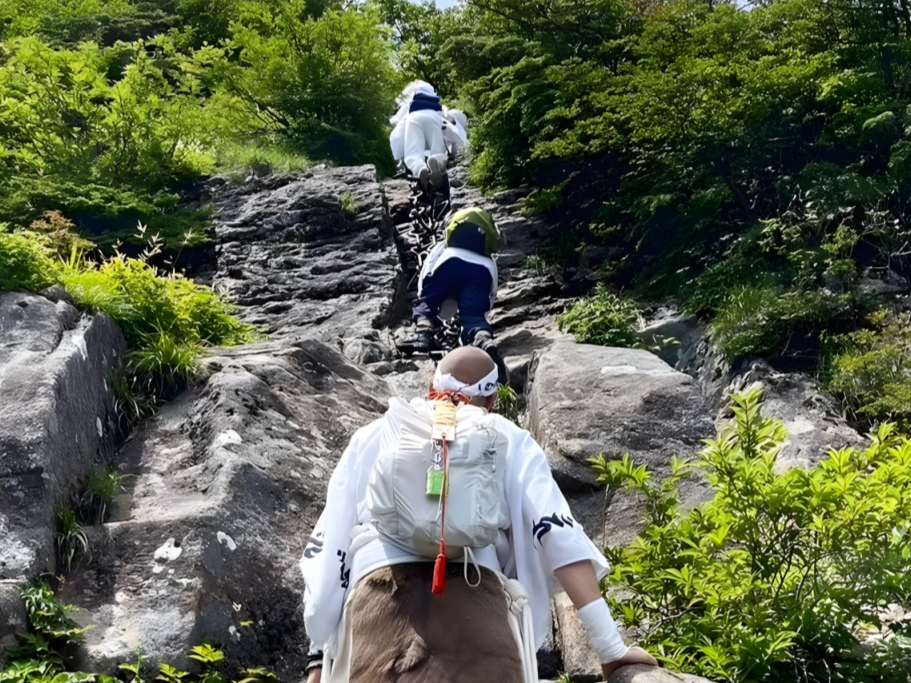
The craggy cliffs of Mt. Ishizuchi, Shikoku’s tallest mountain, are draped in heavy iron chains. White-clad practitioners of Shugendō, “the Path of Cultivating Mystic Power,” chant “Namu Amida!” as they scale the chains, their voices mingling with the clinking of iron on rock.
The practice of Shugendō produces some of the most otherworldly and striking images Shikoku and Japan have to offer. Practitioners scale steep cliffs, traverse tiny ledges, hang off cliffs, and build great ritual bonfires at temples and shrines deep in the mountains. But what do yamabushi, practitioners of Shugendō, seek when they go into the mountains? This article introduces some key concepts, figures, and rituals of Shugendō.
This article is supervised by a Shikoku travel specialist and Shingon Buddhist priest with over six years of dedicated study and practice in Shugendō, Buddhism, and Shinto, providing insights drawn from direct experience in the mountain traditions explored here.
Key Concepts
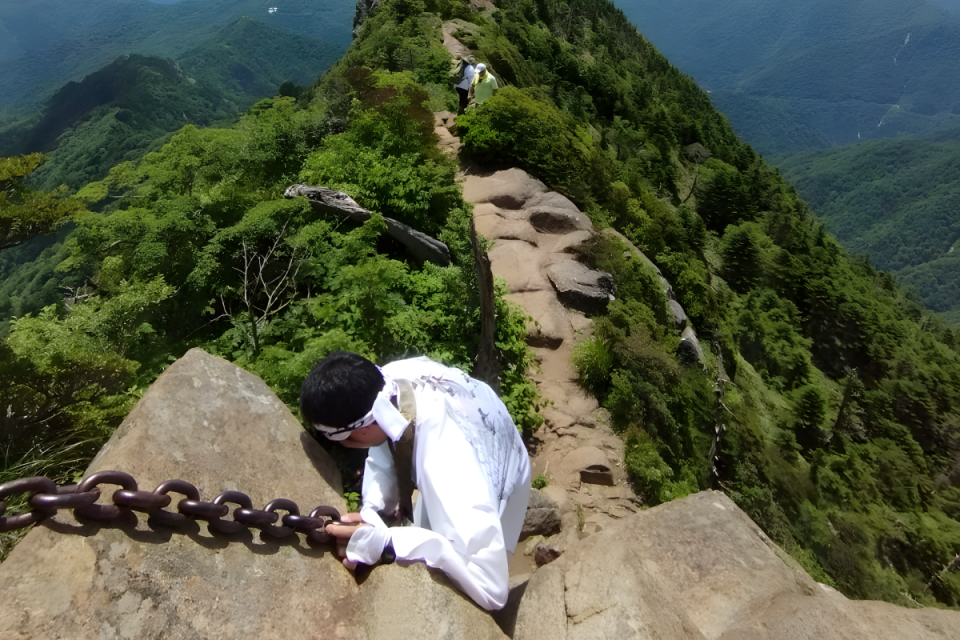
Shugendō is a category-defying tradition. It blends indigenous Shinto beliefs and practices with Buddhist and Taoist ones. Yamabushi, “mountain-prostrators,” believe that submitting themselves to the sacred power of nature allows them to take on some of that divine power. They then use it compassionately on behalf of others when they return to their homes. Shugendō spread from Mt. Ōmine in Nara Prefecture and became influential on almost every sacred mountain in Japan. That includes many of Shikoku’s most famous peaks, such as Mt. Ishizuchi, Mt. Tsurugi, and Mt. Kompira.
As Shugendō spread, it developed unique characteristics from the culture and geography of each region. As such, Shugendō traditions in Shikoku differ from place to place. However, they share one feature in common: legends of the tradition’s founder, En no Gyōja (En the Practitioner). En was likely a historical figure who practiced magic and medicine—closely related disciplines in premodern Japan—in the 7th century. Over time, legends grew around this mysterious figure, particularly stories of his travels to sacred mountains across Japan.
Summoning the Mountain: A Shugendō Legend
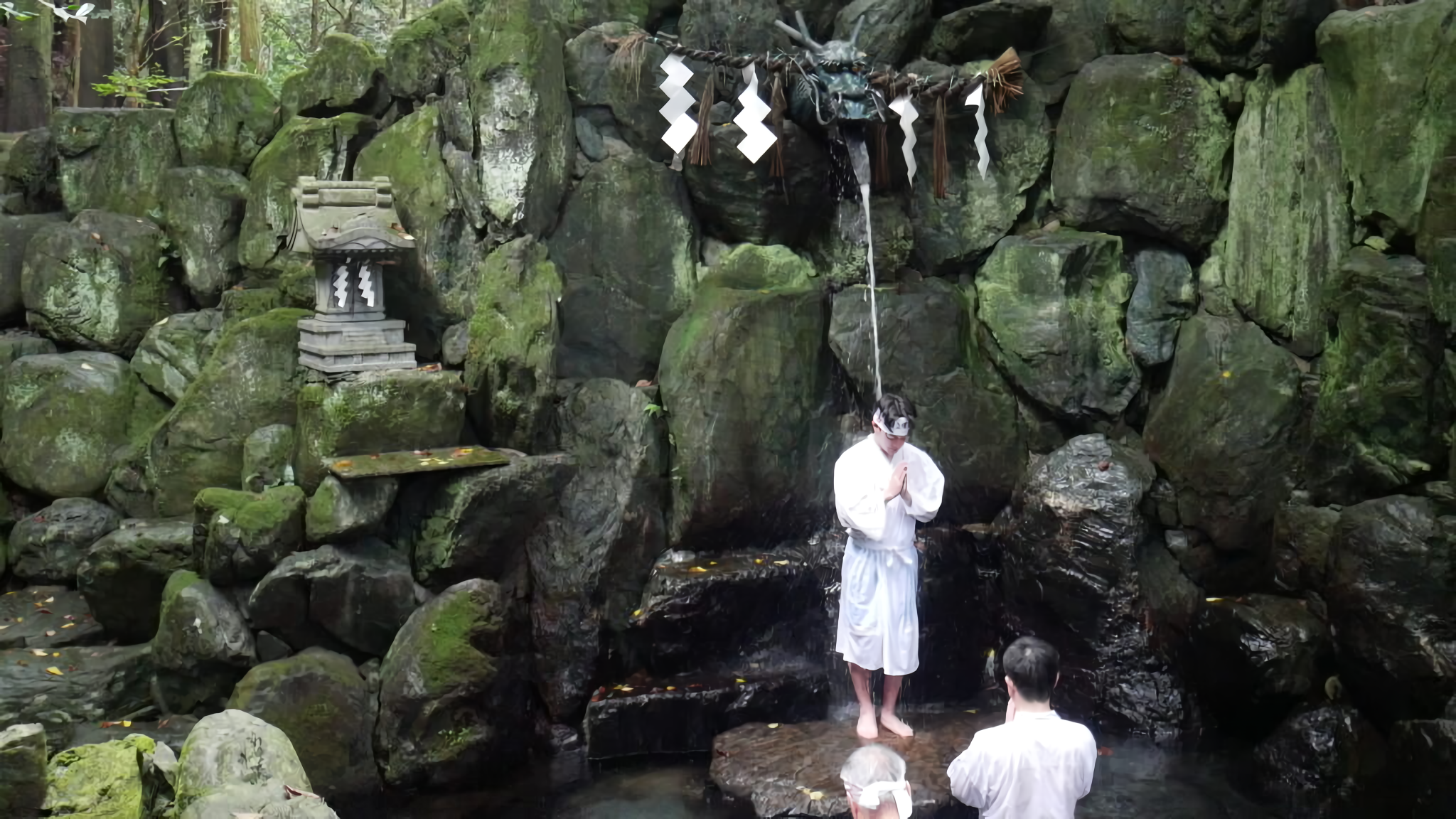
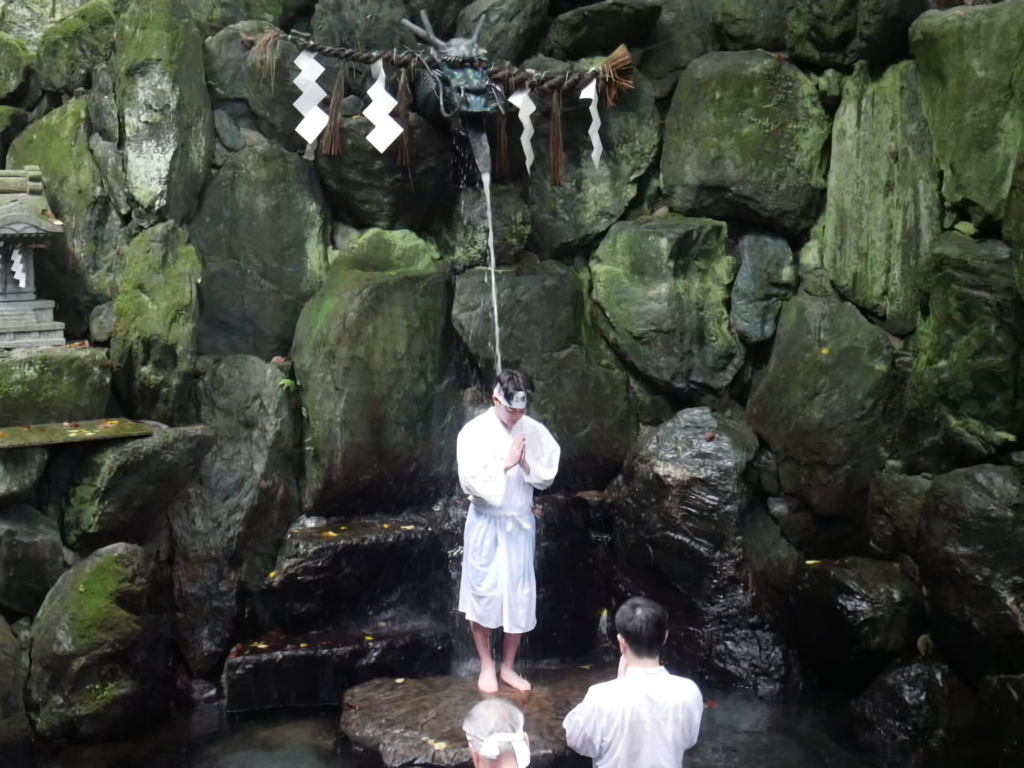
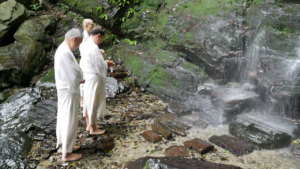
The founding legend of Mt. Ishizuchi is a representative example. En no Gyōja purified himself in the mountain’s waterfalls and scaled the unforgiving cliffs to the summit. He then entered meditation to beg for a Buddha who could guide the people of Japan to salvation.
Eventually, the Buddha Amida and his two attendants appeared. En sensed that these kindly beings were too gentle to save the obstinate Japanese. He implored them to assume a more suitable wrathful form. In response, Amida transformed into Zao Gongen, a fearsome deity with one leg raised as though to smash whatever lay below. The other two deities became wrathful attendants. These three deities became known as the “Three Manifestations of Mt. Ishizuchi.”
This tale contains many defining elements of Shugendō. Shinto concepts include purification through water and mountains as a sacred realm. Buddhist elements include meditation and the appearance of the Buddhist deity Amida. And beneath it all, the Japanese worldview in which Buddhas take on indigenous forms to meet the needs of the people of the archipelago.
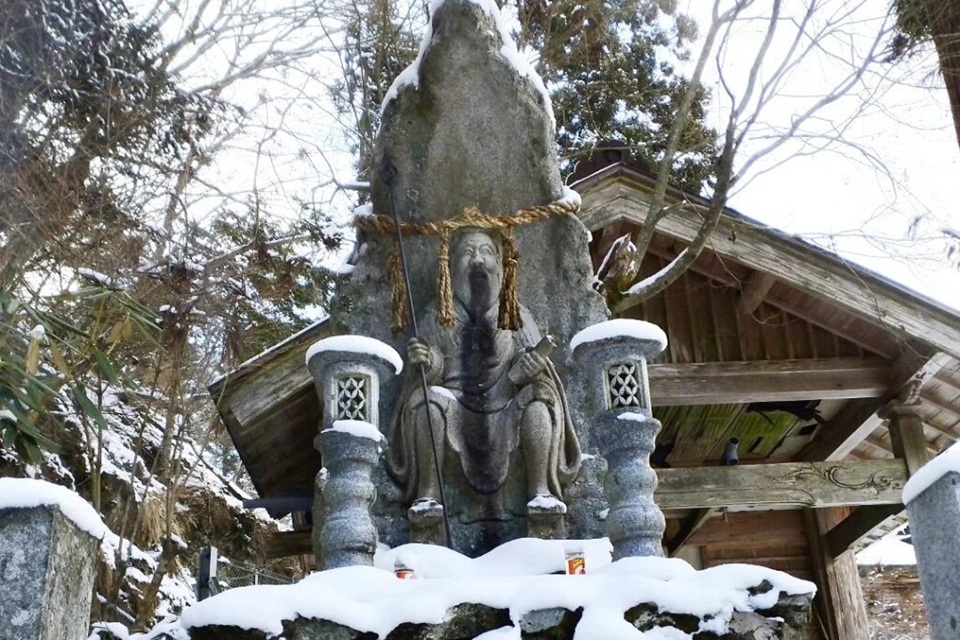
Images of En no Gyōja can be found at many of Shikoku’s mountain temples. The sage sits on a boulder wearing a cowl and tall, toothed wooden sandals called geta. At some temples, iron sandals are displayed nearby. This references legends that En donned such heavy footwear when climbing the mountains as an added ascetic practice.
Restriction and Revival
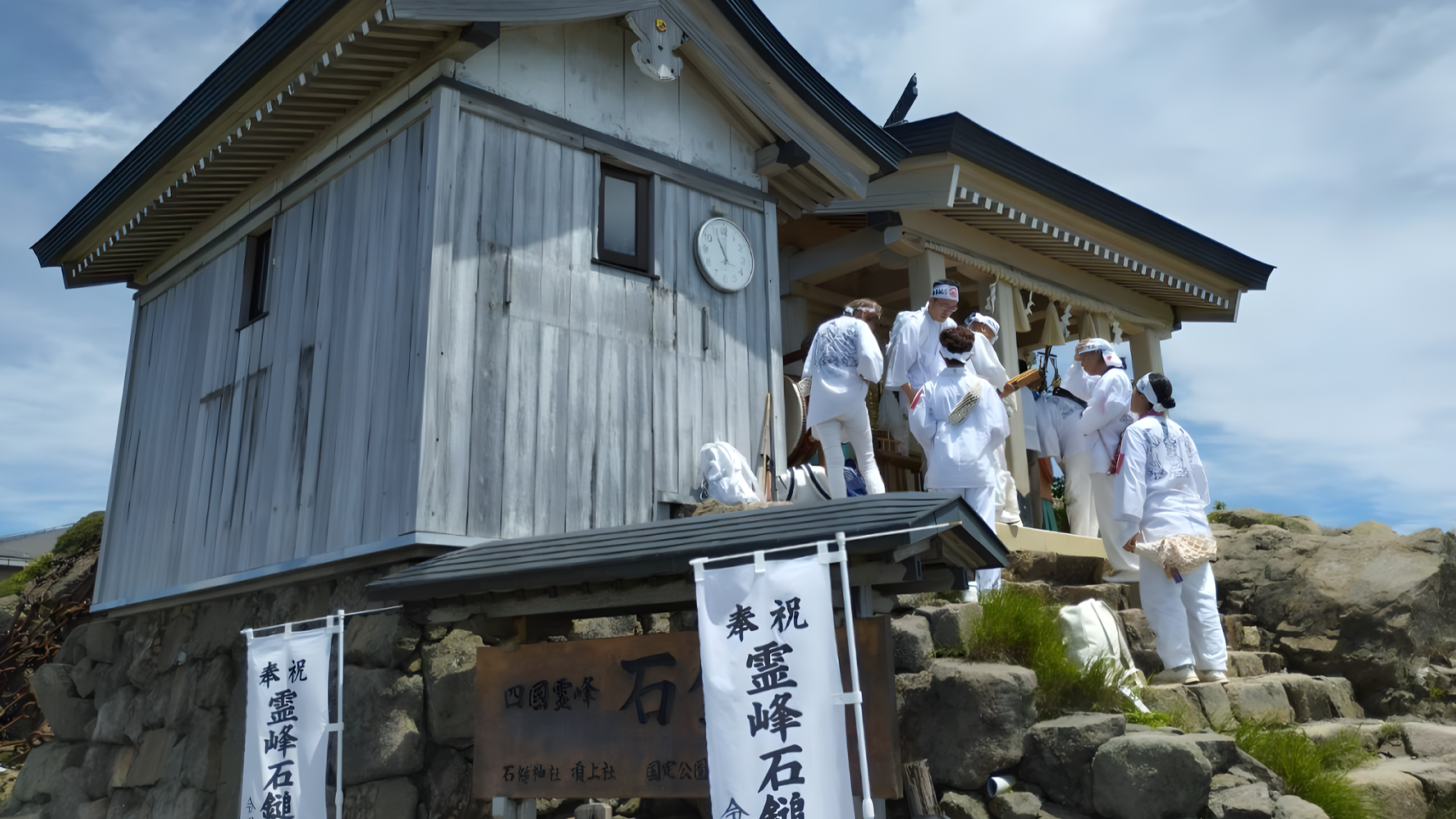
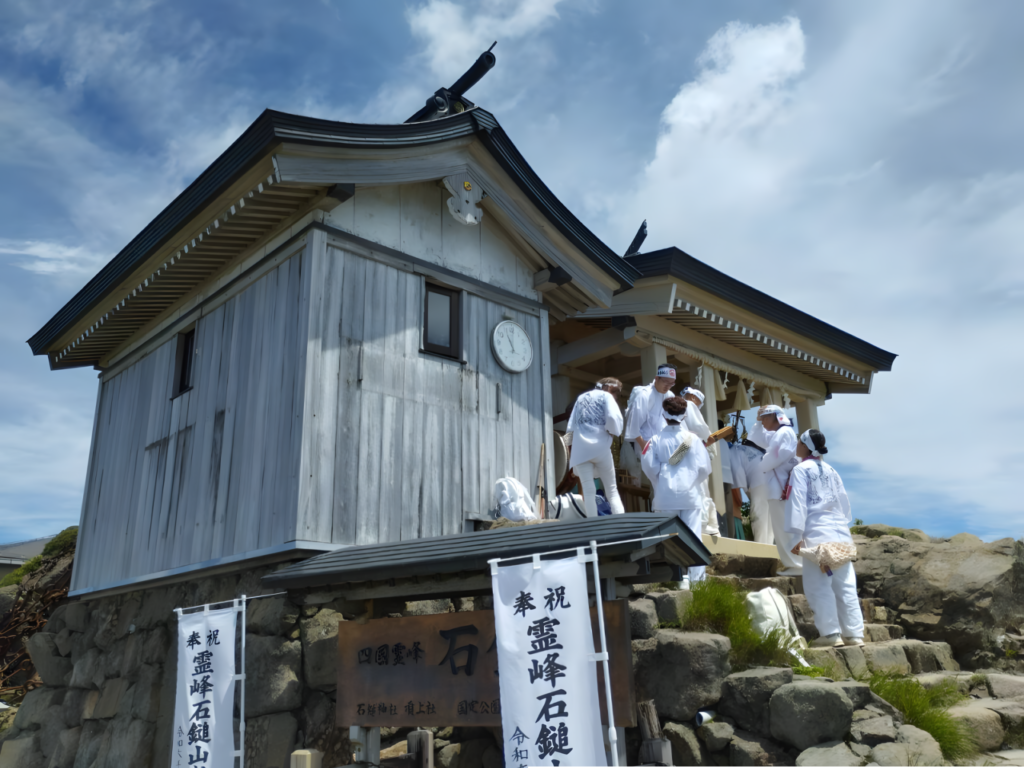
Religious reforms during Japan’s 19th-century modernization saw regional Shinto traditions suppressed in favor of a centralized ritual system. The government forced sacred sites to align exclusively with either Shinto or Buddhism. Since Shugendō inherently combines these, it was totally outlawed in 1868. Its practitioners were compelled to become either Shinto or Buddhist priests. Many Shugendō rituals were absorbed into those traditions or abandoned altogether. This situation persisted until the end of the Second World War, when Japan adopted a constitution that included a guarantee of freedom of religious expression.
Since then, Shugendō has seen a modest revival, and practitioners clad in traditional garb can once again be seen climbing sacred mountains at key times of year, venerating sites and performing rituals once driven from public view.
Shugendō Immersion in Shikoku
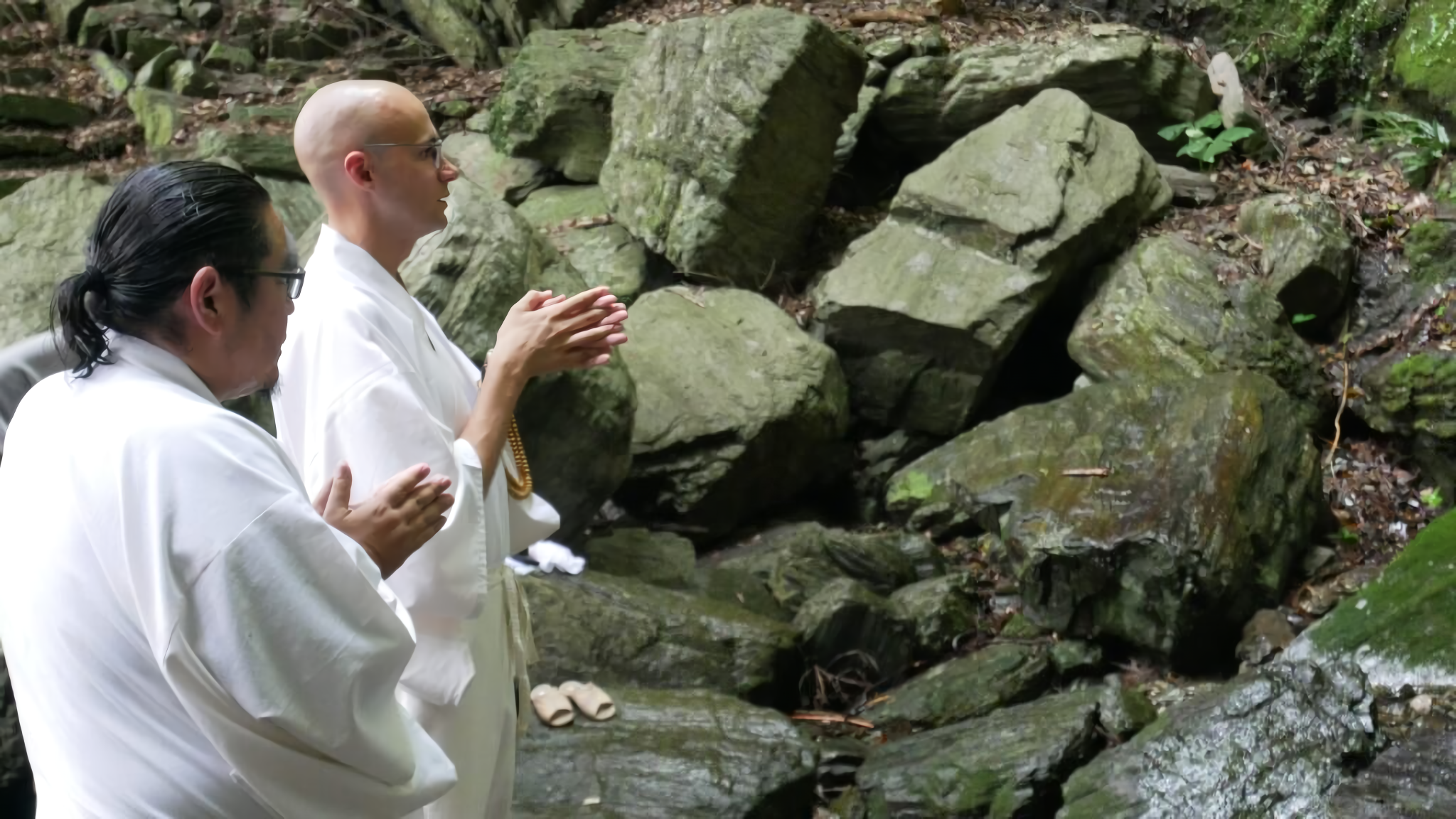
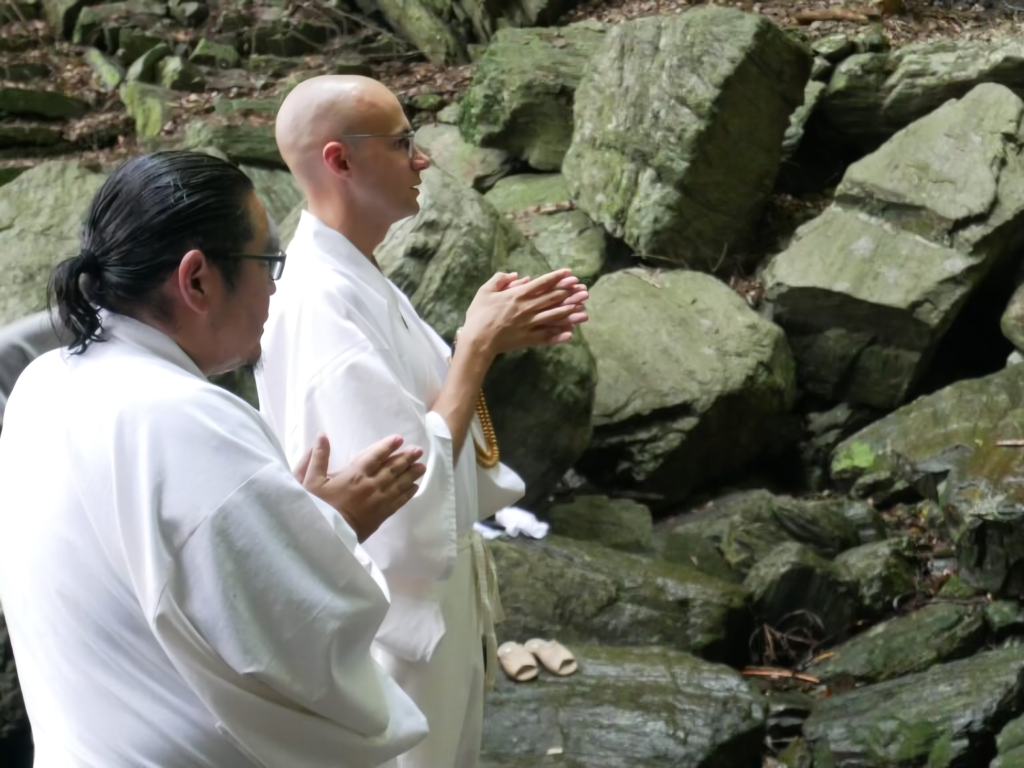
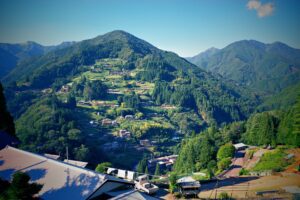
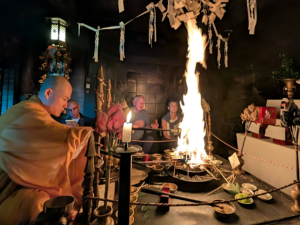
Shikoku, with 70 to 80 percent of its surface covered in steep mountains and surrounded by sea, has long attracted practitioners and pilgrims seeking to immerse themselves in nature’s power through Shugendō. Many practices associated with the tradition, including takigyō and misogi (waterfall purification), goma (fire offerings), and the ascent of sacred mountains, are open to ordinary people under the guidance of experienced specialists.
For travelers interested in encountering Shugendō in this living context, Shikoku Tours offers carefully guided access to these practices. We work with local practitioners and sacred sites to ensure experiences are approached with respect, safety, and cultural understanding. Traveling with an experienced guide allows participants to engage deeply with the mountains and rituals of Shugendō, while focusing fully on the experience itself rather than logistics or uncertainty.
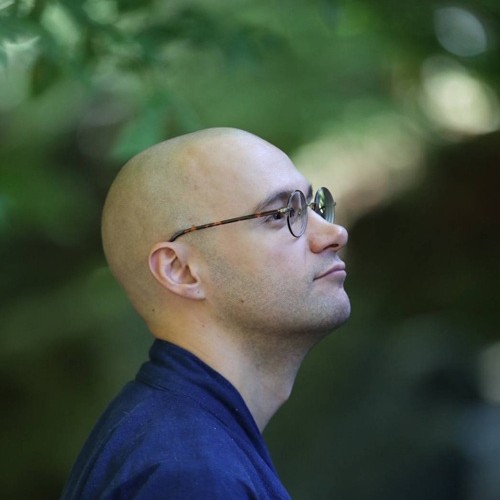
■Role:
Shikoku Travel Specialist, Tour Coordinator, and Shingon Buddhist Priest
■Experience:
10 years of lived experience in Japan, including over 6 years of in-depth study and practice in Japan’s religious traditions, particularly Buddhism, Shugendō, and Shinto.
I became a guide after experiencing firsthand how an understanding of Japan’s religious and cultural history can reveal deeper layers of meaning in even the simplest places. My aim is to help travelers connect with Shikoku not just as a destination, but as a living spiritual landscape, and to support them in discovering a more meaningful and personal journey.
■Role:
Shikoku Travel Specialist, Tour Coordinator, and Shingon Buddhist Priest
■Experience:
10 years of lived experience in Japan, including over 6 years of in-depth study and practice in Japan’s religious traditions, particularly Buddhism, Shugendō, and Shinto.
I became a guide after experiencing firsthand how an understanding of Japan’s religious and cultural history can reveal deeper layers of meaning in even the simplest places. My aim is to help travelers connect with Shikoku not just as a destination, but as a living spiritual landscape, and to support them in discovering a more meaningful and personal journey.