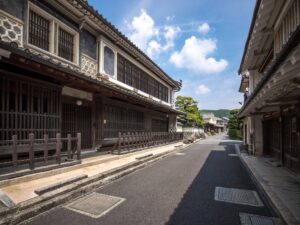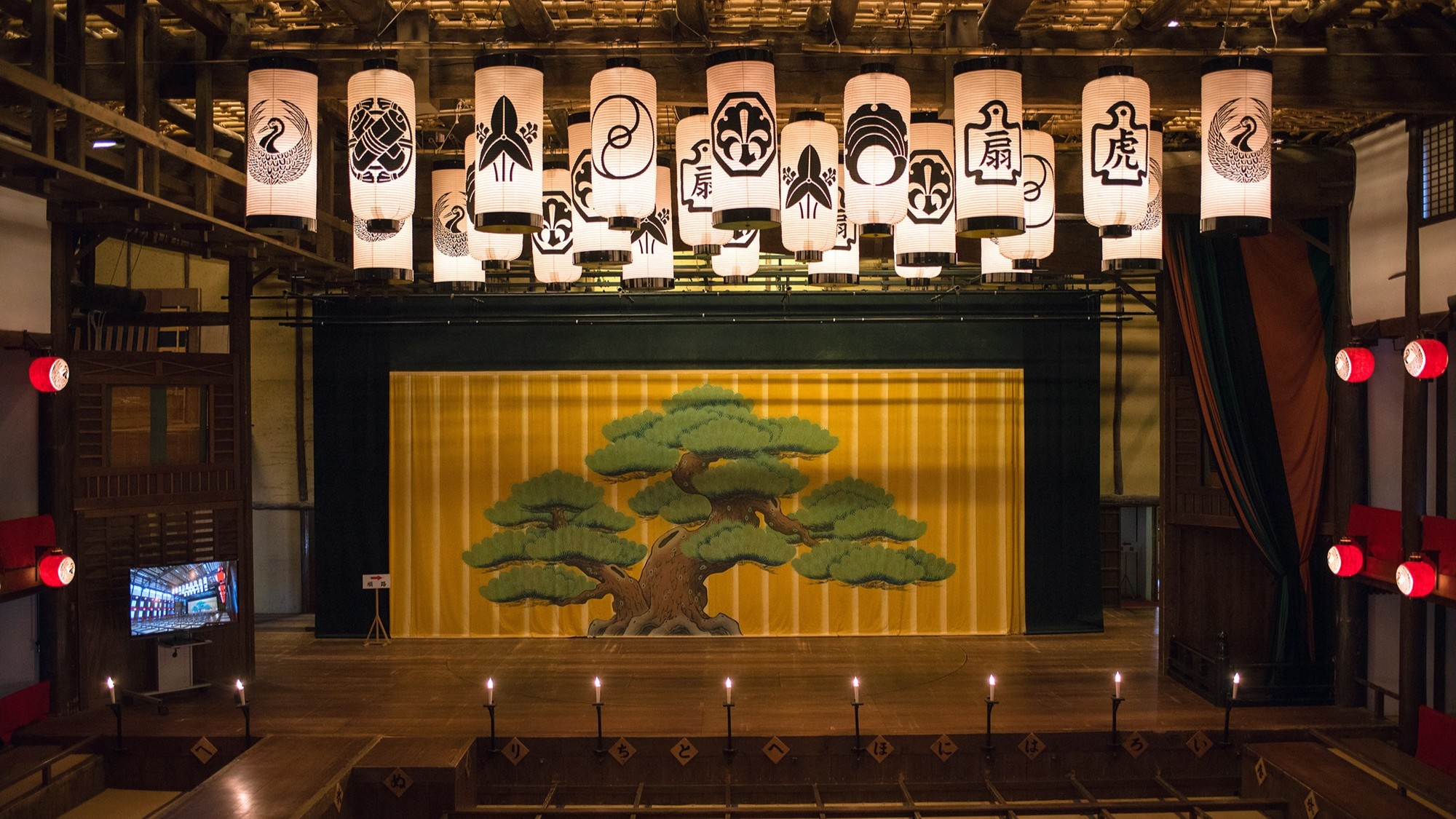
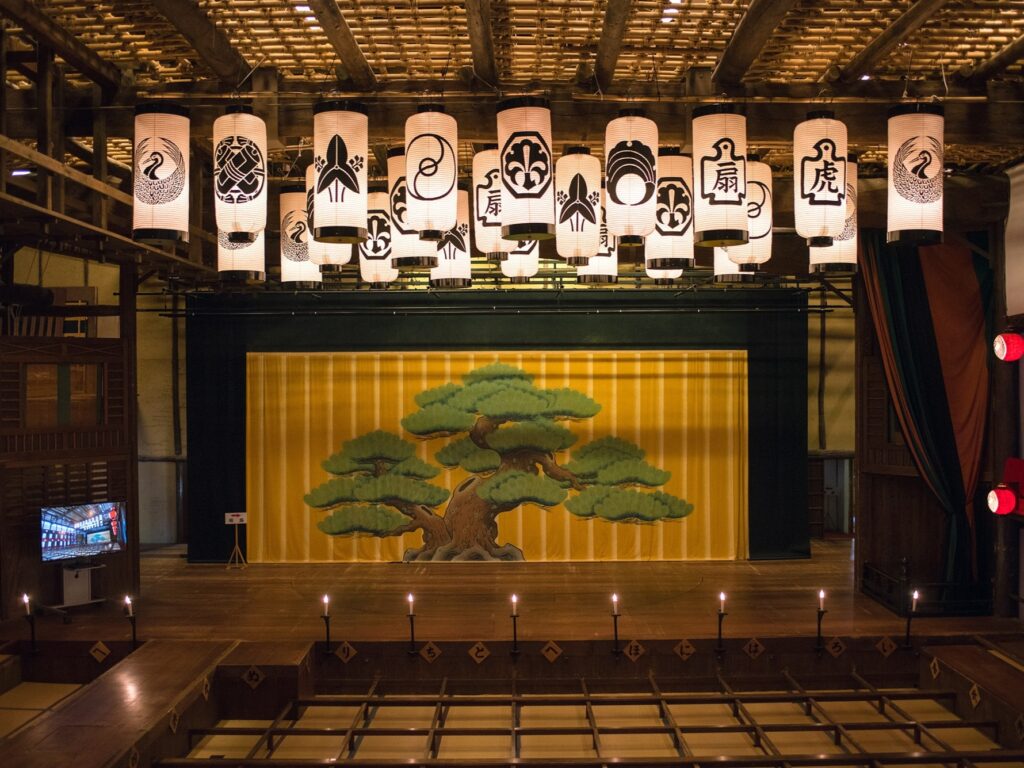
Tucked away in the mountains of Kagawa lies one of Shikoku’s most spectacular hidden gems—the Konpira Grand Theatre, Japan’s oldest standing hall for Kabuki performance. Every spring, amidst blooming sakura, performers grace the stage in a spectacle straight out of the Edo Period. Step back in time with a visit to this timeless Shikoku treasure.
Discover Japan’s Most Storied Kabuki Theatre
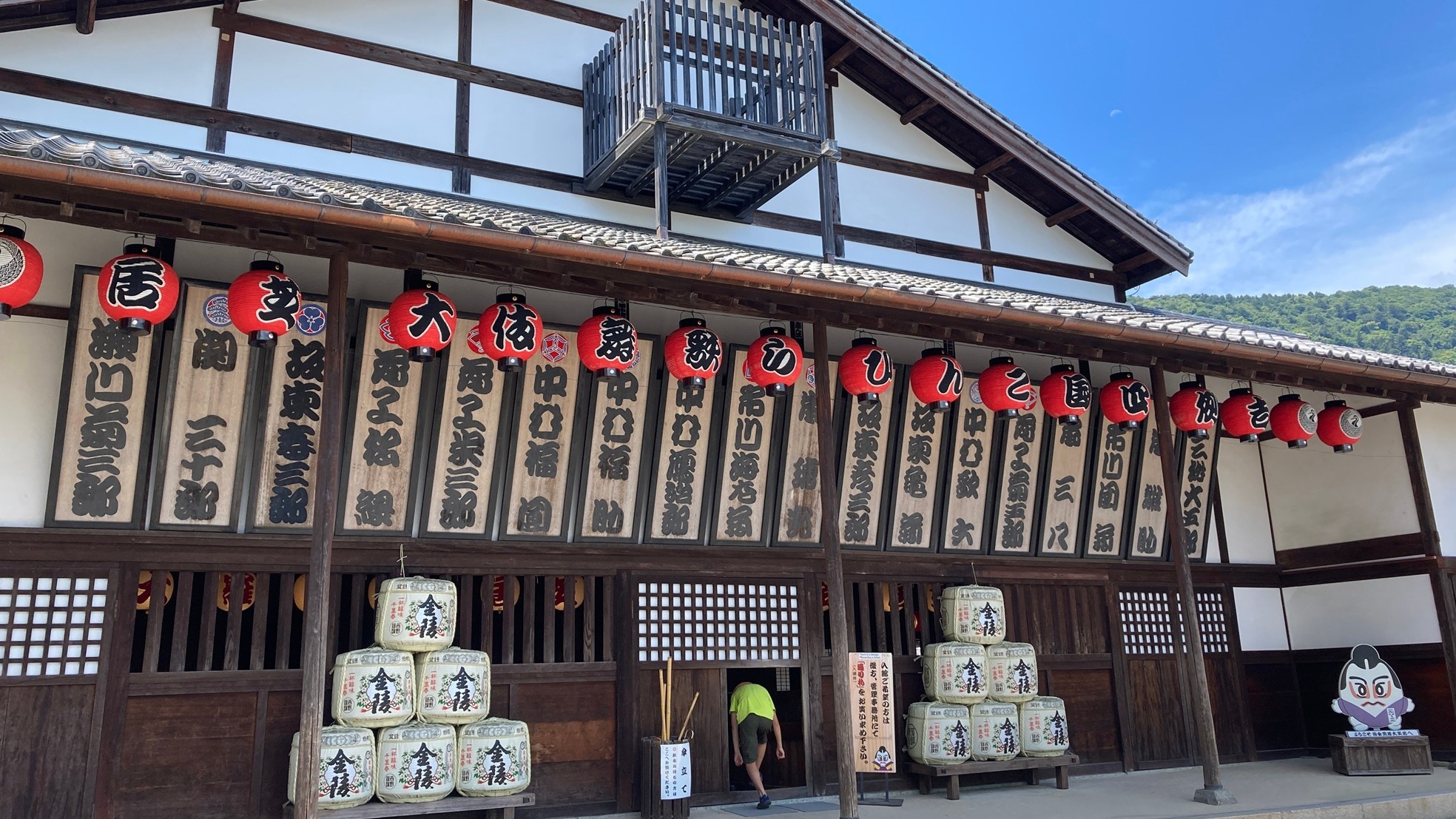
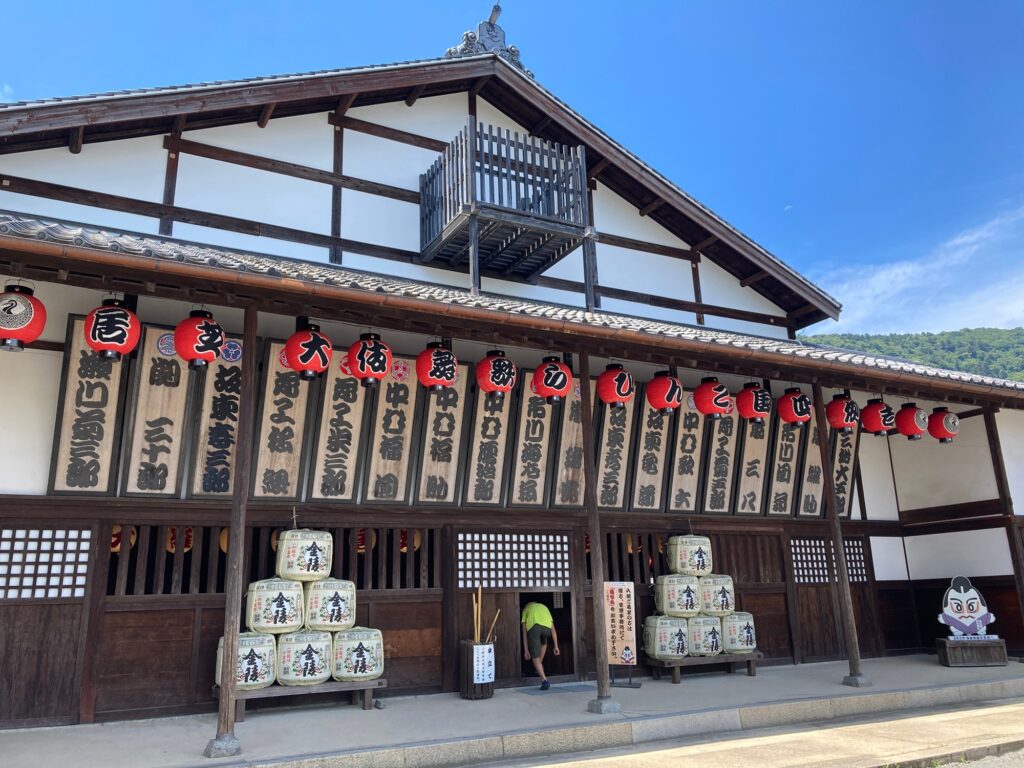
Although modern Kabuki is closely associated with Osaka, Shikoku’s pilgrimage town of Kotohira has its own deep Kabuki roots. In days when throngs of pilgrims to the sprawling Kompira Shrine visited the mountain, temporary kabuki stands were constructed to entertain travelers. Seeing a need in their community, in 1865 a group of local geisha raised 1,000 ryo, or roughly ¥120,000,000 ($747,600.72USD) to have a proper theater built. This was the Kompira Grand Theatre.
For the next 40 years, Konpira Grand Theatre enjoyed a steady stream of visitors and high-profile performers until the decline of the art from nation wide in the late 1800’s. The theatre fell into disrepair, frequently changing hands until it was bought in 1900 by local businessman Kanamaru Genjirō for just ¥4,500, roughly ¥30,000 ($200 USD) in today’s money. The theatre struggled to stay open until it the government recognized it as an Important Cultural Property in 1970. Since then, local efforts have seen the theatre restored to its former Edo-period glory.
A Spring Spectacle: Experience Edo-Era Kabuki as it Was 200 Years Ago
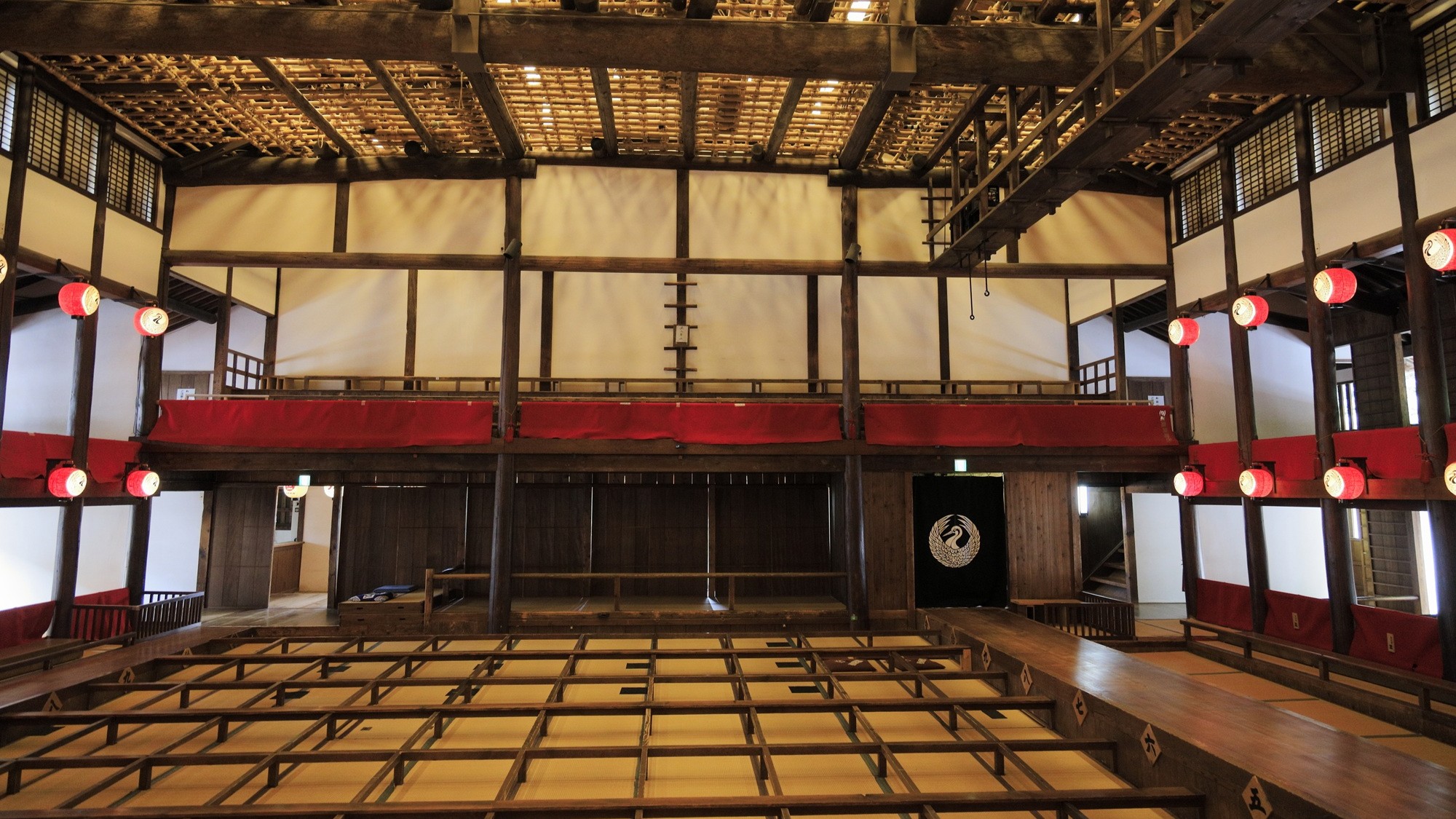
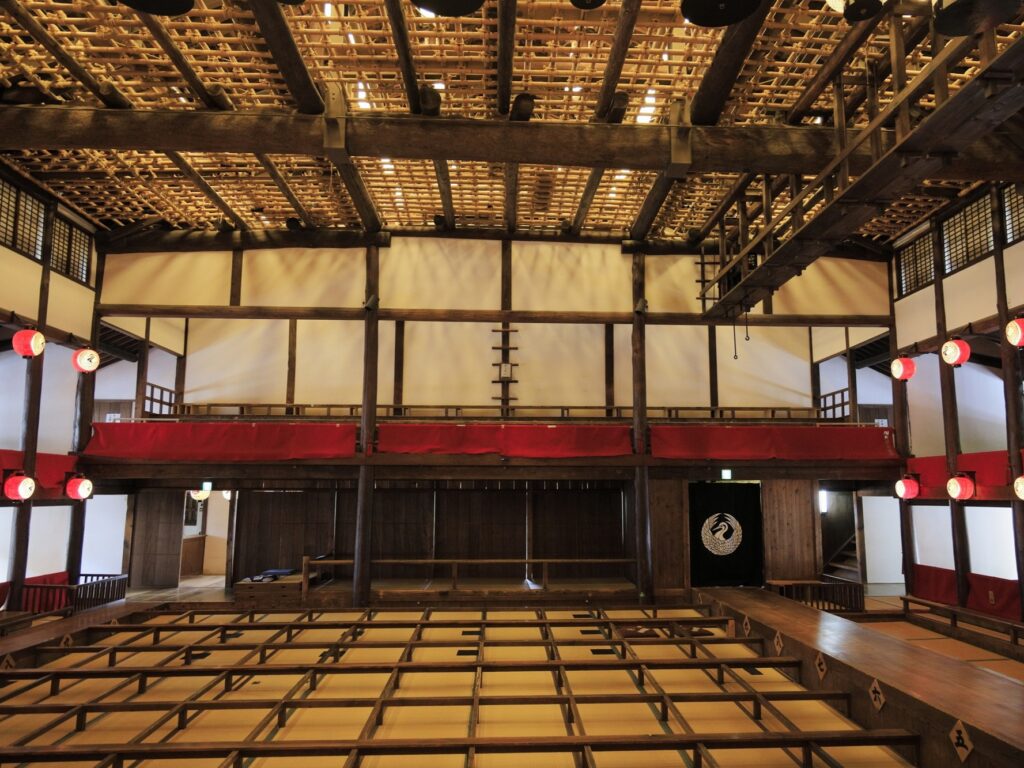
The Konpira Grand Theatre is a must-see for ayone visiting Kotohira. The theatre welcomes visitors in all months but April. Visitors can look behind the scenes at period changing rooms and the naraku, the under-stage area named after Buddhist hell for its cramped darkness. The naraku is where much of the magic of special effects takes place.
In April the theatre shuts its doors to casual visitors for a very good reason—its stage once again becomes host to Kabuki performances done exactly as they were 200 years ago. The performances, which feature well-known performers, go on for about a month, with two shows daily.
Taking in a Kabuki performance at the Konpira Grand Theatre is a truly one-of-a-kind experience only available in Kagawa. For anyone interested in Japanese performing arts, samurai culture, or traditional architecture, a visit to Konpira Grand Theatre among the cherry blossoms is an unmissable experience.
Tour including the Konpira Grand Theatre

■Role:
Shikoku Tours Social Media Manager & Historian specializing in Japanese History
■Experience:
10 years of living in Japan, specifically in the Ehime area. I also have 8 years of experience in social media content creation, specifically in the areas of niche travel and History.
Hello! I’m Tehya, a historian with a passion for social media and using it as a tool for education. My goal is to help people discover the amazing and historical places Shikoku has to offer!
■Role:
Shikoku Tours Social Media Manager & Historian specializing in Japanese History
■Experience:
10 years of living in Japan, specifically in the Ehime area. I also have 8 years of experience in social media content creation, specifically in the areas of niche travel and History.
Hello! I’m Tehya, a historian with a passion for social media and using it as a tool for education. My goal is to help people discover the amazing and historical places Shikoku has to offer!