Step back in time to Japan’s Taisho Era and explore the remarkable story of the Uchikoza Theatre in Ehime. Built in 1916 by a prosperous, arts-loving community, this historic landmark survived modernization and near-demolition. Discover how this beloved cultural heritage site continues to preserve its timeless beauty and rich artistic legacy today.
The Golden Age of Uchiko, Ehime: The Birth of a Historic Theatre
As Charlie Chaplin captivated the silver screen in the West, Rensageki and Japan’s first animated films were dazzling viewers in the many newly built theaters that had been popping up all over the nation.
Building theatres was not a cheap endeavor for cities outside of Osaka and Tokyo, but one small town in Ehime was able to build its own. Uchiko, during the Taisho Era (1912-1926), was in its golden age. Through the local production of wax and silk, the town prospered as a whole. The people of Uchiko, who have seemingly always been patrons of the arts, came together in 1916 to build the Uchikoza Theatre in celebration of the town’s prosperity and the enthronement of Emperor Taisho.
As Charlie Chaplin captivated the silver screen in the West, Rensageki and Japan’s first animated films were dazzling viewers in the many newly built theaters that had been popping up all over the nation.
Building theatres was not a cheap endeavor for cities outside of Osaka and Tokyo, but one small town in Ehime was able to build its own. Uchiko, during the Taisho Era (1912-1926), was in its golden age. Through the local production of wax and silk, the town prospered as a whole. The people of Uchiko, who have seemingly always been patrons of the arts, came together in 1916 to build the Uchikoza Theatre in celebration of the town’s prosperity and the enthronement of Emperor Taisho.
From Entertainment Hub to Cultural Heritage: The Living History of Uchikoza
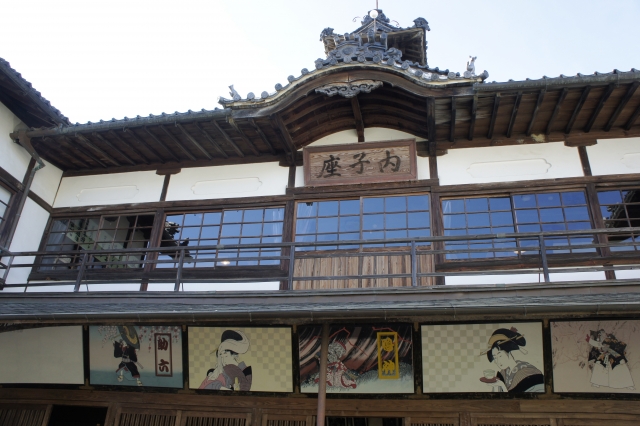
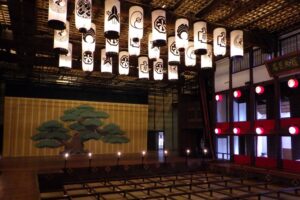
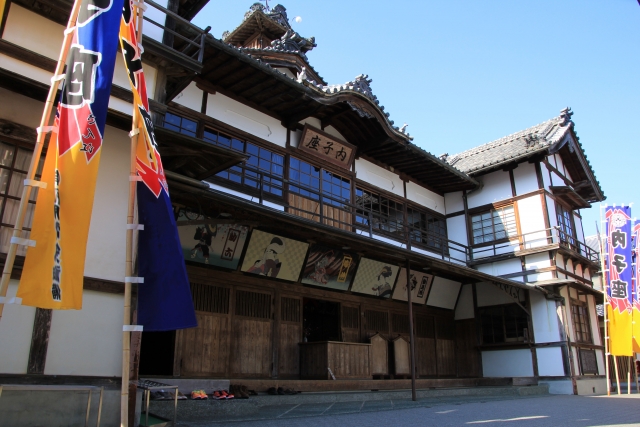
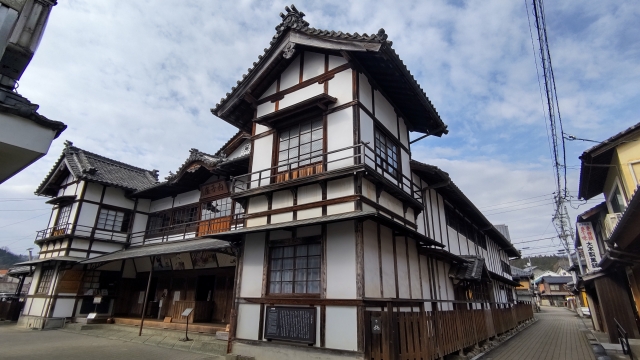
Standing two stories tall and equipped with a revolving stage, a hanamichi (runway), and box seats, plays and performances were regularly held. Later, when motion pictures grew in popularity, the theatre was equipped with a projector and converted into a movie theatre. It quickly became a hub for the arts and local people to gather and enjoy movies and entertainment together.
Unfortunately, due to a series of unfortunate events, the theatre fell into disuse and became a shadow of its former glory. It underwent reconstruction in the 1980’s, but still never regained its popularity and was scheduled to be demolished. However, the people of Uchiko came together once again and saved their beloved theatre. Now it is a Cultural Heritage Site that sometimes holds local festivals and cultural events.
It has been closed to the public since 2024, but you can still experience the beauty of the exquisitely kept Taisho Era theatre and feel the history of the place all around you.
Standing two stories tall and equipped with a revolving stage, a hanamichi (runway), and box seats, plays and performances were regularly held. Later, when motion pictures grew in popularity, the theatre was equipped with a projector and converted into a movie theatre. It quickly became a hub for the arts and local people to gather and enjoy movies and entertainment together.
Unfortunately, due to a series of unfortunate events, the theatre fell into disuse and became a shadow of its former glory. It underwent reconstruction in the 1980’s, but still never regained its popularity and was scheduled to be demolished. However, the people of Uchiko came together once again and saved their beloved theatre. Now it is a Cultural Heritage Site that sometimes holds local festivals and cultural events.
It has been closed to the public since 2024, but you can still experience the beauty of the exquisitely kept Taisho Era theatre and feel the history of the place all around you.