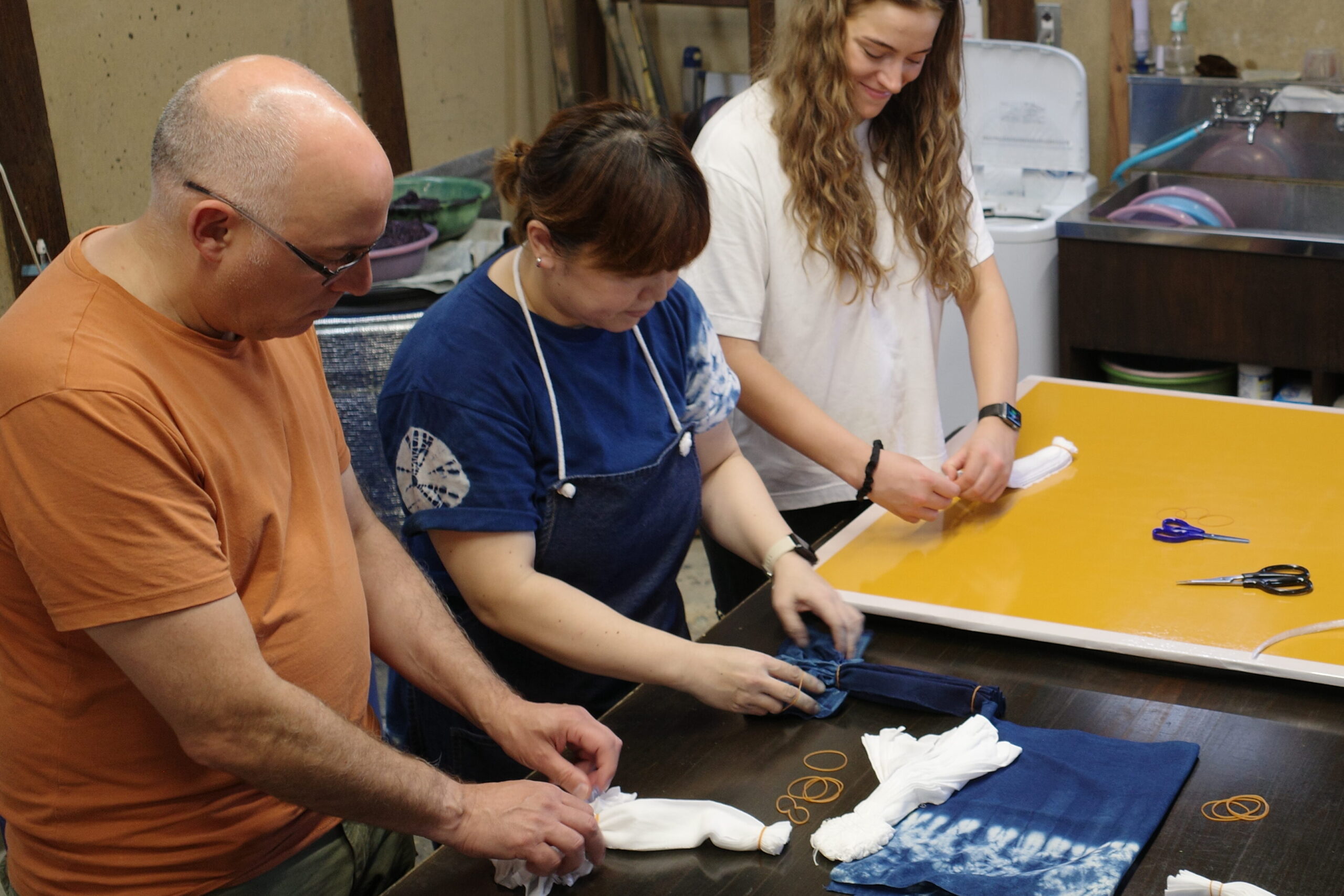
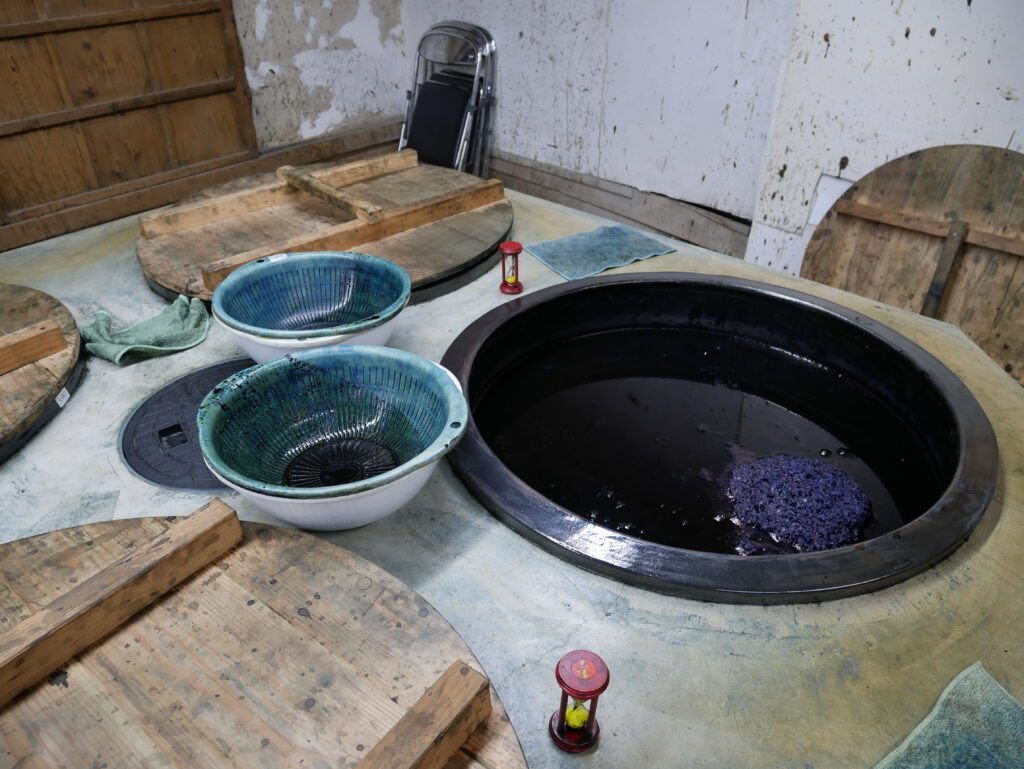
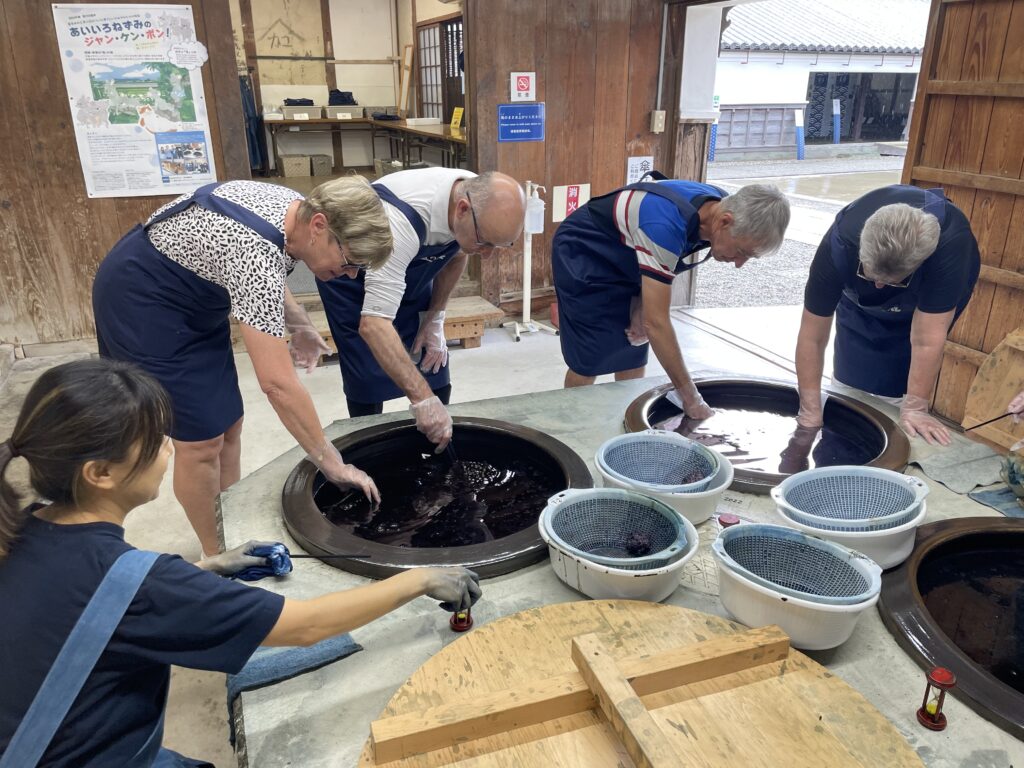
Walking into Yamauchi Indigo Workshop, the first thing most people notice is the smell. The distinct aroma of ammonia wafts up from vats of purplish, iridescent liquid. It’s a by-product of the complex mix of fermenting ingredients that lead to the vibrant indigo known as “Japan Blue.”
“I’ve come to love the smell,” says Ms. Yamauchi, one of the staff members at the workshop. Her cuticles and fingernails are all tinged navy blue, the mark of long days with her hands in the vats.
It was this unmistakable scent that helped make Tokushima, formerly called Awa, one of the richest regions in Japan during the Edo Period. And in Wakimachi, renowned for its historical streetscape of indigo merchant houses, Japan Blue is still its heart and soul.
Join us for a dive into the history of Awa’s love affair with indigo, a living tradition with Japan’s distinctive approach to craftsmanship at its heart.
What is Indigo?
Indigo, or ai (藍) in Japanese, usually refers to the plant Persicaria tinctoria. This member of the knotweed family grows to about a meter in height and has waxy green leaves. In other words, it would be easy to overlook as just another weed growing along the riverbanks of East Asia.
Yet when its leaves begin to dry, they develop a distinctive blue tint. It was likely this transformation that inspired people in China to use the plant as a dye over 3,000 years ago. But the plant’s beautiful blue hides a unique challenge. The blue indigo pigment itself does not dissolve in water. That means it’s impossible to dye cloth with the raw pigment alone.
From Plant to Dye: the Fermentation Process
Traditional indigo artisans overcame this obstacle by fermenting the dried leaves. This creates a living dye in which naturally occurring microorganisms convert the indigo into a form that can penetrate fabric. When the dye reacts with air, oxidization turns the fabric from green to deep indigo blue.
Ancient peoples must have discovered this process through trial and error. Both the indigo plant and dyeing techniques were introduced from China to Japan around the 6th century. They would eventually give rise to the celebrated tradition of Awa Indigo.
Samurai Vanity and the Edo Indigo Boom
Indigo was a hit from the moment it was introduced to Japan. However, the plant is picky about where it grows and the fermentation process is time and labor intensive. It was thus reserved for special occasions for almost a thousand years. For example, scribes inscribed kon-shi (“dark blue paper”) scrolls with sumptuous hand-copied Buddhist sutras in gold or silver ink.
That all changed in the Edo Period, Japan’s era of stability under the iron-fisted rule of the Tokugawa Shōguns, who made Edo (now Tōkyō), their administrative capital. The centuries before the Edo Period were the heyday of the samurai, Japan’s warrior class. Frequent wars meant soldiers were in high demand. Samurai wealth was determined by the amount of rice produced on land they controlled. Rice was the basis of the economy, and the destruction of constant war meant it was always in high demand.
When the fighting settled in the early 17th century, the economy changed dramatically. The samurai class’s fixed income, paid in rice, soon paled in comparison to the wealth generated by merchants in growing towns.
But the Tokugawas and their samurai allies still ran the country, and they didn’t allow any ambiguity about that. They thus made many laws that limited how non-samurai could show their wealth. That included a law restricting clothing colors to muted earth-tones.
Of the allowed colors, indigo was the brightest and most attractive. Combined with ingenious dyeing techniques that used tie-dyeing, wax, and rice paper, craftspeople found ways of dancing between these restrictions. The patterns they produced resulted in clothing just as spectacular and flashy as that reserved for the samurai.
And with this new indigo boom came Awa’s time to shine.
Awa: Japan’s Indigo Powerhouse
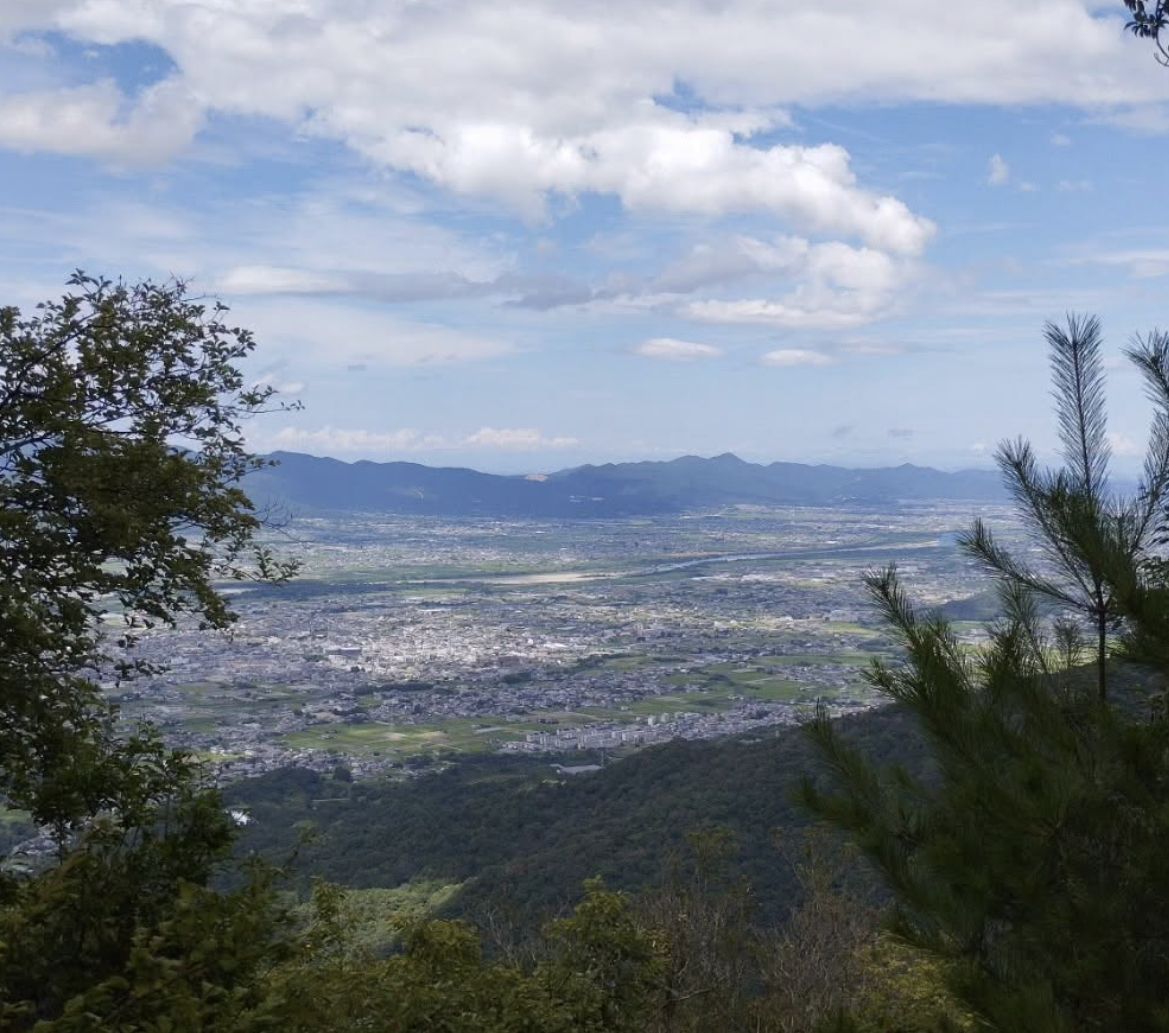
The mighty Yoshino River splits Tokushima, Shikoku’s easternmost prefecture. Fed by rivers from all four of the island’s regions, the Yoshino regularly caused destructive floods before embankments were built in the 20th century. As you can imagine, such an unpredictable river made a poor neighbor for medieval rice farmers, who often had their crops destroyed. Cycling or walking through the region, you’ll notice many statues of the Buddha Jizō set on high pedestals. Locals erected these taka-jizō or “tall Jizō” as floodline markers after particularly damaging inundations, both to pray for the souls of the dead and to remind subsequent generations just how dangerous the river could be.
But with the river’s risks came great rewards. The Yoshino’s yearly floods reliably carried mineral-rich silt into surrounding farmland, making it perfectly suited for growing nutrient-intensive indigo year after year. Seeing an opportunity in the Edo indigo boom, the lord of the region, Hachisuka Iemasa, began pouring resources into the Awa indigo industry. His investment paid off—within fifty years, Awa completely dominated the market, and continued to do so until the 1900s.
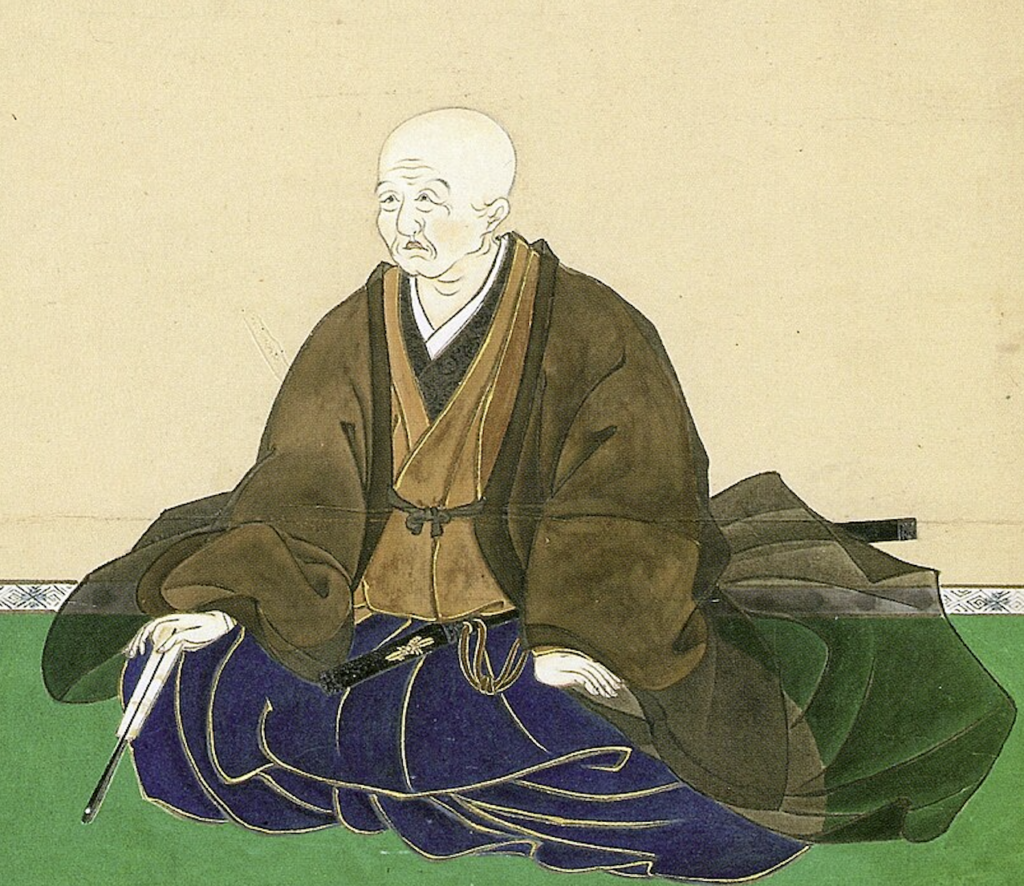
At its peak, indigo fields covered 15,000 hectares of farmland in modern-day Tokushima. After harvesting, producers dried and fermented the plant in a year-long process. The end result is sukumo, dried indigo mash that looks like caked dirt. Merchants then packaged the sukumo in straw sacks and floated it down the Yoshino toward Tokushima city on flat-bottomed boats. The sacks were loaded onto seafaring vessels and shipped off to Okayama, Edo, or Ōsaka. Craftspeople then brought the sukumo back to life in a concoction of rice bran, lye, potash, and sake. It was then up to the craftsmen to dye it in patterns that suited their clientele.
Wakimachi’s Udatsu Streetscape: Samurai Rules and Merchant Opulence
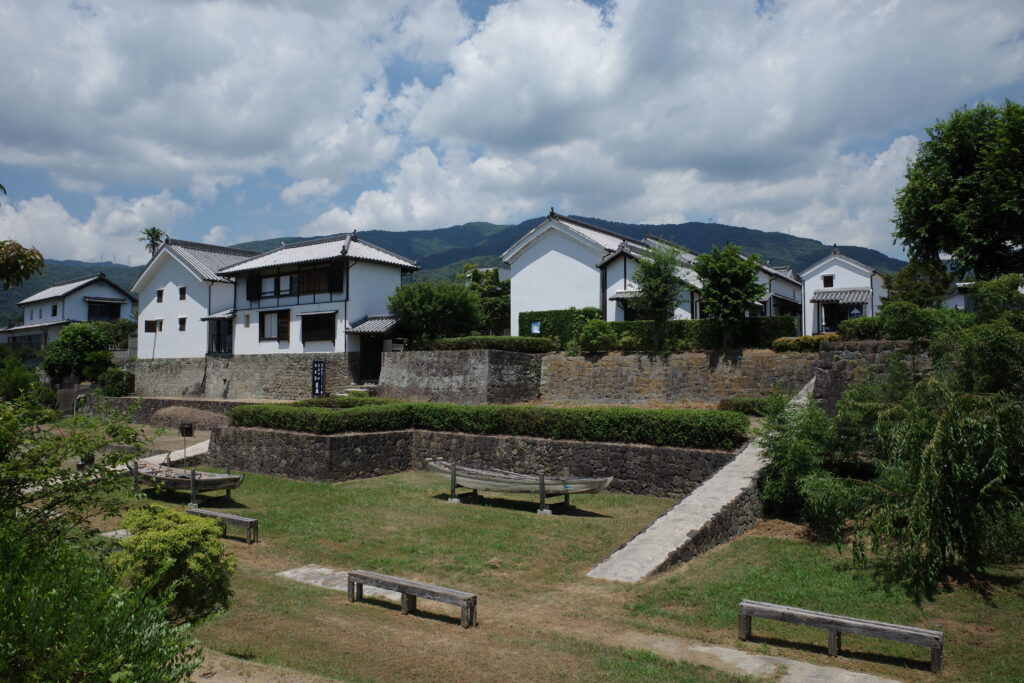
As indigo flowed out of Awa, money flowed in. Sukumo-producing towns like Wakimachi became some of Japan’s richest locales. But the same laws that governed non-samurai clothing also restricted their architecture. The law forbade merchants from building second floor rooms facing the street, as looking down on their samurai overlords could be a beheading offense.
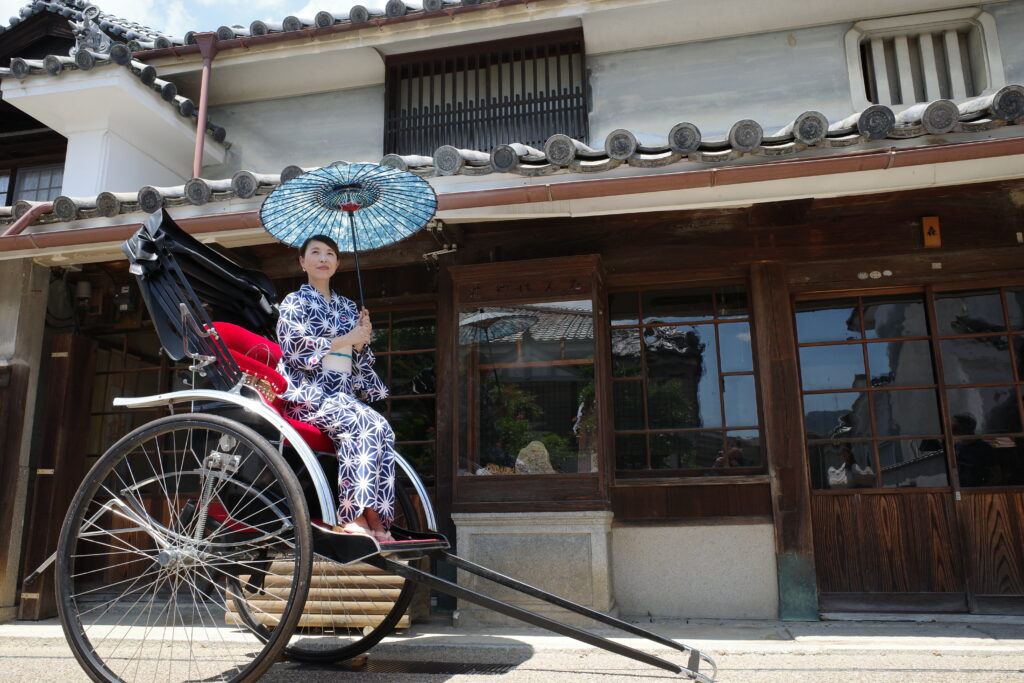
Just as they had with clothing, merchants found creative ways to flaunt their wealth within the rules. In Wakimachi, udatsu, protective barriers originally meant to keep fire from spreading between buildings, became the ultimate show of wealth. Decorative tiles adorned with protective gargoyles and family crests showed who dominated the town’s economy without drawing the ire of the samurai class.
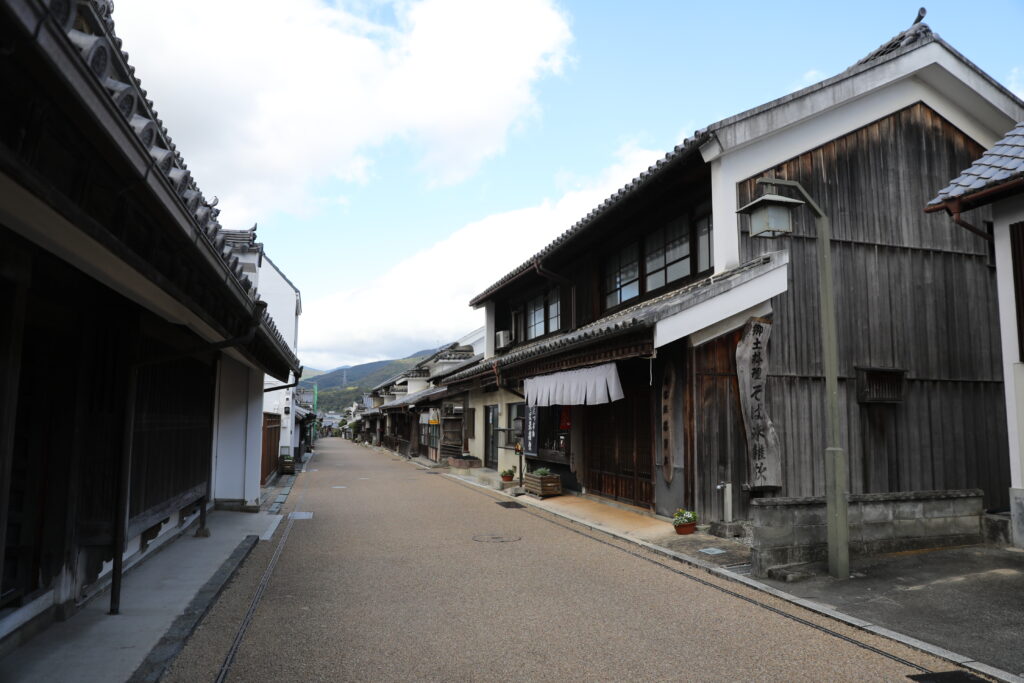
Wakimachi’s samurai-era streetscape remains incredibly well-preserved. The same families that made Wakimachi wealthy continue to live in the majority of the houses. The house of the Yoshida clan, the wealthiest merchants in Wakimachi, is now a museum open to the public. With sponsorship from the government and local businesses, its many fermentation warehouses have been converted into galleries, cafes, and indigo dyeing workshops. Yamauchi Indigo Workshop is one of these. The workshop still ferments its indigo exactly as was done in the Edo period, in locally-produced ceramic vats with all natural ingredients,
From Dye of the Masses to Heritage Craft: Awa Indigo’s Future
Awa’s indigo industry weathered Japan’s industrialization in 19th century, and continued as Japan’s main producer even after the province’s name changed to Tokushima. But at the turn of the 20th century, just as the industry was entering a new chapter combined with industrial cotton production, disaster struck. Two Swiss chemists named Pfliger and Heumann accidentally discovered a formula for synthetic indigo. Cheap, fast, their methods spread like wildfire and toppled the natural indigo industry worldwide, including in Tokushima. Modern bluejeans are still dyed with the techniques they developed in Zurich.
Tokushima’s indigo fields soon disappeared, which meant farmers clamored for dykes to control the Yoshino River’s destructive floods. Ironically, engineers studied watermarks on the buildings of Wakimachi to determine how high to build the embankments that now run alongside the river.
As such, the indigo industry in Tokushima has transitioned from mass production to a dual approach. On the one hand, new generations of craftspeople constantly use traditional techniques to dye products that suit modern tastes. Shops in Tokushima now sell indigo-dyed scarves, t-shirts, dresses, and decorations created with the same level of artistry and care that has defined Japanese textiles for centuries. Since plant-derived indigo contains compounds besides blue, natural-dyed products often have a richer, more vibrant hue than their synthetic counterparts. That combined with their status as an authentic, traditional, organic product makes indigo-dyed products an easy sell for the health- and environmentally-conscious.
The other approach is tourism. At Yamauchi Workshop, the Ai no Yakata Indigo Museum, and other working indigo facilities, craftspeople guide visitors through the process of dyeing their own items. This gives travelers a chance to get hands-on with the rich history of indigo in Tokushima, and take home a one-of-a-kind memento of their trip to Shikoku.
Ai and Ai: A Love For Indigo
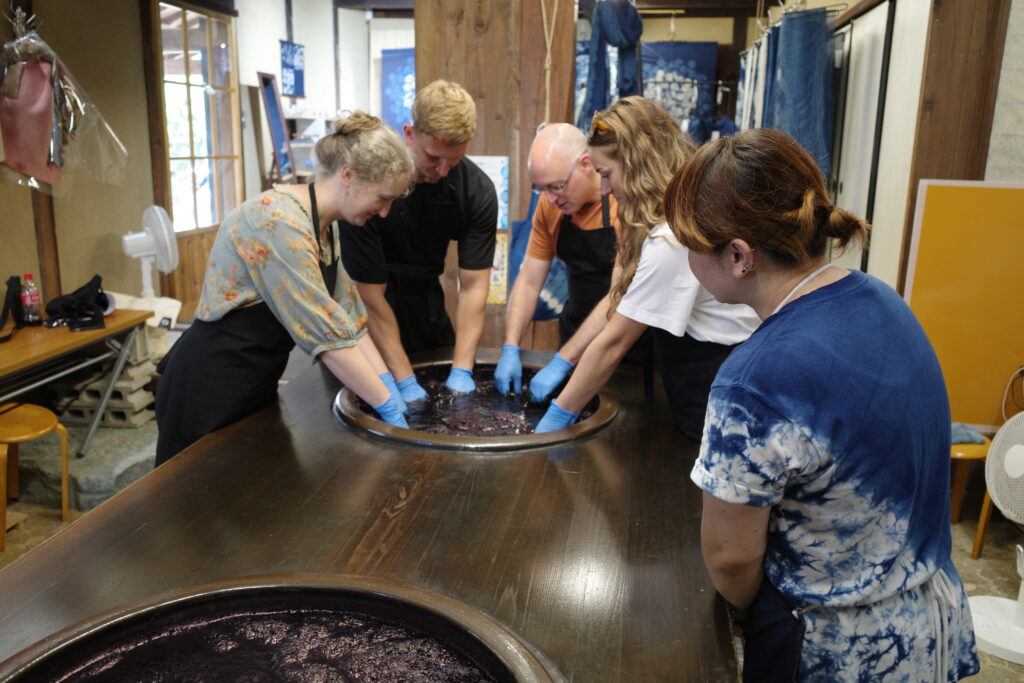
But beyond the act of dyeing itself, a visit to Tokushima’s indigo workshops gives visitors a chance to see the level of care, experience, and attention that defines Japanese craft culture.
As she guides participants into the workshop, she says, “Let’s use this vat. It’s in a good mood today.” The quality of the dye varies depending on the temperature, humidity, season, and stage in an indigo batch’s lifestyle. A trained craftsperson can spot a weak vat just by looking at the iridescent foam that gathers on top. And depending on the same factors, the amount of time an item is soaked, and how many repetitions it needs, might vary too.
While visitors might get the idea that indigo is easy from the consistently amazing products that come out at the end, nothing could be further from the truth. The dyeing is the easy part—it takes a real pro to do the nurturing, reading, and adjusting that ends in Awa Indigo.
In Japanese, the word for indigo, ai, is also the word for love. Visiting Tokushima’s workshops and talking to the craftspeople that steward the tradition of indigo in them, you get a sense that this isn’t an accident. Most people are in it out of a true love for their craft, as well as the history and culture that makes Awa Ai so unique.
Planning Your Indigo Adventure
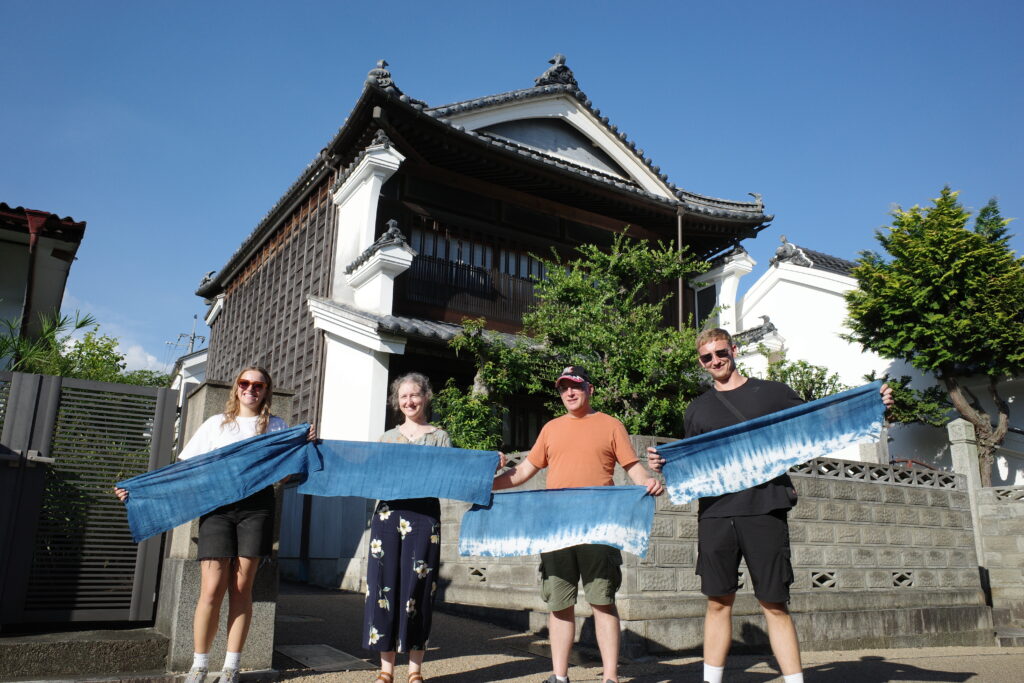
Experiencing Tokushima’s iconic indigo heritage should be on anyone’s list when they visit Shikoku. Whether you choose to create your own indigo-dyed keepsake or simply wander Wakimachi’s historic streets, Tokushima offers a rare opportunity to experience a craft that has shaped the region for centuries. For travelers hoping to explore Shikoku beyond its famous pilgrimage and hot springs, Awa Indigo provides one of the island’s richest windows into Japan’s history, artistry, and enduring spirit of craftsmanship. Shikoku Tours can help plan your experience of the island’s craft heritage, through indigo and beyond.

■Role:
Shikoku Travel Specialist, Tour Coordinator, and Shingon Buddhist Priest
■Experience:
10 years of lived experience in Japan, including over 6 years of in-depth study and practice in Japan’s religious traditions, particularly Buddhism, Shugendō, and Shinto.
I became a guide after experiencing firsthand how an understanding of Japan’s religious and cultural history can reveal deeper layers of meaning in even the simplest places. My aim is to help travelers connect with Shikoku not just as a destination, but as a living spiritual landscape, and to support them in discovering a more meaningful and personal journey.
■Role:
Shikoku Travel Specialist, Tour Coordinator, and Shingon Buddhist Priest
■Experience:
10 years of lived experience in Japan, including over 6 years of in-depth study and practice in Japan’s religious traditions, particularly Buddhism, Shugendō, and Shinto.
I became a guide after experiencing firsthand how an understanding of Japan’s religious and cultural history can reveal deeper layers of meaning in even the simplest places. My aim is to help travelers connect with Shikoku not just as a destination, but as a living spiritual landscape, and to support them in discovering a more meaningful and personal journey.