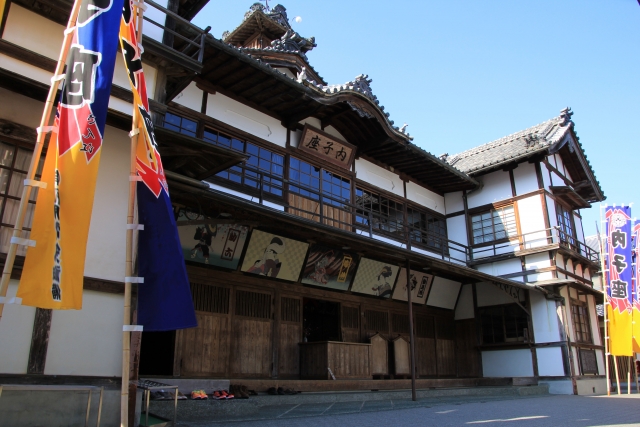
Step back in time to Japan’s Taisho Era and explore the remarkable story of the Uchikoza Theatre in Uchiko, Ehime. Built in 1916 by a prosperous, arts-loving community, this historic landmark survived modernization and near-demolition. Discover how this beloved cultural heritage site continues to preserve its timeless beauty and rich artistic legacy today.
The Golden Age of Uchiko, Ehime: The Birth of Uchikoza Theatre
As Charlie Chaplin captivated the silver screen in the West, silent films, modern dramas, and Japan’s first animated pictures were dazzling viewers in the many newly built theaters that had been popping up all over the nation.
Building theatres was not a cheap endeavor for cities outside of Osaka and Tokyo, but Ehime’s small town of Uchiko was able to defy the odds. During the Taisho Era (1912-1926), Ehime’s Uchiko was in its golden age. The town’s economy had exploded by serving the international market for silk and wax. The people of Uchiko, who have seemingly always been patrons of the arts, came together in 1916 to build the Uchikoza Theatre in celebration of the town’s prosperity and the enthronement of Emperor Taisho.
As Charlie Chaplin captivated the silver screen in the West, silent films, modern dramas, and Japan’s first animated pictures were dazzling viewers in the many newly built theaters that had been popping up all over the nation.
Building theatres was not a cheap endeavor for cities outside of Osaka and Tokyo, but Ehime’s small town of Uchiko was able to defy the odds. During the Taisho Era (1912-1926), Ehime’s Uchiko was in its golden age. The town’s economy had exploded by serving the international market for silk and wax. The people of Uchiko, who have seemingly always been patrons of the arts, came together in 1916 to build the Uchikoza Theatre in celebration of the town’s prosperity and the enthronement of Emperor Taisho.
From Entertainment Hub to Cultural Heritage: The Living History of Uchikoza Theatre
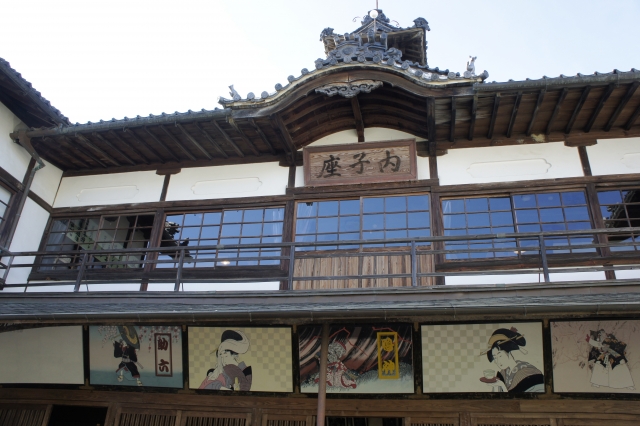
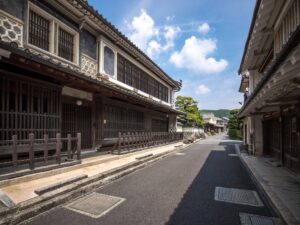
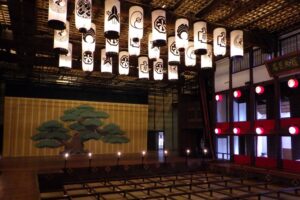
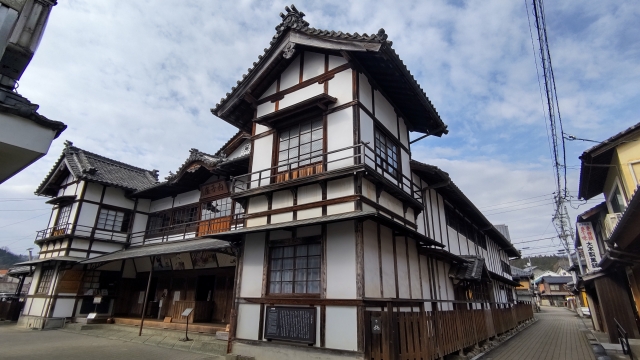
The Taisho Era saw the flowering of a unique blend of Japanese culture and Western styles, and this transition point is embodied in the Uchikoza Theatre. It was built to match Uchiko’s stately traditional streetscape, and at two stories tall it served as a monument of the town’s wealth. Its facilities were state-of-the-art; it features a revolving stage, a Kabuki-style hanamichi (runway), and box seats. Live plays graced its stage in the first period of its operation. Later, when motion pictures grew in popularity, the theatre was equipped with a projector and converted into a movie theatre. It quickly became a hub for the arts where locals could gather to enjoy entertainment.
Unfortunately, Uchiko’s economy began a slow decline alongside when paraffin began to replace vegetable wax in the late 1920s. The theatre, once a symbol of the thriving town, instead became a physical embodiment of its fading glory. The theatre gradually fell into disrepair. In spite of renovations in the 1980s, it never regained its past popularity and was scheduled for demolition. However, the people of Uchiko came together once again and saved their beloved theatre. Now it is a Cultural Heritage Site that sometimes holds local festivals and cultural events.
The theatre has been closed for earthquake proving since 2024, and will reopen around spring 2029. A stroll past the incredible building, however, remains a must-stop spot while exploring the streetscape of Uchiko.
The Taisho Era saw the flowering of a unique blend of Japanese culture and Western styles, and this transition point is embodied in the Uchikoza Theatre. It was built to match Uchiko’s stately traditional streetscape, and at two stories tall it served as a monument of the town’s wealth. Its facilities were state-of-the-art; it features a revolving stage, a Kabuki-style hanamichi (runway), and box seats. Live plays graced its stage in the first period of its operation. Later, when motion pictures grew in popularity, the theatre was equipped with a projector and converted into a movie theatre. It quickly became a hub for the arts where locals could gather to enjoy entertainment.
Unfortunately, Uchiko’s economy began a slow decline alongside when paraffin began to replace vegetable wax in the late 1920s. The theatre, once a symbol of the thriving town, instead became a physical embodiment of its fading glory. The theatre gradually fell into disrepair. In spite of renovations in the 1980s, it never regained its past popularity and was scheduled for demolition. However, the people of Uchiko came together once again and saved their beloved theatre. Now it is a Cultural Heritage Site that sometimes holds local festivals and cultural events.
The theatre has been closed for earthquake proving since 2024, and will reopen around spring 2029. A stroll past the incredible building, however, remains a must-stop spot while exploring the streetscape of Uchiko. Contact us for help planning the perfect journey through Shikoku’s craft, culture, and artistic heritage.

■Role:
Shikoku Tours Social Media Manager & Historian specializing in Japanese History
■Experience:
10 years of living in Japan, specifically in the Ehime area. I also have 8 years of experience in social media content creation, specifically in the areas of niche travel and History.
Hello! I’m Tehya, a historian with a passion for social media and using it as a tool for education. My goal is to help people discover the amazing and historical places Shikoku has to offer!
■Role:
Shikoku Tours Social Media Manager & Historian specializing in Japanese History
■Experience:
10 years of living in Japan, specifically in the Ehime area. I also have 8 years of experience in social media content creation, specifically in the areas of niche travel and History.
Hello! I’m Tehya, a historian with a passion for social media and using it as a tool for education. My goal is to help people discover the amazing and historical places Shikoku has to offer!