Day 1|August 16
Our guests had arrived the evening before and spent their first night in Hiroshima. In the morning we set out by private car for Onomichi and climbed to Senkoji, the temple on the hillside above the town, for a view over the channel and the first of the bridges. We then crossed onto the Shimanami Kaido, the chain of bridges that steps from island to island across the Seto Inland Sea. On Innoshima they visited Suigun Castle, a museum of the Murakami — the sea lords who once controlled these straits — and on Omishima, Oyamazumi Shrine, whose treasure hall holds one of Japan’s foremost collections of historic arms and armour. The night was spent at WAKKA on Omishima.
Day 2|August 17
A day among the islands. Our guests began at the Kirosan Observatory on Oshima — a lookout built into the hilltop by architect Kengo Kuma — then went out by boat beneath the Kurushima Kaikyo Bridge to see the tidal currents that run through the strait at up to ten knots. In the afternoon they visited the Murakami Kaizoku Museum, which sets out the history of the sea lords whose fleets once policed these waters, and stopped at the Yoshiumi Iki-iki-kan roadside station. A second night at WAKKA.
Day 3|August 18
Leaving the islands for the mainland, our guests climbed to the keep of Matsuyama Castle, one of only twelve original keeps still standing in Japan, set on a hill in the middle of the city. The afternoon was spent in Dogo — the glass museum, with its collection of Meiji-era giyaman ware, and the covered shopping street that runs up to the bathhouse. Dogo Onsen is among the oldest hot springs in Japan, named in records more than a thousand years old. The night was spent at Dogo Miyu.
Day 4|August 19
A day given to the Shikoku pilgrimage, with the route left open to how our guests felt on the morning. Among the temples visited were Yokomineji, the 60th, which stands at 750 metres on the slopes of Mount Ishizuchi and is counted among the hardest of the eighty-eight to reach; Senyuji, the 58th, on a ridge above Imabari; Taisanji, the 52nd, whose main hall dates from 1305; and Ishiteji, the 51st, close to Dogo and busy with pilgrims all year. A second night at Dogo Miyu.
Day 5|August 20
We drove to Uchiko and walked its preserved street of merchant houses, built on the fortune of Japan wax. Our guests visited the Kamihaga Residence, the house and workshop of one of the wax-producing families, where the sheds in which the wax was bleached still stand, and the Museum of Commercial and Domestic Life nearby, which recreates a merchant’s household of a century ago. The night was spent in the castle town of Ozu.
Day 6|August 21
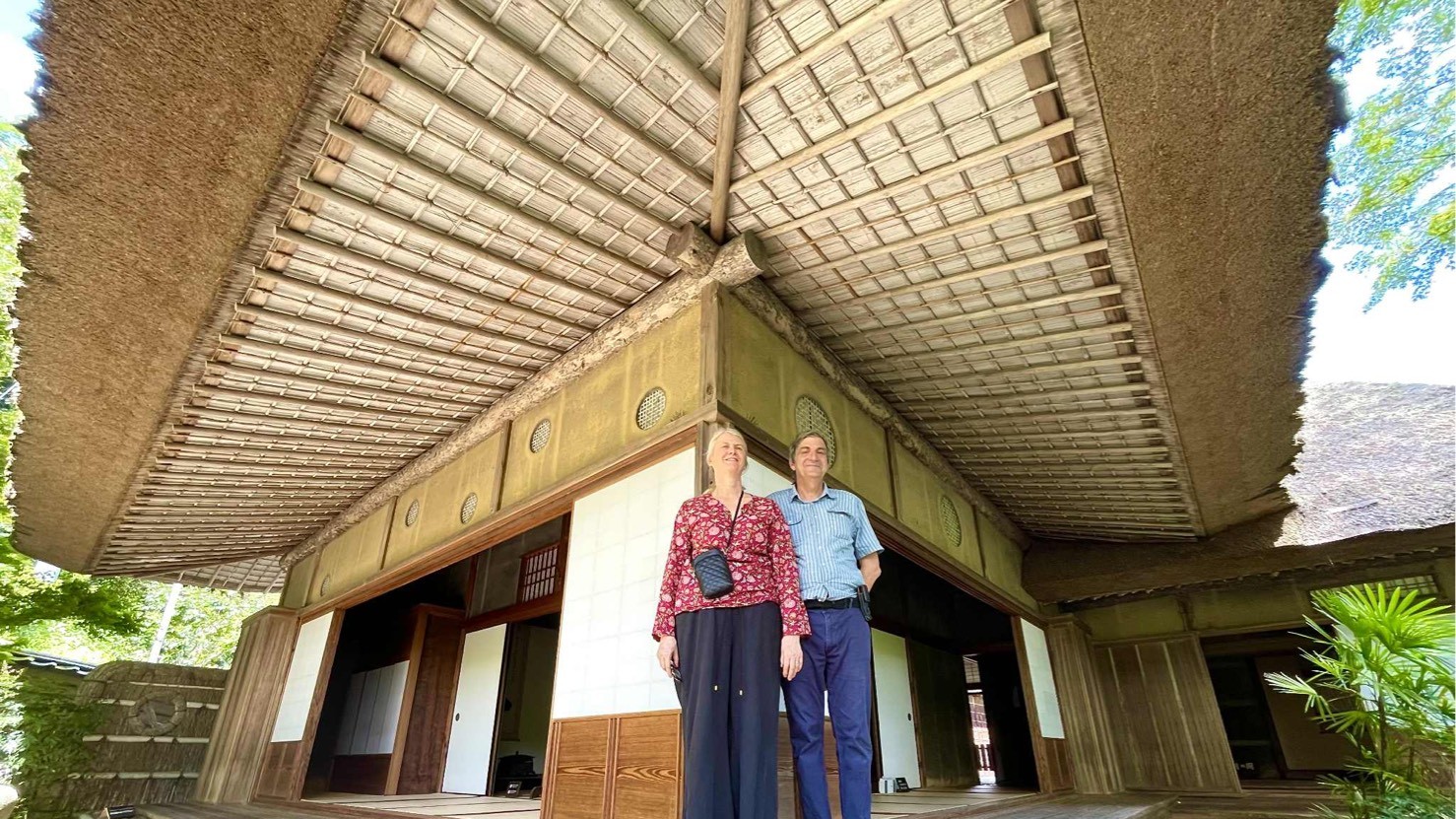
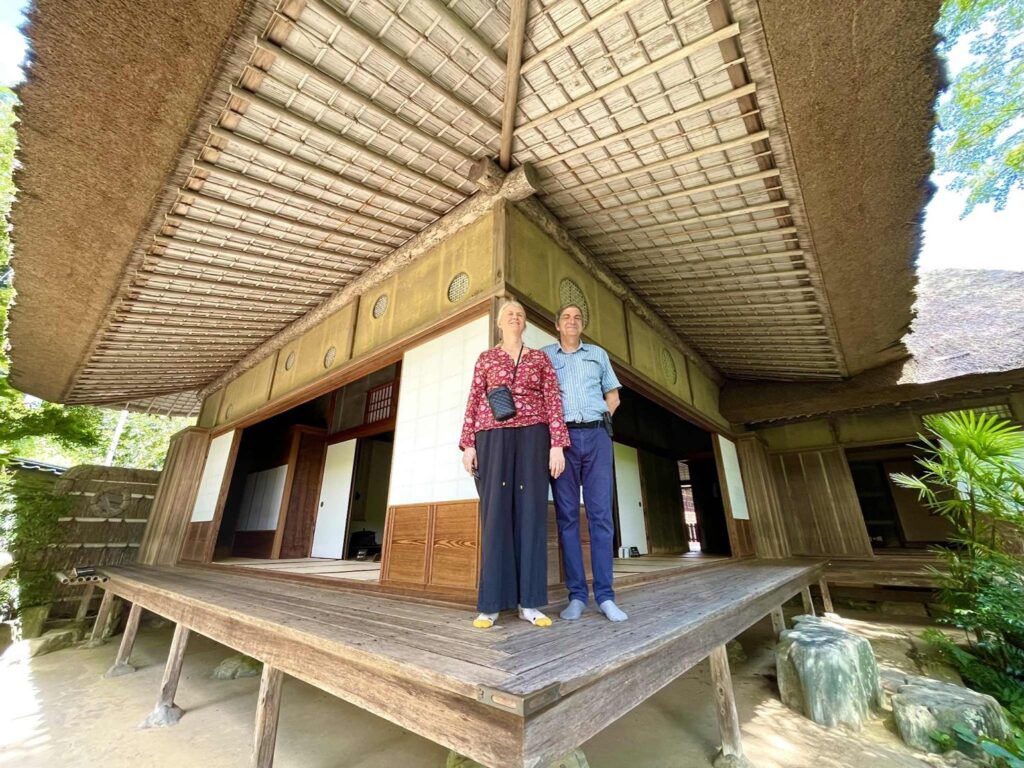
The morning began at Garyu Sanso in Ozu, a villa built over three years by craftsmen brought from Kyoto, set on a bluff above the Hiji River — the sukiya style at its most exacting, down to the choice of each timber. We then continued to Seiyo City and the Ehime Prefectural Museum of History and Culture, which traces the province’s past from its earliest settlements. The long drive south followed, crossin
Day 7|August 22
A day on the Pacific coast, within the Ashizuri-Uwakai National Park. Our guests went out to Cape Ashizuri, the southernmost point of Shikoku, where the cliffs drop eighty metres to the sea, and visited Kongofukuji, the 38th temple of the pilgrimage, standing just behind the cape. On the way back they stopped at Tatsukushi and Minokoshi, a stretch of coast where sandstone laid down twenty million years ago has been cut by wind and water into ridges and honeycombed rock. A second night at Shimanto no Yado.
Day 8|August 23
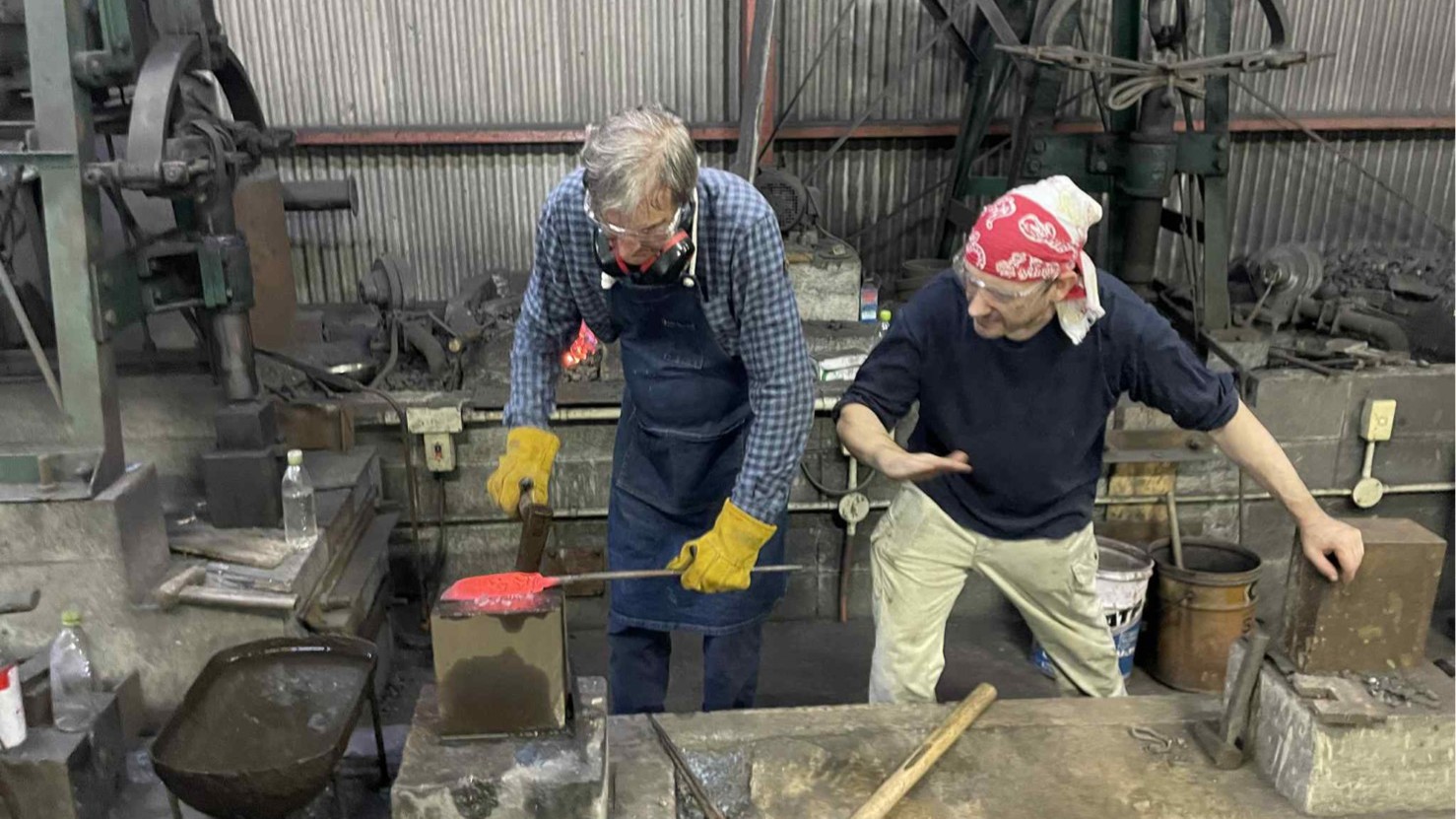
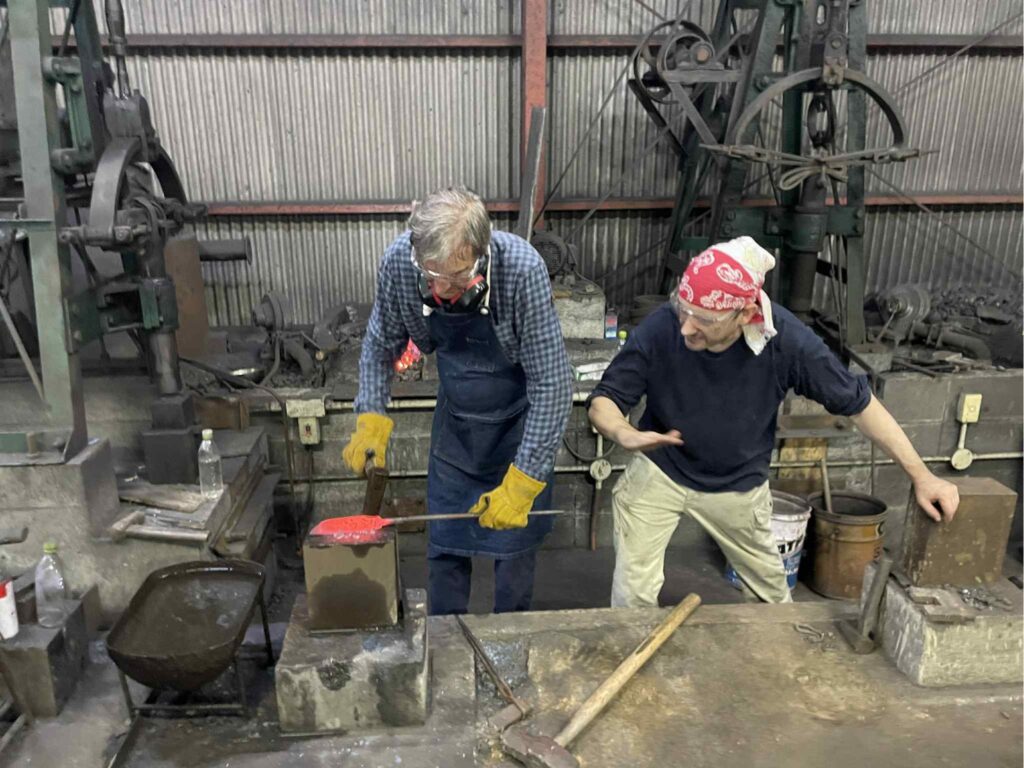
On the way north our guests visited Kobo Kurogane in Nishitosa, a workshop where iron is still smelted in a tatara furnace and forged by hand in the old way — a craft that has all but disappeared elsewhere in Japan. The road then climbed into the mountains to Yusuhara, a town of some three thousand people that has commissioned a series of buildings from the architect Kengo Kuma over thirty years. The night was spent at Marche Yusuhara, one of them, its facade hung with bundles of thatch.
Day 9|August 24
A day left open in Yusuhara. Our guests walked to the other Kuma buildings in the town — the library, with its ceiling of cedar beams fanning out overhead, and the wooden bridge museum — and went up to the Shikoku Karst, a limestone plateau running along the prefectural border at 1,400 metres, where cattle graze among white outcrops of rock. A second night at Marche Yusuhara.
Day 10|August 25
Descending to Kochi City, our guests visited Chikurinji, the 31st temple of the pilgrimage, and its garden, said to have been laid out by the monk Muso Soseki, then the Makino Botanical Garden on the same hill, named for the botanist who described some 1,500 plants. They also climbed to the keep of Kochi Castle, the only castle in Japan where both the original keep and the lord’s residence at its foot survive. Dinner was taken at Hirome Market in the city centre, and the night at OMO7 Kochi.
Day 11|August 26
Leaving the coast for the interior, our guests took a sightseeing boat through Oboke Gorge, where the Yoshino River has cut into rock folded and lifted by the movement of the earth, the strata standing almost vertical along the water. Further up the valley they crossed the Iya Kazurabashi, a bridge woven from mountain vine and rebuilt every three years in the way it always has been. The road continued deeper still, to Oku-Iya, and the night was spent at Togenkyo-Iya, a hamlet of thatched farmhouses restored and run as an inn.
Day 12|August 27
A day left open in the valley. The Yoshino River below Oboke is one of the best whitewater runs in Japan, and rafting was on offer; so was simply staying put at the farmhouse, with the mountains on every side and nothing much to do. A second night at Togenkyo-Iya.
Day 13|August 28
A day in Oku-Iya with a local guide. Our guests walked through Ochiai, a settlement laid out on a mountainside with some 390 metres of elevation between its lowest and highest houses, still farmed in terraces and designated an Important Preservation District. They then tried their hand at making Iya soba, the coarse, short-cut buckwheat noodle of these mountains, and visited the Higashi-Iya Museum of History and Folklore, where the valley’s long association with the defeated Heike clan is set out. The night was spent at Hotel Iya Onsen Tamayura.
Day 14|August 29
Our guests went up Mount Tsurugi, at 1,955 metres the second-highest peak in western Japan and long held sacred. A chairlift carries you most of the way; from the top station a path leads through dwarf bamboo to the summit, where a boardwalk protects the alpine plants and the view runs out over range after range of Shikoku’s interior. Lunch was taken at the hut just below the summit. A second night at Tamayura.
Day 15|August 30
Coming down from the mountains to Wakimachi in Mima City, our guests walked the udatsu townscape — a street of merchant houses whose raised firebreak walls were built as much to display wealth as to stop flames, wealth that came from the indigo trade. They then dyed cloth with Awa indigo at a local workshop, working the fabric in vats of fermented dye. The day ended on the coast at Naruto. The night was spent at Hotel Ridge.
Day 16|August 31
Crossing into Kagawa, our guests visited Yashimaji, the 84th temple of the pilgrimage, standing on a flat-topped plateau above the Seto Inland Sea. In Ritsurin Garden they were served tea in one of the garden’s teahouses, with the ponds, pines and Mount Shiun borrowed as a backdrop — a scene composed over more than a century of work by the feudal lords of Takamatsu. The night was spent at Kotohira Grand Hotel Sakuranosho in Konpira Onsen.
Day 17|September 1
A morning in Kotohira. Our guests visited Kinryo no Sato, a working sake brewery with a museum in its old warehouses, and Kanamaruza, built in 1835 and the oldest surviving kabuki playhouse in Japan — the stage machinery beneath the floor is still worked by hand. They then climbed the stone steps to Kotohira-gu, 785 of them to the main shrine, long a destination of pilgrimage for seafarers. The afternoon brought us to Takamatsu, and the night was spent at JR Hotel Clement Takamatsu.
Day 18|September 2
A day on Naoshima, reached by ferry from Takamatsu. Our guests visited the Chichu Art Museum, built by Tadao Ando almost entirely below ground so that the works — among them five of Monet’s water lilies — are lit only by daylight admitted through shafts and slots in the concrete. They then went on to the Benesse House Museum, where the collection is dispersed through a building that opens onto the sea. A second night at JR Hotel Clement Takamatsu.
Day 19|September 3
Our guests left Takamatsu, closing a nineteen-day circuit of Shikoku that had run from the bridges of the Seto Inland Sea to the southernmost cape of the island, up to the summit of Mount Tsurugi, and out to the art museums of Naoshima.