Day 1|October 18
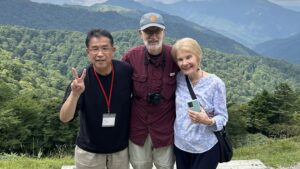
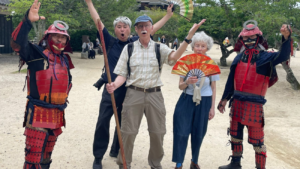
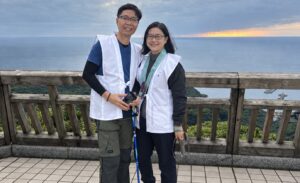
Our guests had arrived the evening before and spent their first night at Dogo Onsen in Matsuyama, among the oldest hot springs in Japan. In the morning we set out by private car for the Shimanami Kaido, the chain of bridges that steps from island to island across the Seto Inland Sea. We stopped at Tatara Park beneath the great cable-stayed bridge, then visited Oyamazumi Shrine on Omishima, whose treasure hall holds one of Japan’s foremost collections of historic arms and armour. The day closed at the Kirosan Observatory on Oshima — a lookout built into the hilltop by architect Kengo Kuma — above the Kurushima Strait and its tidal whirlpools. The night was spent at Umiyado Sennenmatsu, facing the sea.
Day 2|October 19
Returning across the bridges to Matsuyama, our guests climbed to the keep of Matsuyama Castle, one of only twelve original keeps still standing in Japan, set on a hill in the middle of the city. In the afternoon we drove to Uchiko and walked its preserved street of merchant houses, built on the fortune of Japan wax. They visited the Kamihaga Residence, the house and workshop of one of the wax-producing families, and the Museum of Commercial and Domestic Life nearby. The night was spent at Tsukinoya, a restored townhouse in Uchiko itself.
Day 3|October 20
Crossing into Kochi Prefecture, our guests boarded a sightseeing boat on the Shimanto, often called Japan’s last clear-running river — no dam blocks its main stream. From the water they saw the chinkabashi, the low bridges built without railings so that floodwaters pass over them rather than sweep them away. The road then followed the river upstream to Nishitosa, and the night was spent at Hotel Seira Shimanto, looking out over the valley.
Day 4|October 21
The morning was spent at Kure Taishomachi Market in Nakatosa Town, a small covered market by the fishing port where the day’s catch is sold and bonito is seared over straw. Continuing to Kochi City, our guests visited Chikurinji, the 31st temple of the Shikoku pilgrimage, and its garden, said to have been laid out by the monk Muso Soseki, then the Makino Botanical Garden on the same hill. They also climbed to the keep of Kochi Castle, the only castle in Japan where both the original keep and the lord’s residence at its foot survive. Dinner was taken at Hirome Market in the city centre, and the night at Sansuien.
Day 5|October 22
Leaving the coast for the interior, our guests took a sightseeing boat through Oboke Gorge, where the Yoshino River has cut into rock folded and lifted by the movement of the earth, the strata standing almost vertical along the water. Further up the valley they crossed the Iya Kazurabashi, a bridge woven from mountain vine and rebuilt every three years in the way it always has been. The road continued deeper still, to Oku-Iya, and the night was spent at Fusho, a thatched farmhouse of the Togenkyo-Iya project — dinner cooked by a local okaasan, in the plain country style of these mountains.
Day 6|October 23
A full day in Oku-Iya with a local guide. Our guests walked through Ochiai, a settlement laid out on a mountainside with some 390 metres of elevation between its lowest and highest houses, still farmed in terraces and designated an Important Preservation District. They then tried their hand at making Iya soba, the coarse, short-cut buckwheat noodle of these mountains, and ate what they had made for lunch. In the afternoon they visited the Higashi-Iya Museum of History and Folklore, where the valley’s long association with the defeated Heike clan is set out. A second night at Fusho.
Day 7|October 24
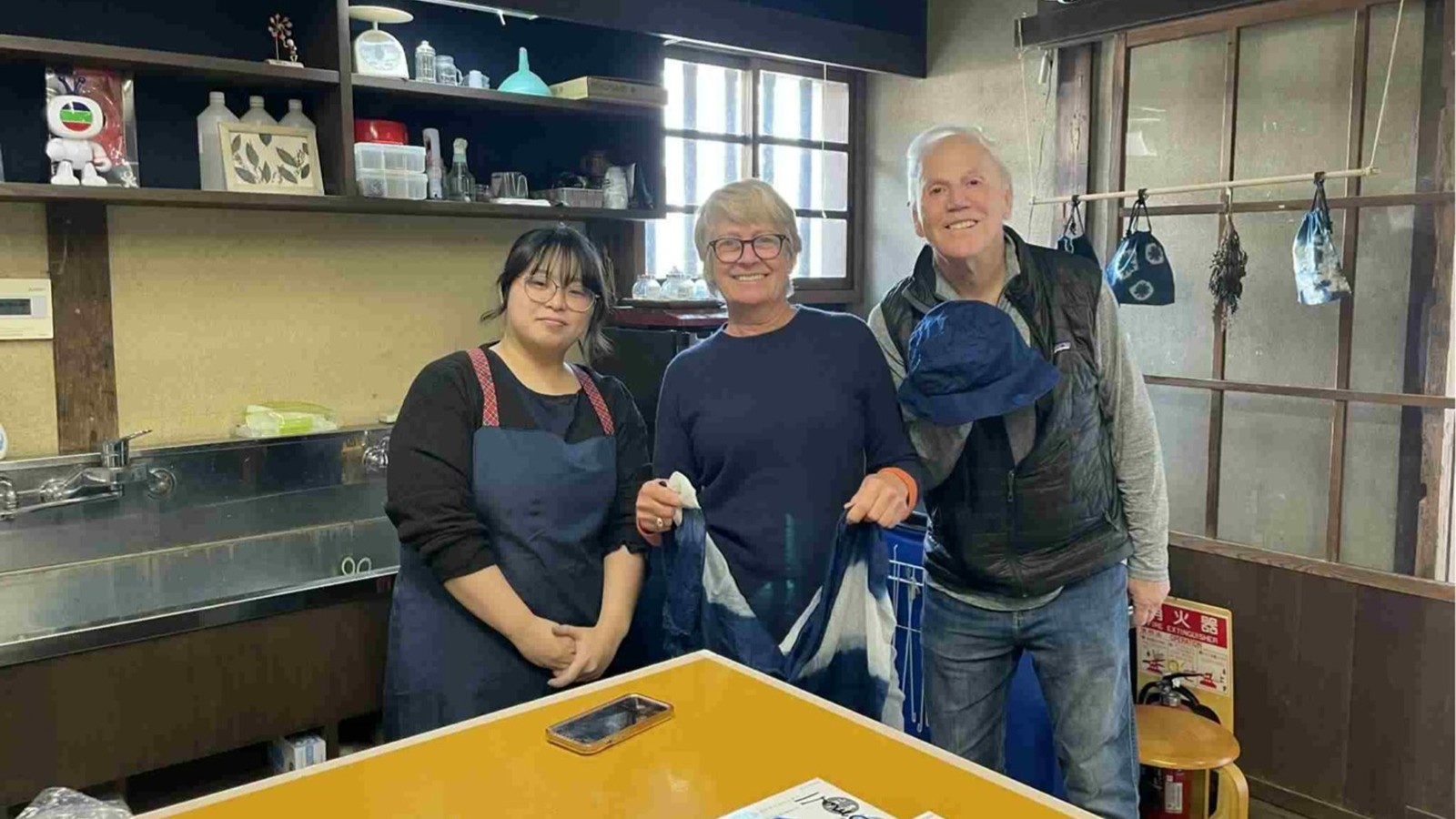
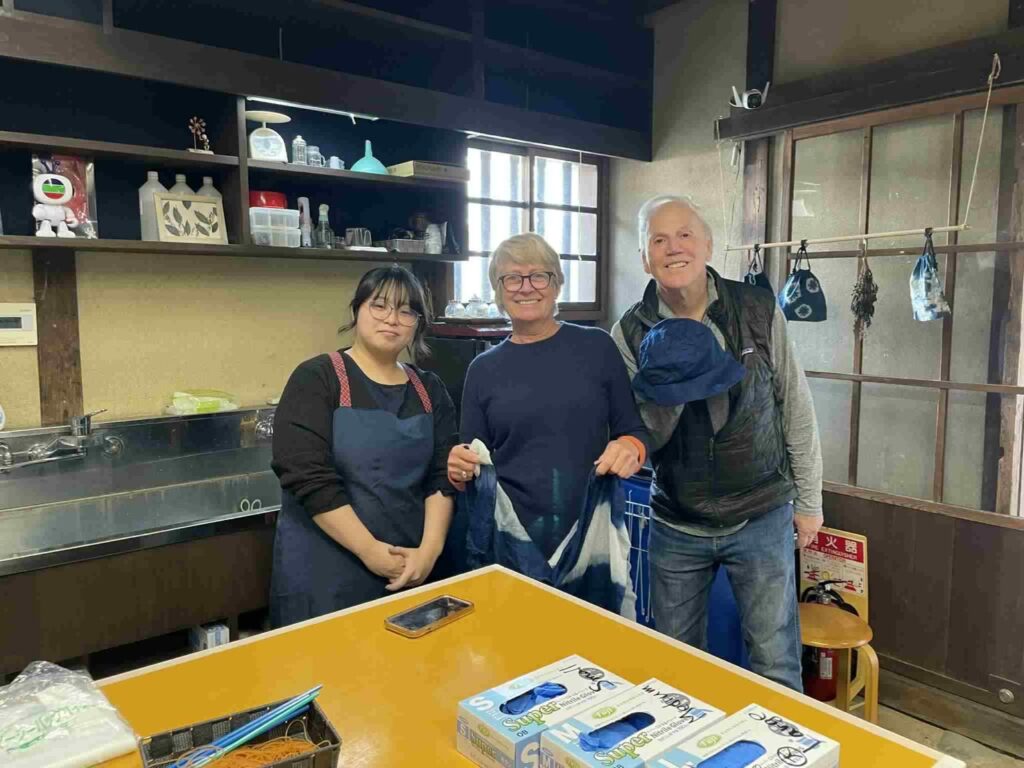
Coming down from the mountains to Wakimachi in Mima City, our guests dyed cloth with Awa indigo at a local workshop, working the fabric in vats of fermented dye, then walked the udatsu townscape — a street of merchant houses whose raised firebreak walls were built as much to display wealth as to stop flames, wealth that came from the indigo trade itself. Continuing into Kagawa, they visited Kinryo no Sato, a working sake brewery with a museum in its old warehouses, and Kanamaruza, built in 1835 and the oldest surviving kabuki playhouse in Japan, before climbing the stone steps to Kotohira-gu. The night was spent at Kotosankaku in Kotohira.
Day 8|October 25
Our guests left Kotohira to continue their journey, closing an eight-day circuit of Shikoku that had run from the bridges of the Seto Inland Sea to the clear water of the Shimanto and the thatched houses of the Iya valley.