Customer’s name:Kelvin
Number of guests: 4
Visits to Shikoku: 1st time
Travel dates:October 26 – November 15,2025
Areas visited: Tokushima, Kochi, Ehime, Kagawa, Koyasan
Itinerary
A twenty-one-day pilgrimage covering all eighty-eight temples of the Shikoku circuit, from Ryozenji in Tokushima to Okuboji in Kagawa, and closing at Koyasan — the way pilgrims have long ended the journey, by reporting their completion at the mausoleum of Kobo Daishi. Travelling by chartered vehicle, our guests kept the pace of a walking route without the distances, with three rest days written into the schedule and several nights spent in temple lodgings, where the evening meal is shojin ryori, the vegetarian cooking of the monasteries.
Day 1|October 26
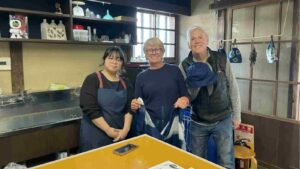
Our guests travelled from Osaka to Tokushima and spent the day getting their bearings in the city before the pilgrimage began. The Awa Odori Kaikan, where the dance that fills the city each August is performed year-round, and a workshop painting yusanbako — the tiered lacquer boxes Tokushima families once carried out to the hills in spring — were both within reach. The night was spent at Daiwa Roynet Hotel Tokushima.
Day 2|October 27
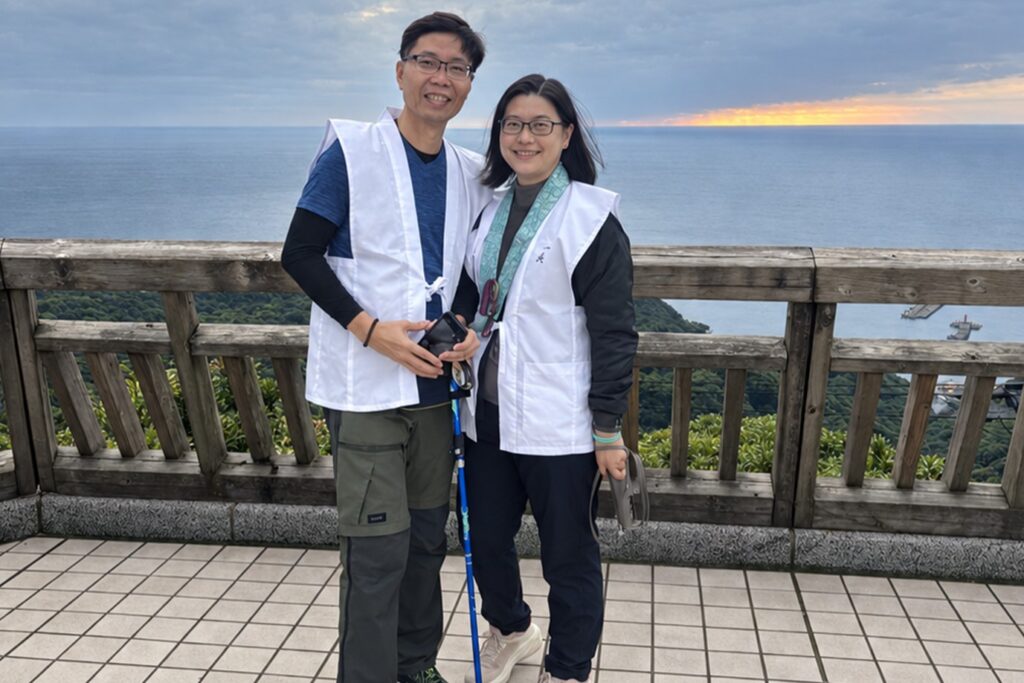
The pilgrimage began at Ryozenji, the first temple, where pilgrims are fitted out with the white robe, conical hat and staff that mark them on the road. Our guests then walked the short, level stretch through Naruto and Itano that takes in Gokurakuji, Konsenji, Dainichiji, Jizoji and Anrakuji — six temples within a few kilometres of one another, a gentle opening to a long circuit. The night was spent in the lodgings at Anrakuji itself, which has its own hot spring.
Day 3|October 28
Jurakuji, Kumadaniji, Horinji, Kirihataji and Fujiidera followed, the last of them at the foot of the mountains. Beyond it lies the climb to Shosanji, the twelfth temple — the first of the stretches pilgrims call henro-korogashi, “pilgrim-crushers”, where the walking route rises some 700 metres through cedar forest. At 800 metres, the temple stands among trees several hundred years old. The night was spent at moja house, a guesthouse in Kamiyama.
Day 4|October 29
A day back on the plain. Dainichiji, Jorakuji, Kokubunji, Kannonji and Idoji stand close together on the edge of Tokushima City — Jorakuji built on an outcrop of bare rock, its courtyard the exposed bedrock itself. Onzanji and Tatsueji followed to the south. The night was spent in the lodgings at Tatsueji, the temple long known as the sekisho, the barrier gate where a pilgrim’s sincerity is said to be tested.
Day 5|October 30
Two mountain temples opened the day: Kakurinji, reached through cedar forest, and Tairyuji, high enough that it has long been called “the Koyasan of the west” — the young Kukai is said to have trained here. Byodoji and Yakuoji followed, and then the long run down the Pacific coast to Cape Muroto and Hotsumisakiji, the temple above the cave where Kukai is said to have attained enlightenment, with only the sky and the sea before him. The night was spent at Kurakukan Kurayado in Muroto.
Day 6|October 31
Shinshoji, reached by a steep flight of steps above the fishing harbour, and Kongochoji on the cape’s western side were followed by Konomineji, set at 450 metres with a garden of moss and clipped hedges laid out below the main hall. The road then ran west along the coast to Dainichiji, Kokubunji and Zenrakuji on the outskirts of Kochi City. The night was spent at Dormy Inn Kochi.
Day 7|November 1
Chikurinji stands on Mount Godai above Kochi City, its garden said to have been laid out by the monk Muso Soseki. Zenjibuji, Sekkeiji, Tanemaji and Kiyotakiji followed, and then Shoryuji across the bay — a temple of fewer visitors, approached by a long flight of steps under old trees. A second night at Dormy Inn Kochi.
Day 8|November 2
A rest day in Kochi City, with no temples on the schedule. Kochi Castle — the only castle in Japan where both the original keep and the lord’s residence at its foot survive — Hirome Market, and the Yosakoi Information Exchange Centre were all within walking distance of the hotel. A third night at Dormy Inn Kochi.
Day 9|November 3
Only two temples, but the longest day of the circuit. Iwamotoji, whose main hall ceiling carries 575 painted panels contributed by parishioners and visitors, was followed by the run down the coast to Cape Ashizuri — some eighty kilometres, the greatest distance between any two temples on the route. Kongofukuji stands at the southernmost point of Shikoku, the cliffs dropping to the sea behind it. The night was spent at Ashizuri Kokusai Hotel.
Day 10|November 4
Enkoji, the last temple in Kochi, marked the end of the province the pilgrimage calls the place of ascetic training. Crossing into Ehime — the province of enlightenment — our guests visited Kanjizaiji, Ryukoji, Butsumokuji and Meisekiji, the last of them in the old post town of Uwa in Seiyo City, where the temple is set into a wooded hillside and its records reach back well over a thousand years. The night was spent at Dogo Hakuro in Dogo Onsen.
Day 11|November 5
The day began in the mountains at Daihoji, the halfway point of the circuit, and at Iwayaji, whose halls are built against a cliff face pierced with caves, a ladder running up the rock to a hermitage above. Coming down to the Matsuyama plain, our guests visited Joruriji, Yasakaji, Sairinji, Jodoji, Hantaji and Ishiteji — the last of these the temple that carries the legend of Emon Saburo, said to be the origin of the pilgrimage itself. A second night at Dogo Hakuro.
Day 12|November 6
A rest day in Matsuyama. Matsuyama Castle, one of only twelve original keeps still standing in Japan, sits on the hill in the middle of the city; in nearby Tobe, a workshop offered a chance to paint Tobe-yaki, the blue-and-white porcelain the town has made for some 250 years. Dogo Onsen, among the oldest hot springs in Japan, was on the doorstep. A third night at Dogo Hakuro.
Day 13|November 7
Taisanji, whose main hall dates from 1305 and is the oldest building of its size in Ehime, opened the day, followed by Emmyoji on the coast. Crossing to Imabari, our guests visited Enmeiji, Nankobo — the only one of the eighty-eight called a bo rather than a temple — Taisanji and Eifukuji. The night was spent at Kyukamura Setouchi Toyo, on the coast at Kawaranotsu.
Day 14|November 8
Senyuji, on a ridge above Imabari with the Inland Sea laid out below, was followed by Kokubunji, Koonji, Hojuji and Kichijoji on the plain. The day ended with the climb to Yokomineji, the sixtieth temple, standing at 750 metres on the slopes of Mount Ishizuchi — the highest mountain in western Japan — and counted among the hardest of the eighty-eight to reach. The night was spent at Guesthouse 60BASE in Saijo.
Day 15|November 9
Maegamiji, long the temple of the Mount Ishizuchi mountain faith, and Sankakuji marked the end of Ehime. Crossing into Kagawa — the province of nirvana, the last leg — our guests went up to Unpenji, at 911 metres the highest of the eighty-eight, where some five hundred stone arhats line the approach. Daikoji, Jinneiin and Kannonji followed, the last two sharing a single precinct. The night was spent at Kanonji Grand Hotel.
Day 16|November 10
Motoyamaji, whose five-storey pagoda stands over the rice fields, opened the day, followed by Iyadaniji, cut into the hillside with Buddhas carved in the rock face, then Mandaraji, Shussakaji, Kozaiji and Konzoji. The day ended at Zentsuji, built on the site where Kobo Daishi was born, its precinct among the largest on the route. The night was spent in the temple lodgings there.
Day 17|November 11
Doryuji, Goshoji, Koshoin and Kokubunji were followed by two mountain temples above Takamatsu: Shiromineji, which holds the tomb of the exiled Emperor Sutoku, and Negoroji, reached by a road winding up through the trees. Ichinomiyaji closed the day. The night was spent at Daiwa Roynet Hotel Takamatsu.
Day 18|November 12
The last day of the circuit. Yashimaji stands on the flat-topped plateau above Takamatsu, Yakuriji on the slopes of Mount Goken with a cable car running up to it, and Shidoji and Nagaoji lie along the coast and the plain beyond. The road then climbed into the hills to Okuboji, the eighty-eighth temple, where pilgrims who have completed the circuit leave their staff behind. A second night at Daiwa Roynet Hotel Takamatsu.
Day 19|September 3
A rest day in Takamatsu, the circuit complete. Ritsurin Garden is a short way from the hotel — its ponds, pines and the borrowed backdrop of Mount Shiun composed over more than a century of work by the feudal lords of Takamatsu. A third night at Daiwa Roynet Hotel Takamatsu.
Day 20|November 14
Our guests left Shikoku for Koyasan, the monastic complex founded by Kobo Daishi in 816 and the head temple of Shingon Buddhism, set in a wooded basin at 800 metres. The night was spent at Fukuchiin, one of the temple lodgings on the mountain, with shojin ryori served in the evening.
Day 21|November 15
The morning was spent on the mountain. At Okunoin, a path runs two kilometres through cedars several hundred years old, past some two hundred thousand memorials, to the mausoleum where Kobo Daishi is said to remain in meditation — the place where pilgrims report the completion of the circuit, and where this journey ended. Our guests then travelled on to Kyoto, where the tour concluded.