If you’re planning a trip to Shikoku and you haven’t looked up the Awa Odori festival yet, stop everything. This is the reason to book your flights.
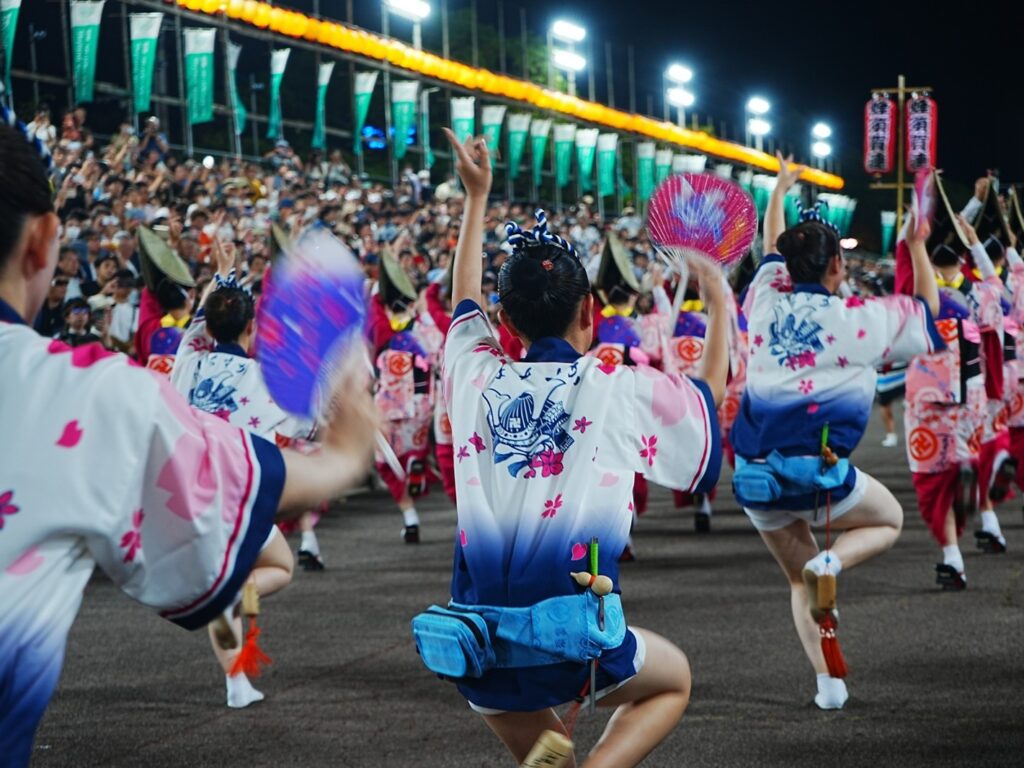
Every August, the city of Tokushima transforms into one giant, gloriously chaotic dance party. The streets fill with the sound of shamisen strings, taiko drums, and flutes, as thousands of dancers spill out onto the roads. It’s a spectacle that’s equal parts ancient tradition and pure, infectious joy. Welcome to Awa Odori, one of Shikoku’s most beloved summer festivals!
What Exactly Is Awa Odori?
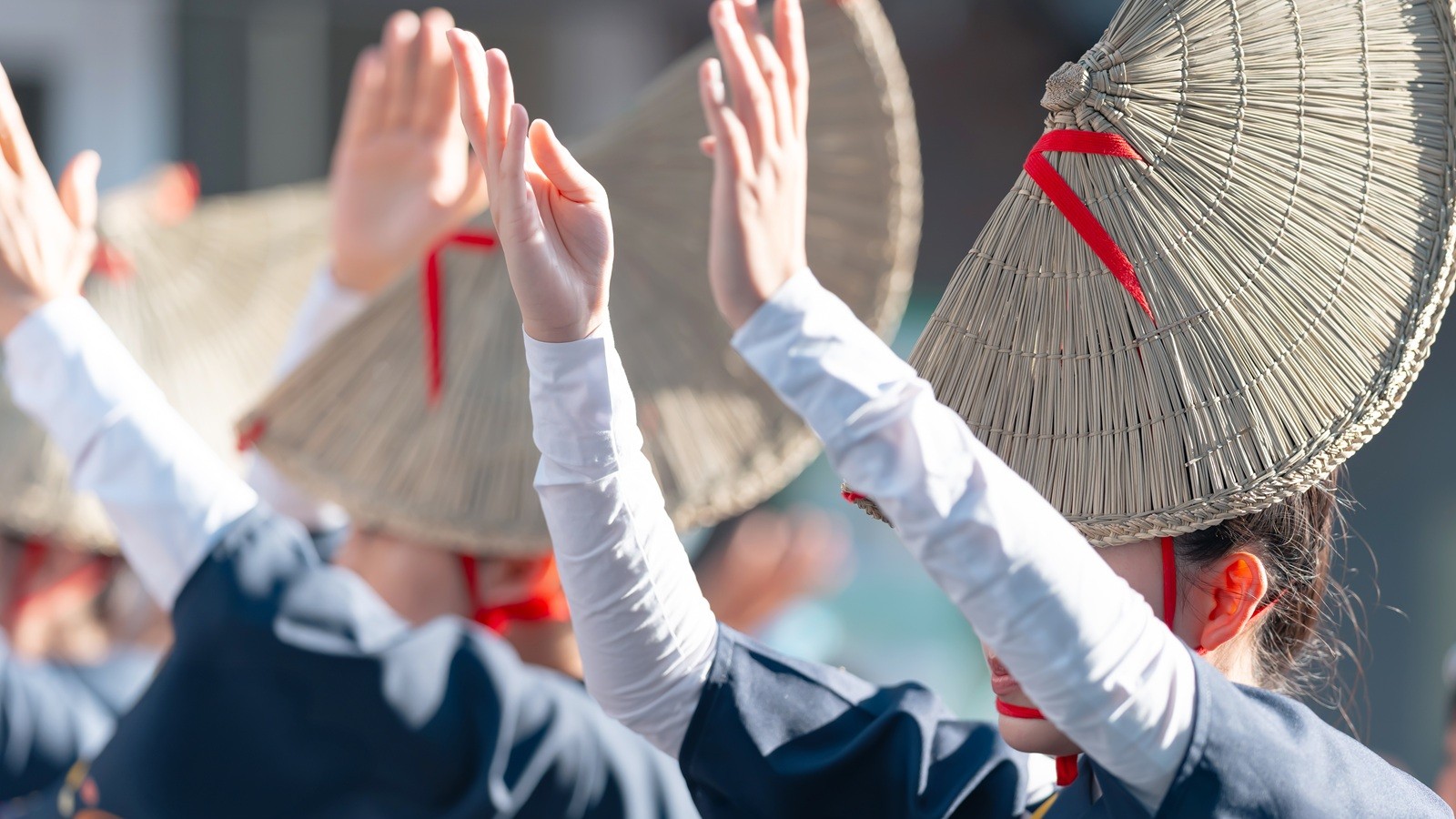
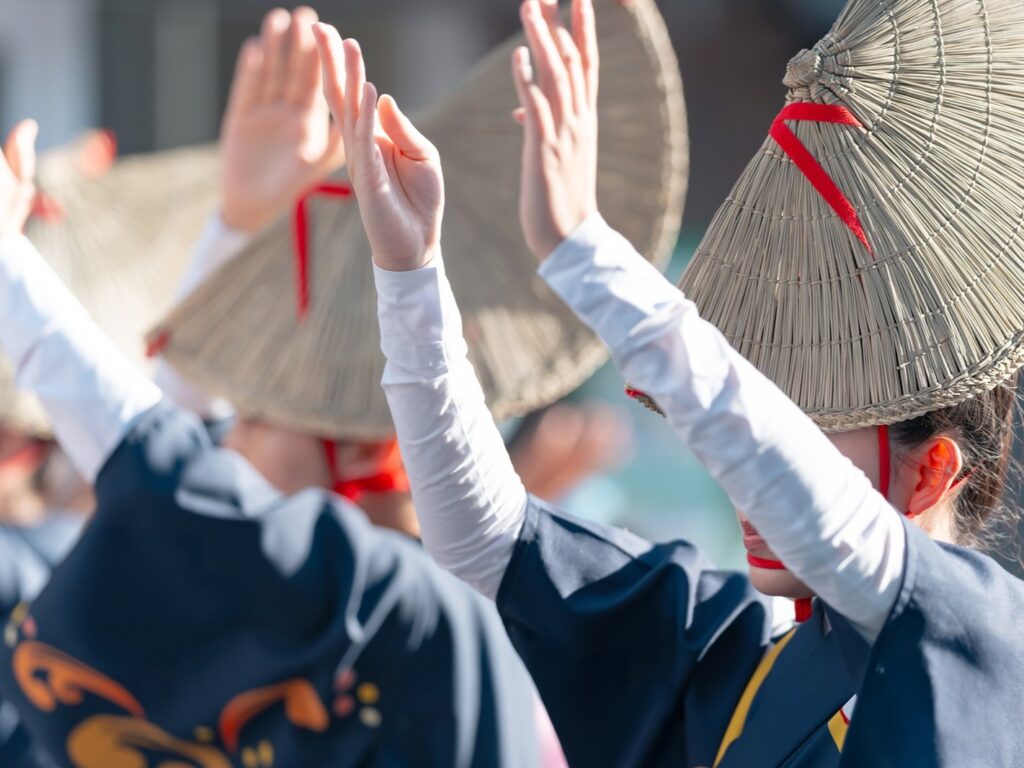
Awaodori (“Awa Dance”) is a style of Bon Odori, the traditional folk dancing performed during the Obon season when, according to Shinto belief, the spirits of ancestors return to visit the living. The dance style originated in Tokushima Prefecture, “Awa” being the old name for the region, and has been practiced for over 400 years.
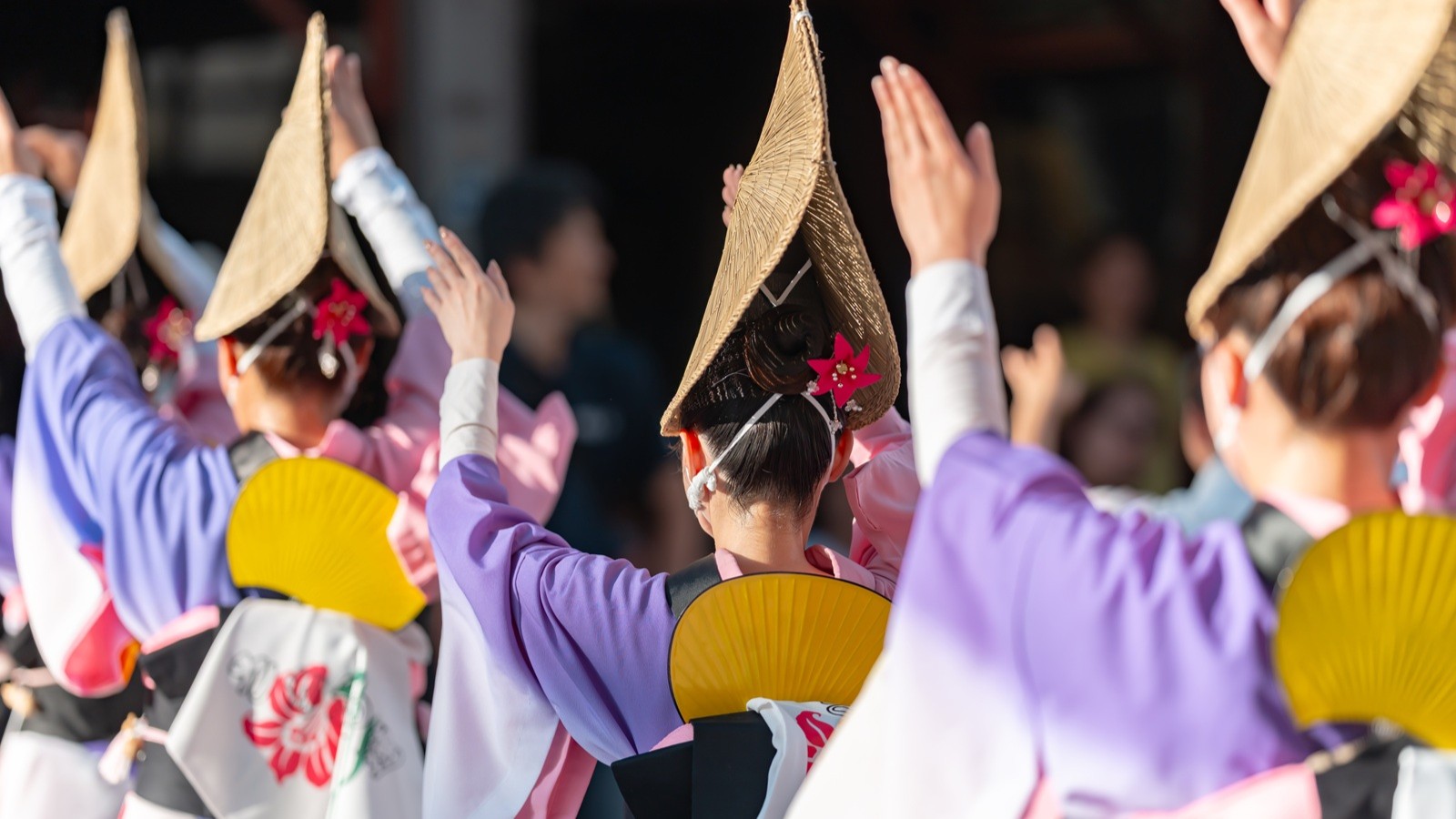
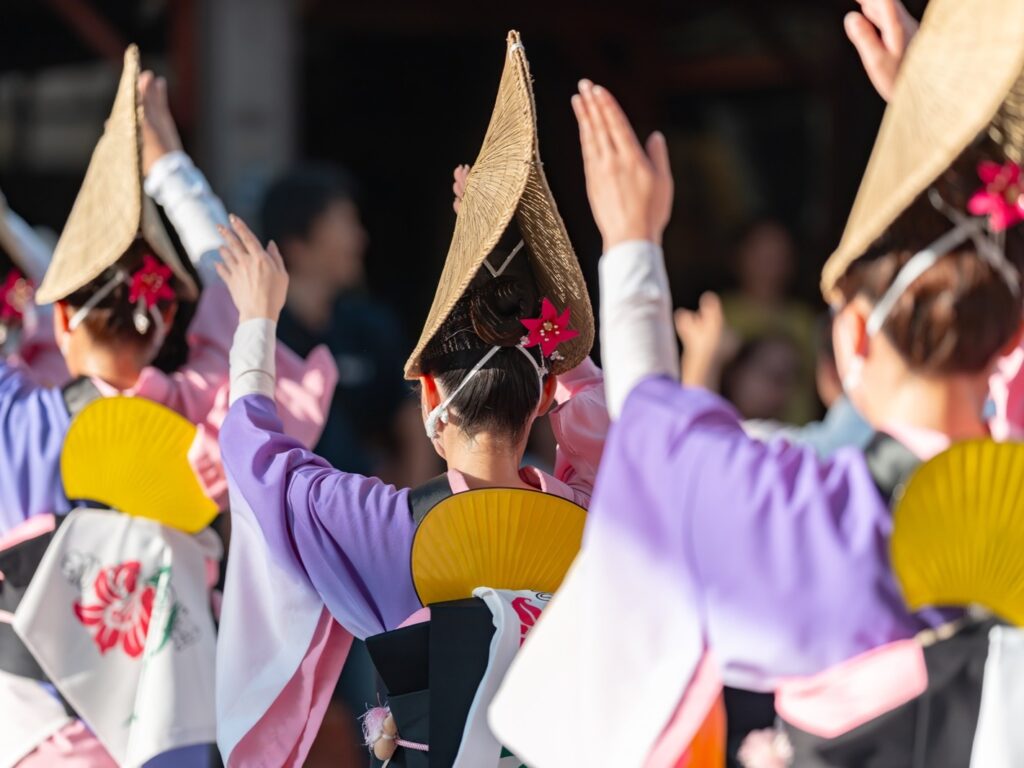
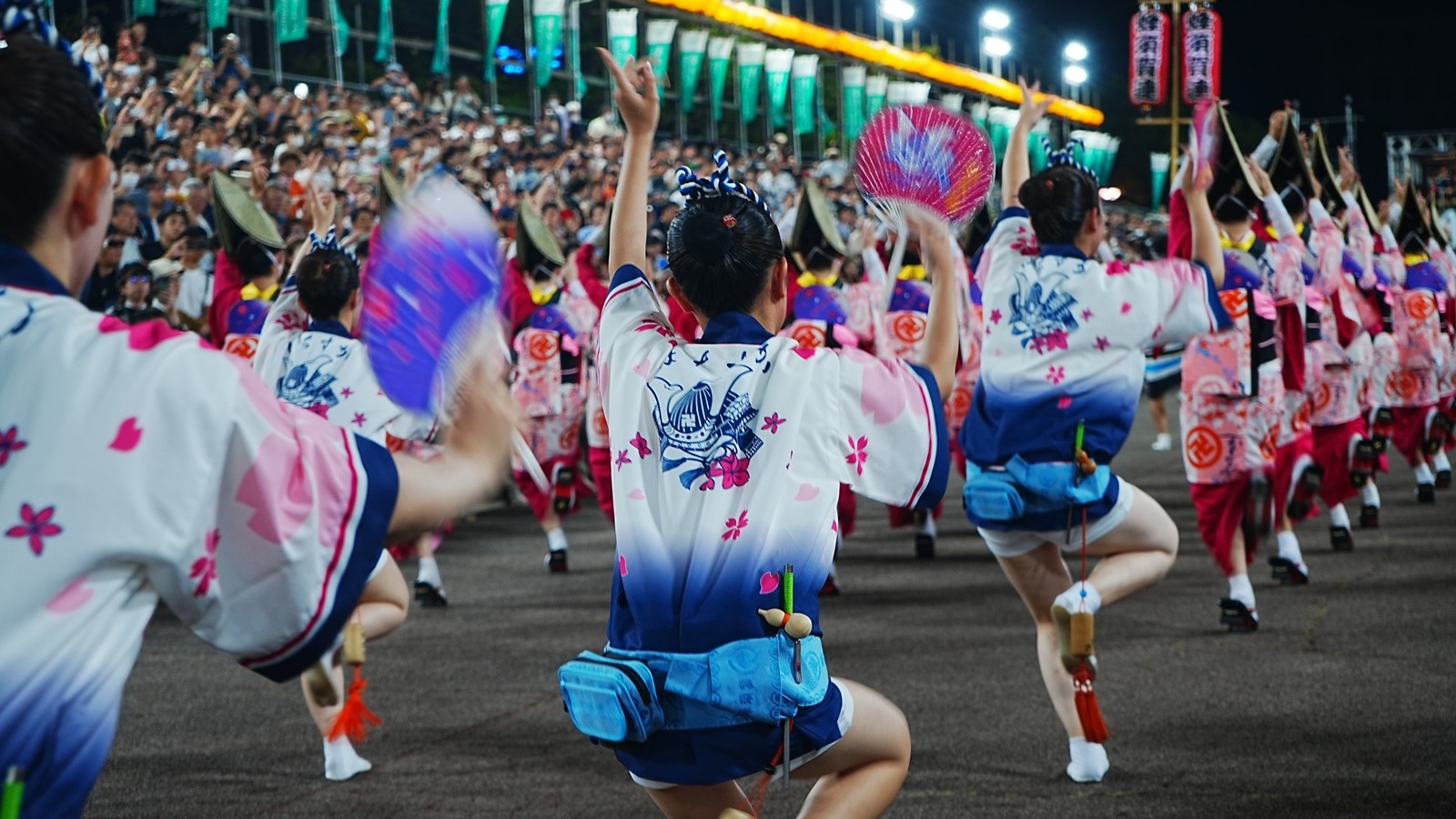
But don’t let the solemnity of its origins fool you. This festival is fun. The movement is loose and lively: arms raised, feet shuffling in a distinctive two-beat rhythm, bodies swaying through the streets in long processional lines. Men dance in low, stomping stances while women move with elegant, tiptoe grace. Both groups wear stunning traditional costumes in bright pink, sea blue, and a whole rainbow of colors. The women have very distinct half-moon star hats known as Okesa-gasa. They are delicately tied under their chins and angle forward, giving the woman a bird-like appearance.
But regardless of what you’re wearing, everyone, and I mean everyone, dances. There’s an old saying about the festival that goes something like: “If you dance you’re a fool, if you watch you’re a fool. If we’re all fools, might as well dance!” Consider yourself warned.
Tokushima: The Home of Awa Odori
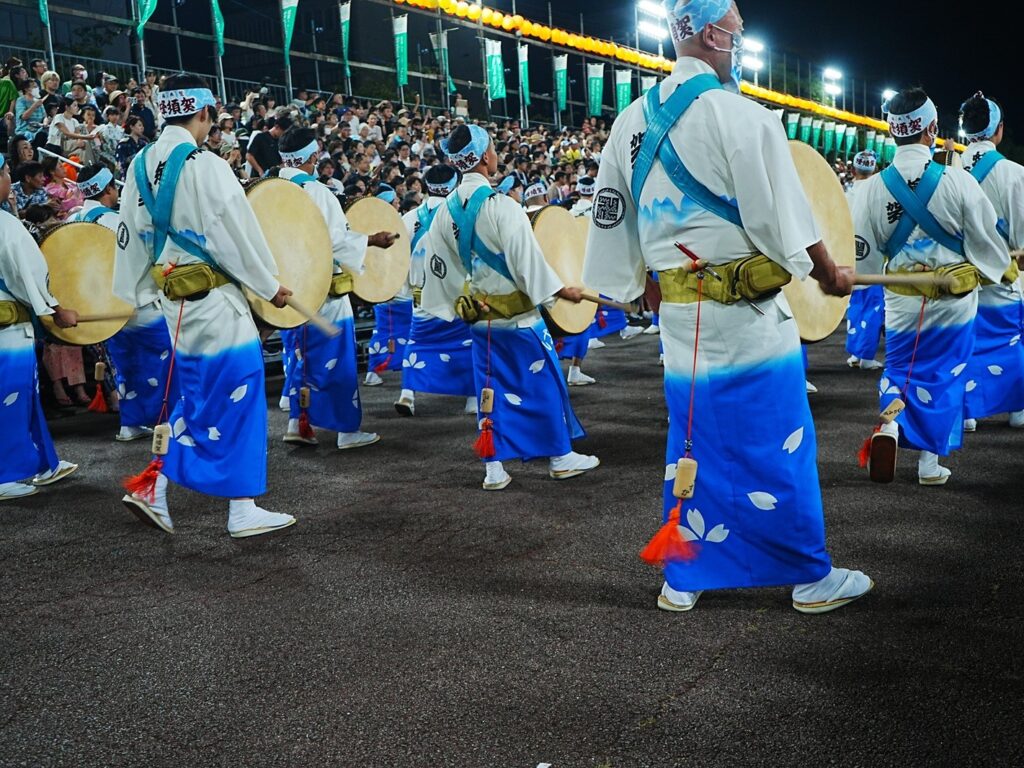
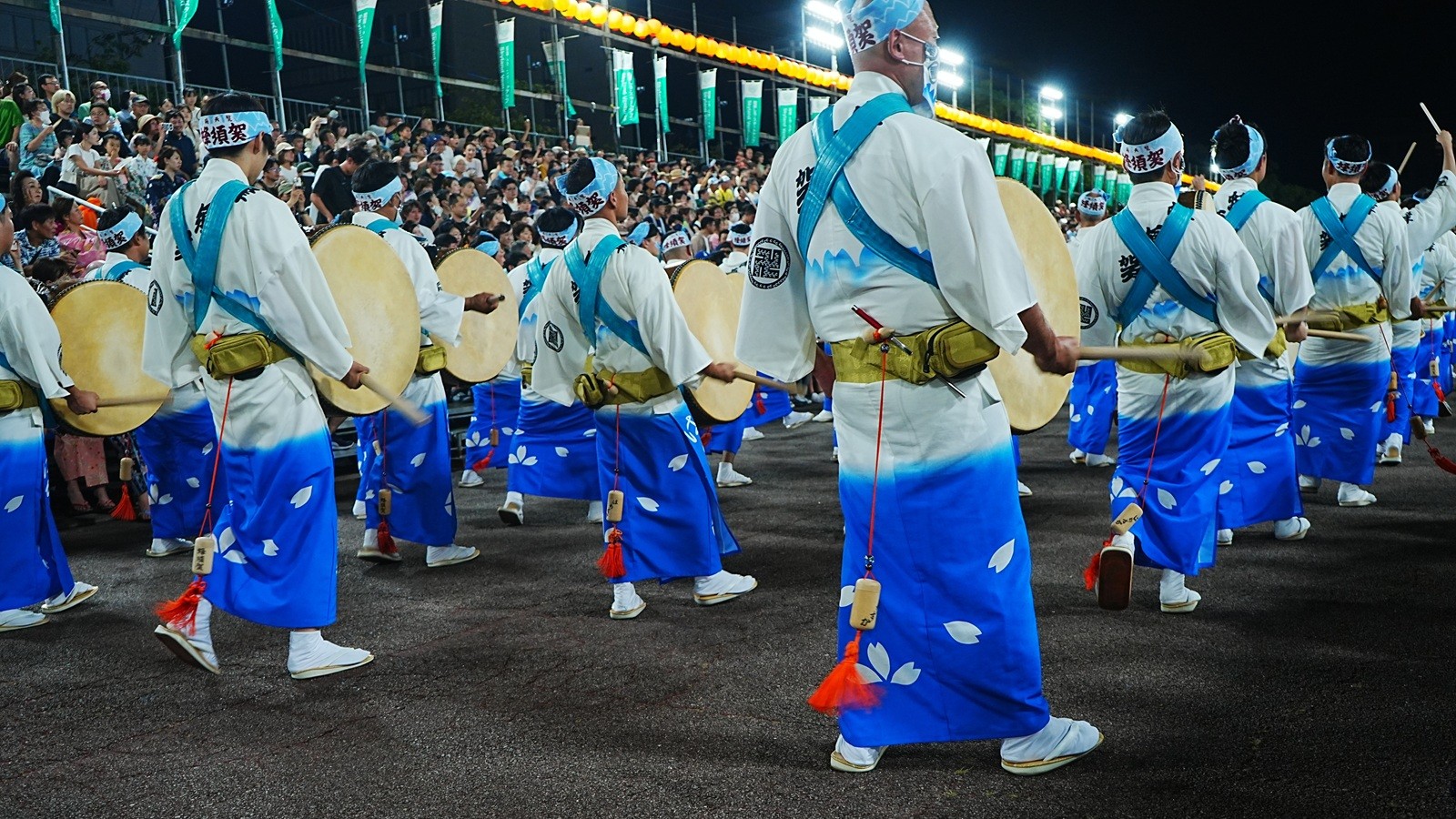
Tokushima City is the undisputed birthplace and capital of Awa Odori. This is where the festival reaches its most spectacular, legendary form. Every year, over a million visitors descend on the city for four nights in mid-August, making it one of the largest dance festivals in all of Japan.
Tokushima’s Awa Odori takes place over several electrifying evenings, with multiple ren (dance troupes) parading through designated streets and purpose-built performance stages throughout the city center. Each troupe arrives with its own matching costumes, signature style, and live musical ensemble. The atmosphere is electric but welcoming. Locals and visitors mingle freely, and audience participation is genuinely encouraged, so make sure you have on your dancing shoes when you go!
Tips for First-Time Festival-Goers
Get there early. Prime street-side spots fill up fast. Bring a folding stool or a small blanket to stake out your place along the parade route.
Eat your way through it. Street food stalls line the festival areas, yakitori, takoyaki, kakigōri (shaved ice), so arrive hungry.
Say yes to dancing. Many troupes invite bystanders to join the procession. You won’t look silly, you’ll love it.
Pair it with Ritsurin Garden. Takamatsu is home to one of Japan’s finest landscape gardens. A tranquil morning among the pines before an evening of dancing? That’s a perfect Shikoku day.

■Role:
Shikoku Tours Social Media Manager & Historian specializing in Japanese History
■Experience:
10 years of living in Japan, specifically in the Ehime area. I also have 8 years of experience in social media content creation, specifically in the areas of niche travel and History.
Hello! I’m Tehya, a historian with a passion for social media and using it as a tool for education. My goal is to help people discover the amazing and historical places Shikoku has to offer!
■Role:
Shikoku Tours Social Media Manager & Historian specializing in Japanese History
■Experience:
10 years of living in Japan, specifically in the Ehime area. I also have 8 years of experience in social media content creation, specifically in the areas of niche travel and History.
Hello! I’m Tehya, a historian with a passion for social media and using it as a tool for education. My goal is to help people discover the amazing and historical places Shikoku has to offer!