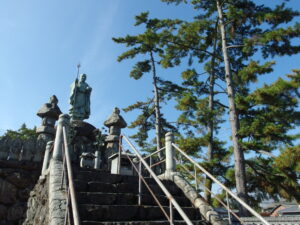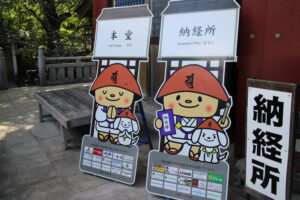
Pilgrims on the Shikoku Henro pray twice at every temple, once to the temple’s Main Deity in its main hall, and once to Japan’s greatest saint, Kobo Daishi, known in life as Kukai, in a separate “Daishi Hall.” Henro Pilgrims are seen as walking side-by-side with Kukai, recreating a sacred journey the saint himself undertook to benefit everyone who encounters it.
Early Days
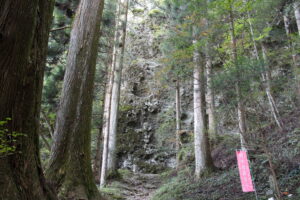
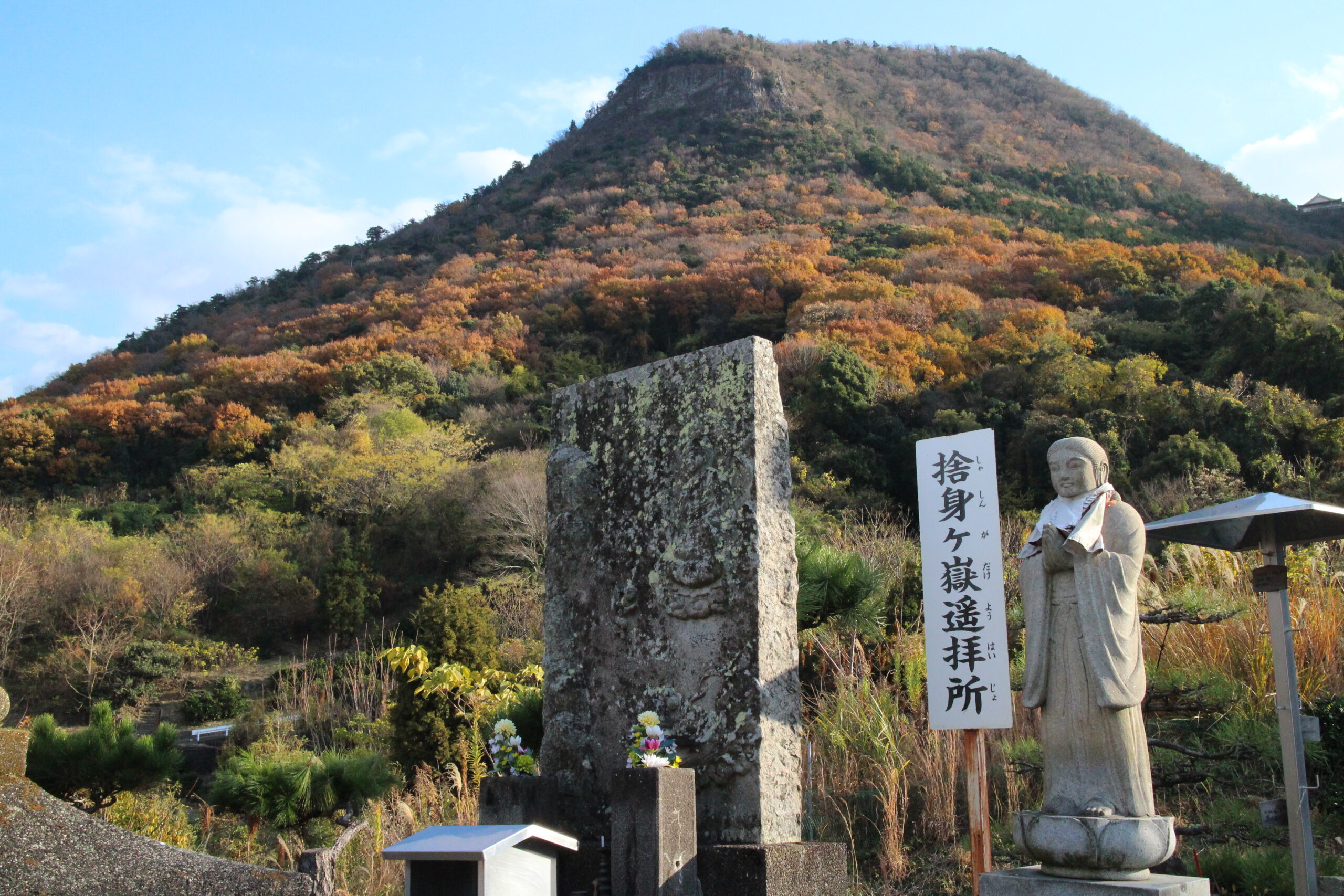
Kukai was born in 774 in modern day Kagawa Prefecture. At 6, legend says, Kukai climbed to the top of a cliff and declared “I’ll either land safely and become a monk, or give my body as an offering to the Buddhas!” and jumped. A heavenly being caught him in midair, and the Buddha appeared to him on the cliffside, spectacularly confirming his future as a great religious leader.
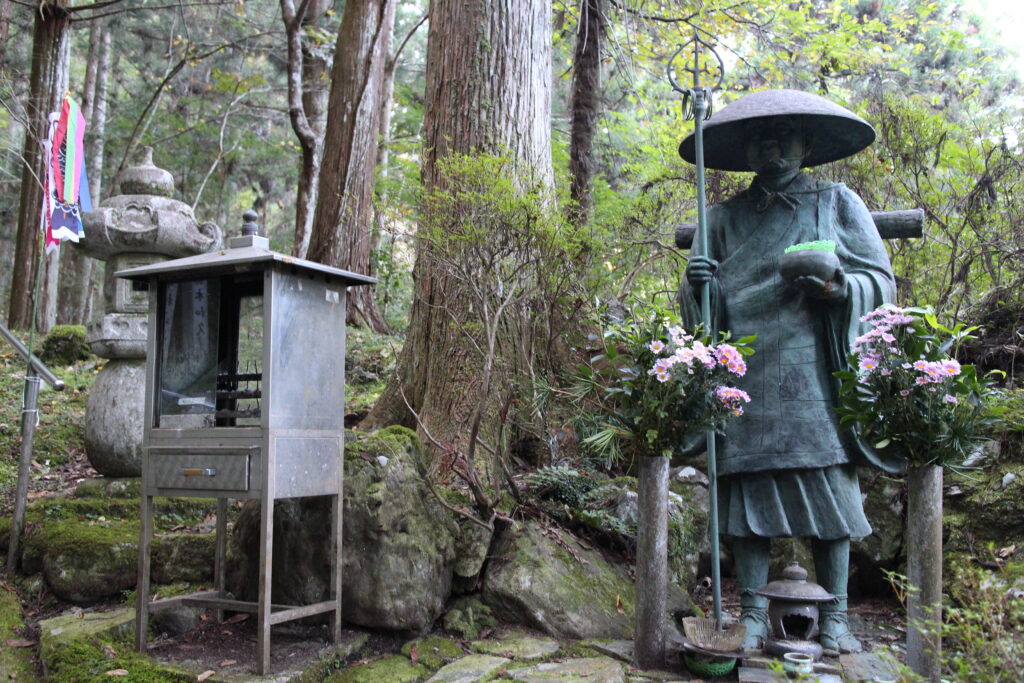
Though a promising student, in his teens Kukai dropped out of the Heian Capital’s university to become a wandering ascetic. He encountered a teacher who transmitted a meditative practice called the Gumonji-bo. This 100-day esoteric ritual centers on the mantra, or Sanskrit incantation, of the enlightened being Akasagarbha, “The Storehouse of Space.”
The Gumonji-bo is one of the many rituals of esoteric Buddhism, an approach which holds that awakening can be gained by secret methods of spiritual union with enlightened beings. Kukai tells us that he traveled around Shikoku practicing this method “like rubbing two sticks together to make fire.” Eventually, his efforts paid off; he had a lifechanging mystical experience in a cave on Shikoku’s southern coast. Kukai’s name, meaning “Sky and Sea” is said to be based on this period of intense practice.
Travels to China and Rise to Prominence
Still seeking deeper understanding of esoteric Buddhism, Kukai traveled to Tang China. In 805, he met his teacher Keika, who in just three months transmitted the full teachings of esoteric Buddhism to him. Kukai then returned to Japan with a vast collection of texts and sacred implements and began expounding his new school. This he called the Shingon, or “True Words,” as he claimed its teaching encapsulates the highest truths of the universe. His ideas quickly caught on, attracting the attention of elites for its promises of magical protection, and of the Buddhist establishment for its claim to enable awakening in a single lifetime. His reputation as a teacher and humanitarian made him a beloved figure among commoners as well. Check out the Kongobu-ji Temple website for more information on Kukai’s thought.
Establishing the Henro and Mt. Koya
Though he was a respected figure in the capital, Kukai longed for the quietude of nature. Legend has it that at age 42—his “bad luck” year according to Chinese astrology—he undertook a pilgrimage around Shikoku, establishing 88 sacred sites. According to tradition, the number 88 was chosen by adding the unlucky ages of men (42), women (33), and children (13). The 88-temple pilgrimage was born. A year later, Kukai established his spiritual headquarters at Mt. Koya, south of Kyoto, where he continued teaching and meditating for almost 20 years. Learn more about Mt. Koya on the Wakayama Travel Guide.
A Lasting Legacy
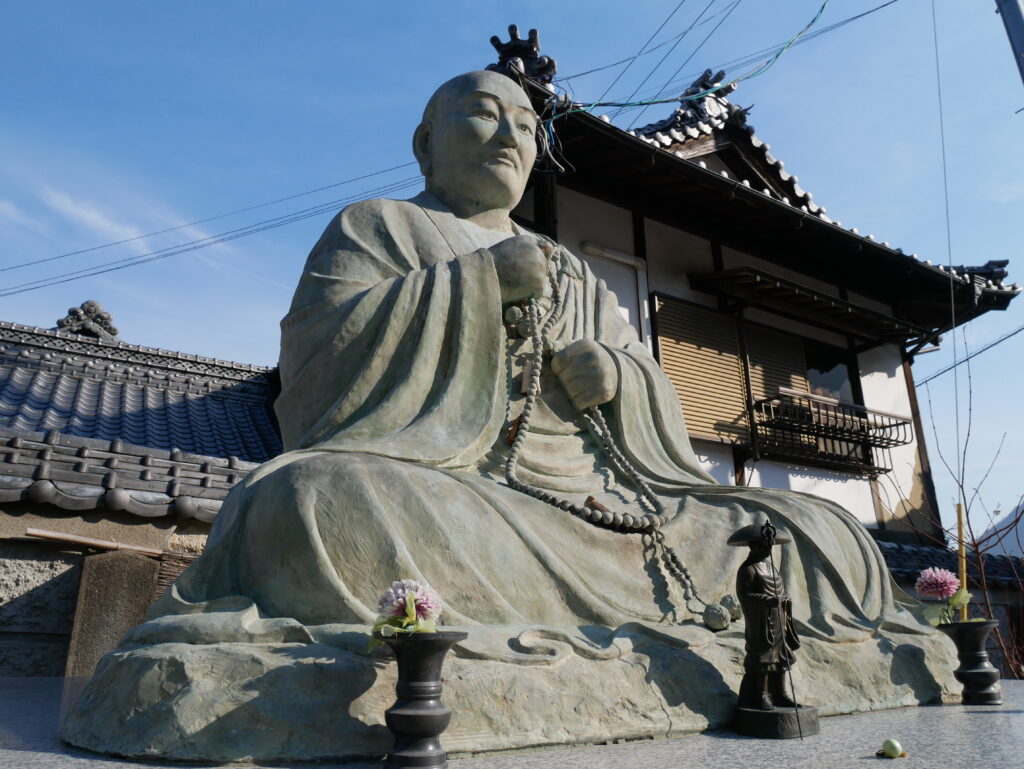
In 835, Kukai vowed to remain in eternal meditation until all beings are awakened, and passed away. He was granted the posthumous name Kobo Daishi, “the Great Master who Spread the Dharma.” Believers hold that he is still alive within his mausoleum on Mt. Koya, which is surrounded by 200,000 graves, the resting places of people who hoped their proximity to Kukai would give them a boost in their next life. For most pilgrims, paying their respects to Kobo Daishi at Mt. Koya marks the final stop of their pilgrimage. Kukai’s philosophical and artistic contributions revolutionized Japanese religion and culture. For many Japanese, he remains a trusted spiritual companion and protector, affectionately referred to as Odaishi-san.
Inspired by Kukai’s journey? Begin your own path of discovery on the Shikoku Pilgrimage.