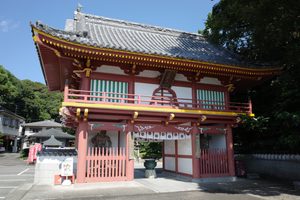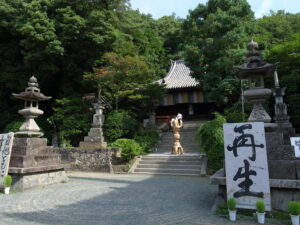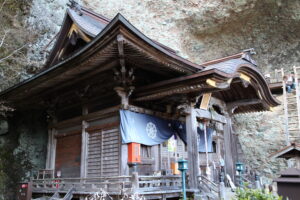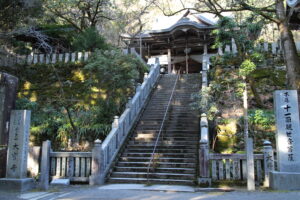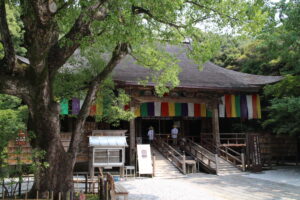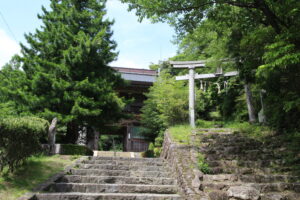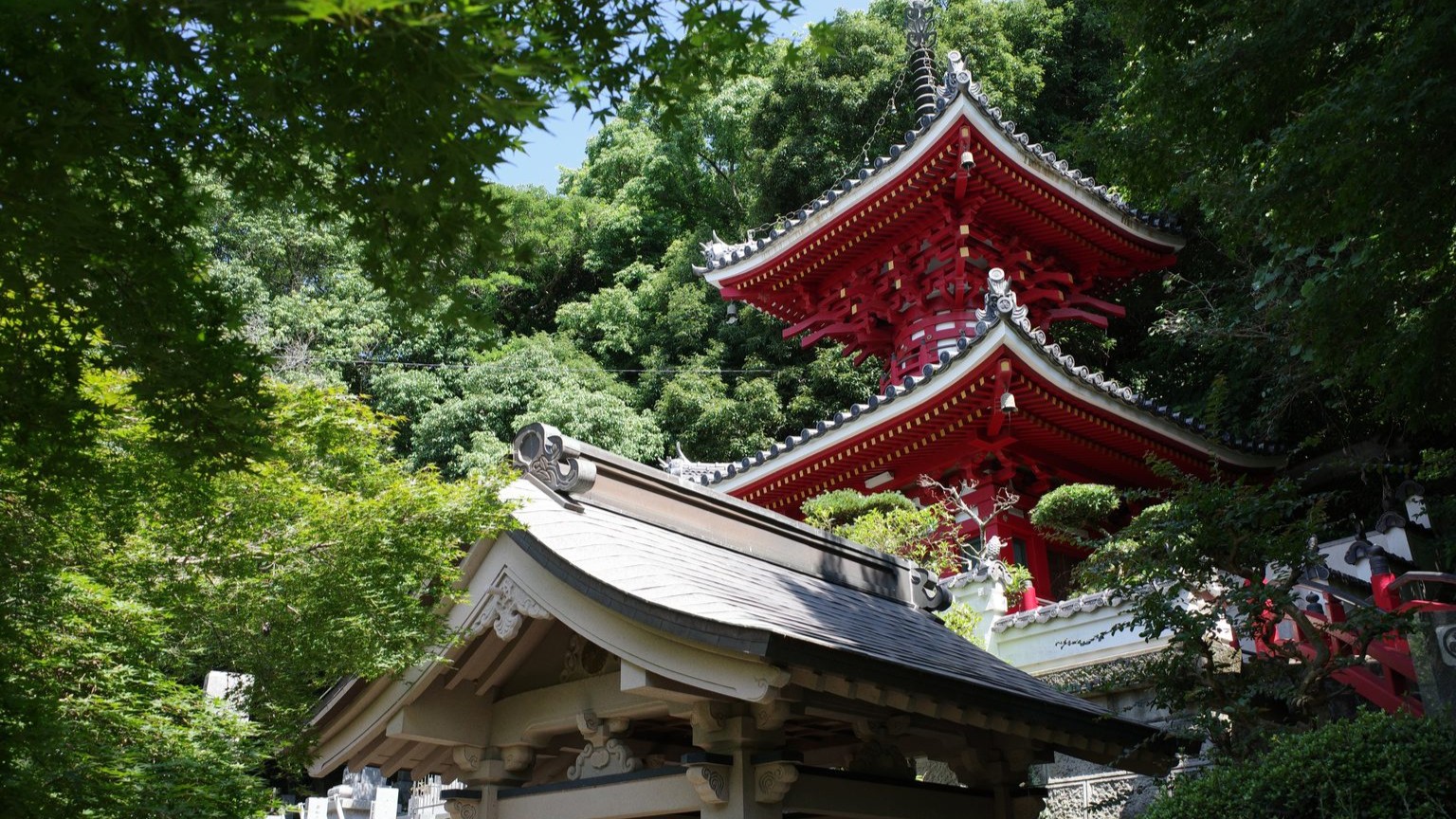
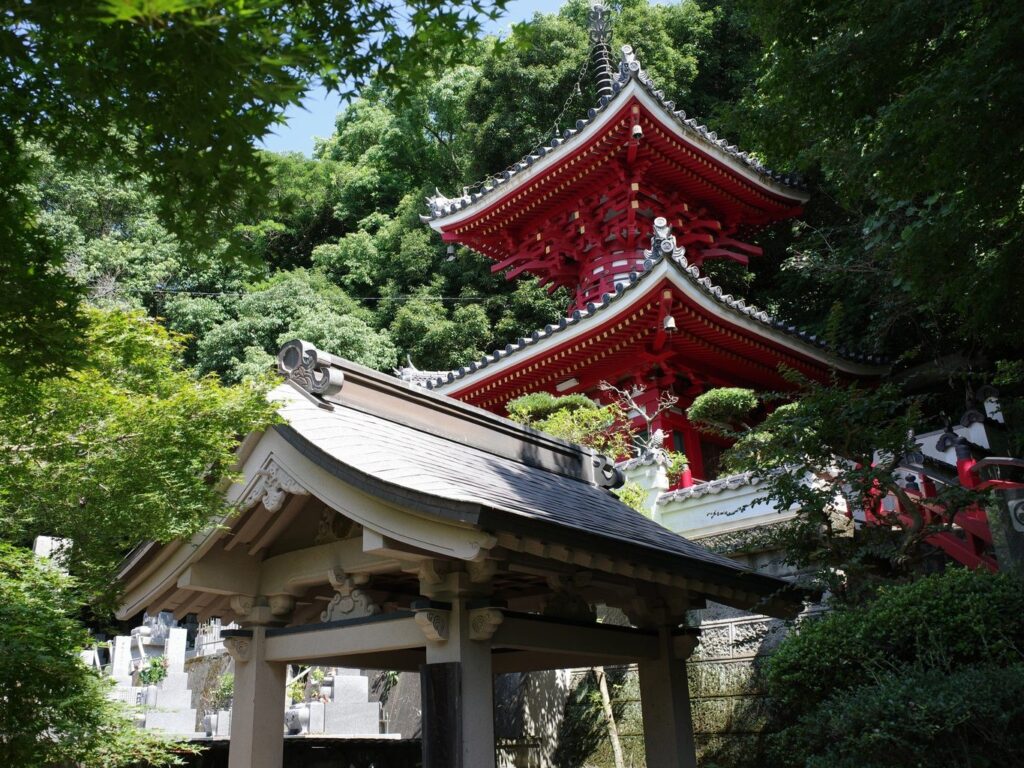
The pilgrimage path between Temples 2 and 3 traces ancient routes through rice fields and past country homes. Stone signposts with carved hands point the way. Amidst idyllic rural scenes, the sound of the temple bell and the smell of incense gradually grows stronger until you emerge into the grounds of Temple 3, Konsen-ji, the Temple of the Golden Spring.
Konsen-ji Origins and History
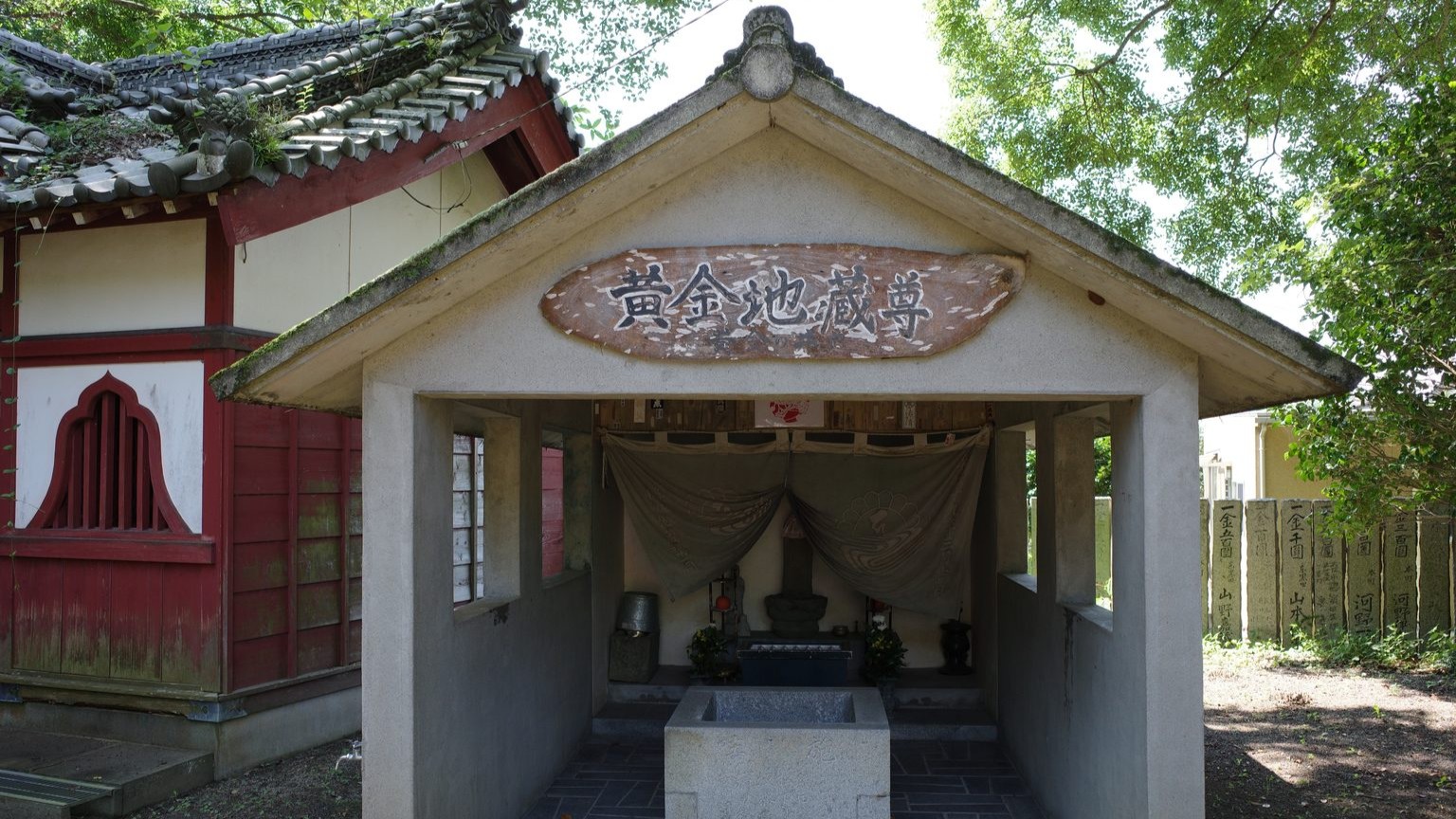
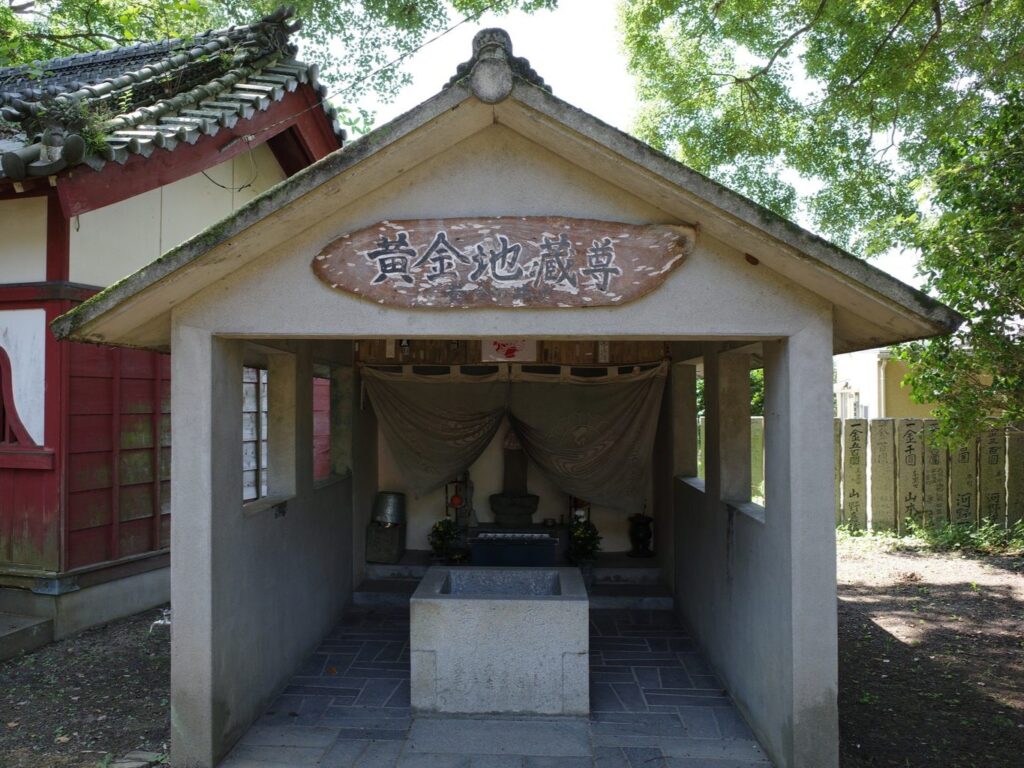
Like Temples 1 and 2, temple legend holds that Gyōki, the larger-than-life monk who helped build Nara’s Great Buddha, established Konsen-ji in the 700s. Historically, Gyōki made it his mission as a Buddhist to aid the suffering. He dug wells, built bridges, and took on other public works projects to benefit his countrymen. Tiles from Gyōki’s time have been found on the grounds, so there’s no doubt that the temple is ancient.
Pilgrimage lore holds that when Kūkai visited the area around 815, he found its people suffering from drought. Perhaps inspired by Gyōki’s example a generation before, he dug a well on the temple grounds. It immediately filled with life-saving water. Locals associated this water with the water of the Pure Land, an ideal world in Buddhism. The name “Temple of the Golden Spring,” is a reference to this otherworldly water.
In 1185, as the Gempei War, the conflict the ushered in the samurai era raged across the islands. The temple became a brief resting point for the army of legendary warrior Minamoto no Yoshitsune. According to legend, Yoshitsune’s bodyguard was the hulking warrior-monk Benkei—the Little John to Yoshitsune’s Robin Hood. Though they were on a speed mission to surprise their, Benkei couldn’t resist using the stopover at Konsen-ji to show off his strength. He lifted an enormous boulder above his head. The boulder, “Benkei’s Stone of Power,” is still on the grounds.
The temple became a favorite of the retired emperor Kameyama in the 13th century. His and later imperial patronage led to the temple become an important center of Buddhist studies. Like most important and powerful temples in the region, it was burnt to the ground by the warlord Chōsokabe Motochika in the 16th century, and rebuilt in the 17th.
What to See at Konsen-ji
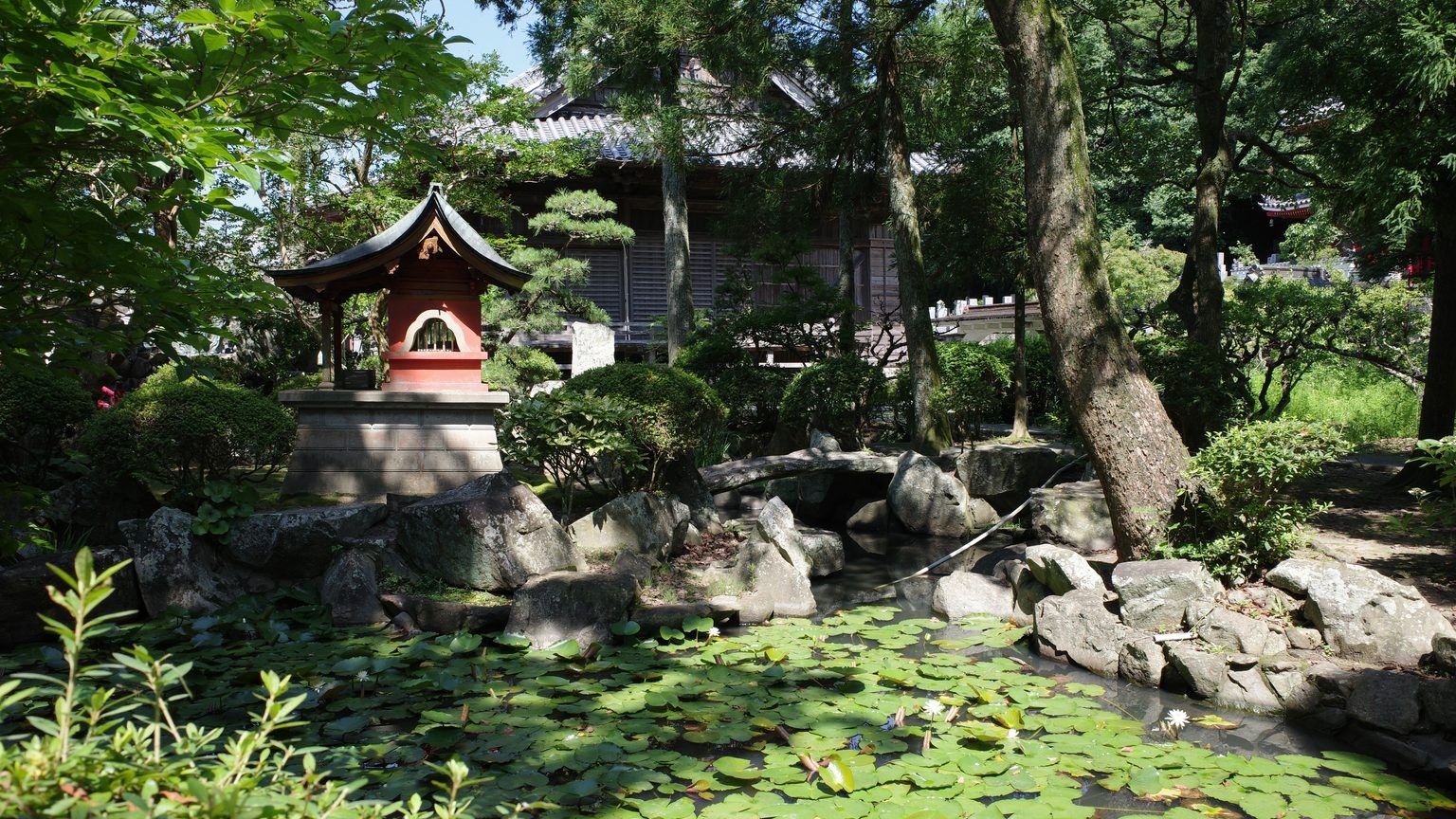
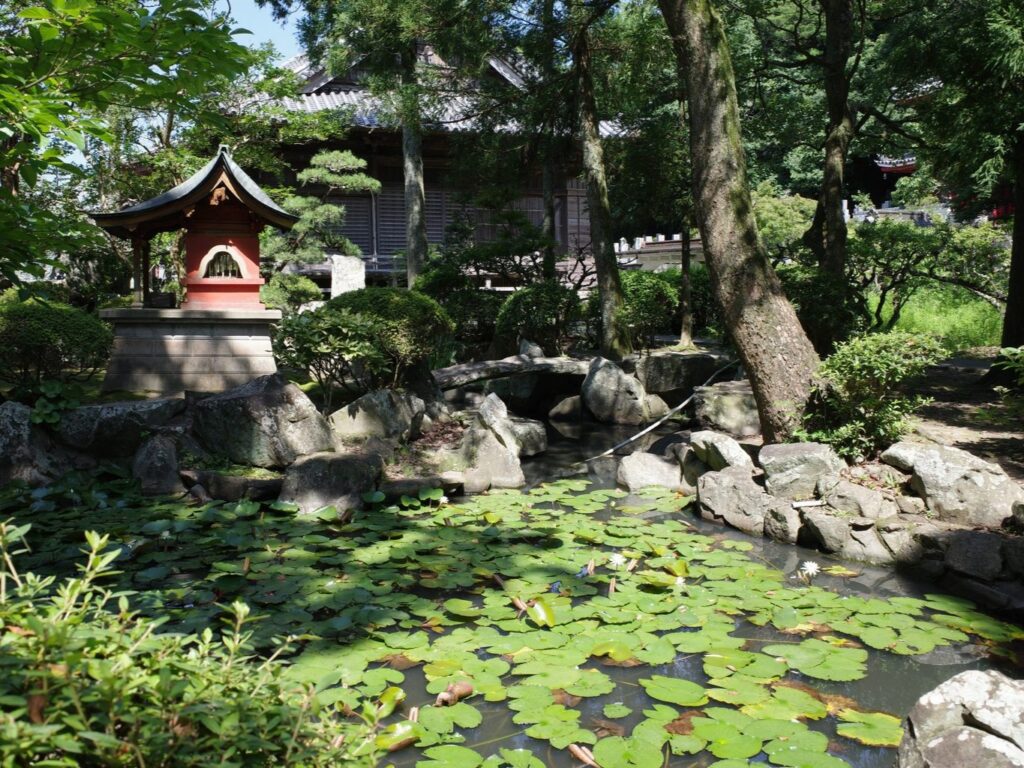
Between the Main Hall and Daishi Hall is a beautiful pond in honor of the goddess Benzaiten. Unusual for temples in Shikoku, the Daishi Hall is open to visitors. A look inside is a wonderful opportunity to get a closer look at the elegant ritual altars and items that characterize halls of the Shingon school.
The miraculous well that gives the temple its name is just to the right of the Daishi Hall. Benkei’s stone is right in front of the temple office, marked by a sign.
Refreshing Mind and Body at Konsen-ji
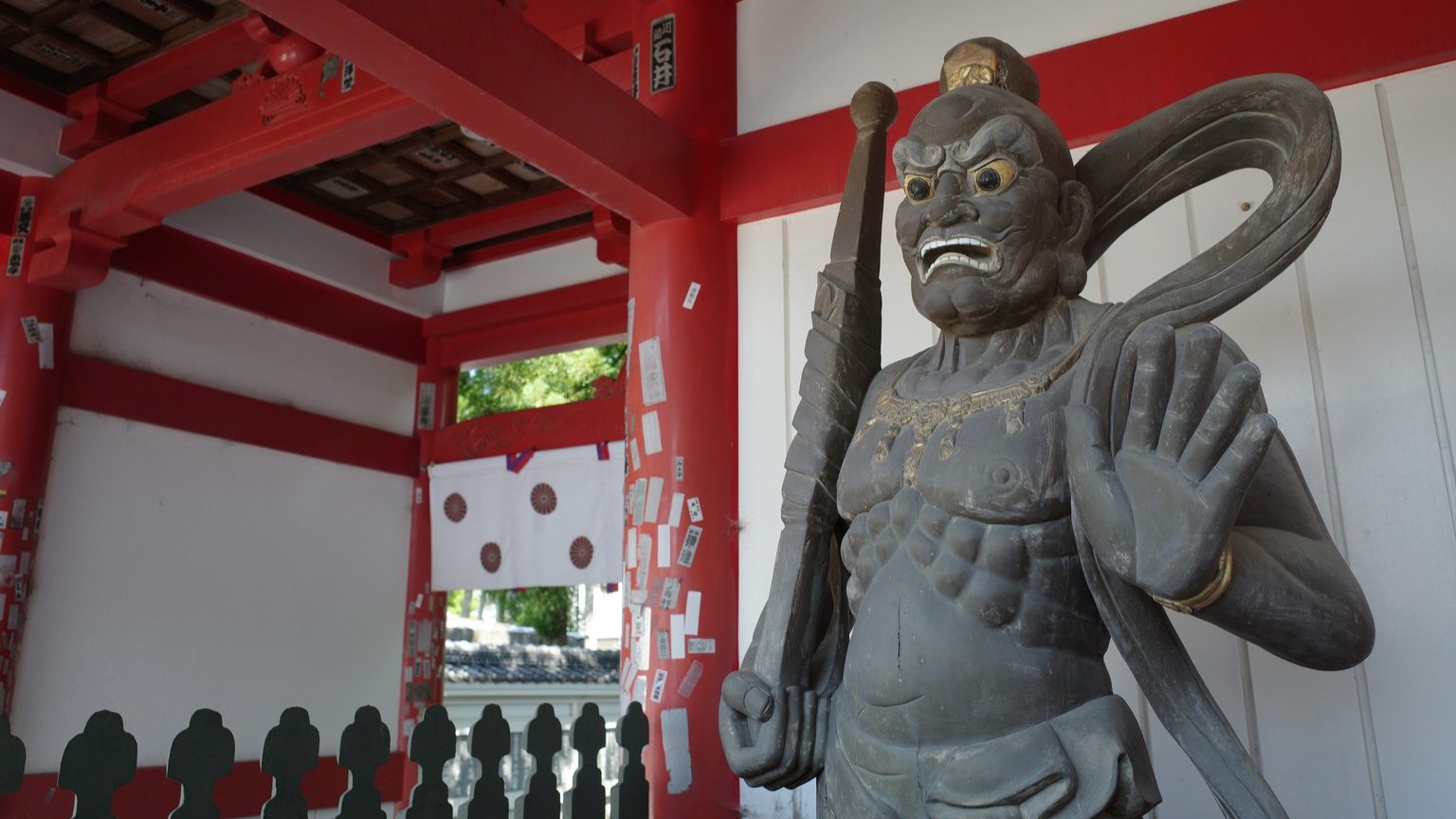
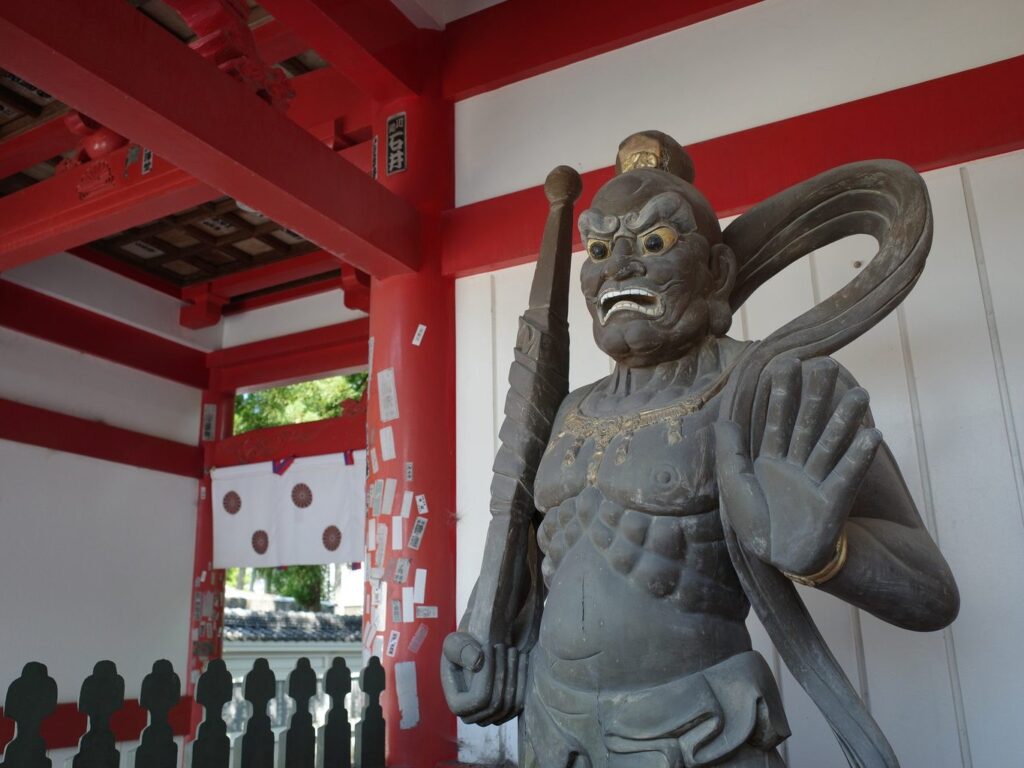
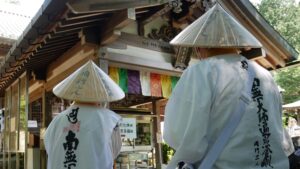
The grounds of Konsen-ji are shady, with benches scattered throughout. Sit down for a while, and you can take your time watching the temple’s everyday scene: pilgrims with hands joined, quietly reciting the sutras. Running through it all is the sound of water crossing the grounds, which calls to mind the legend handed down at this temple. Whether you have half a day or are partway through a long pilgrimage, this is a place worth stopping for a moment.
Tours Including Konsen-ji
- 88 Temple Pilgrimage Tour by Private Car (with Mt. Koya)
- Guided Walking Pilgrimage Tour in Tokushima
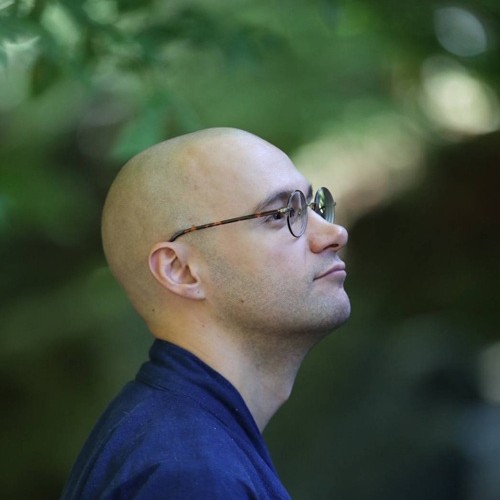
■Role:
Shikoku Travel Specialist, Tour Coordinator, and Shingon Buddhist Priest
■Experience:
10 years of lived experience in Japan, including over 6 years of in-depth study and practice in Japan’s religious traditions, particularly Buddhism, Shugendō, and Shinto.
I became a guide after experiencing firsthand how an understanding of Japan’s religious and cultural history can reveal deeper layers of meaning in even the simplest places. My aim is to help travelers connect with Shikoku not just as a destination, but as a living spiritual landscape, and to support them in discovering a more meaningful and personal journey.
■Role:
Shikoku Travel Specialist, Tour Coordinator, and Shingon Buddhist Priest
■Experience:
10 years of lived experience in Japan, including over 6 years of in-depth study and practice in Japan’s religious traditions, particularly Buddhism, Shugendō, and Shinto.
I became a guide after experiencing firsthand how an understanding of Japan’s religious and cultural history can reveal deeper layers of meaning in even the simplest places. My aim is to help travelers connect with Shikoku not just as a destination, but as a living spiritual landscape, and to support them in discovering a more meaningful and personal journey.