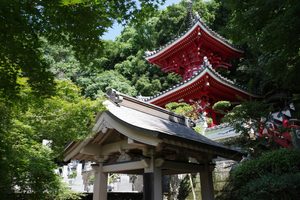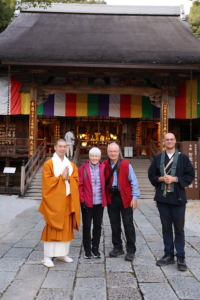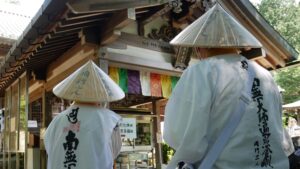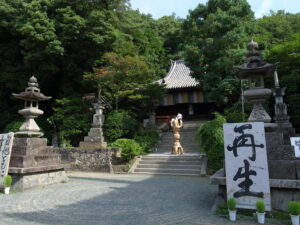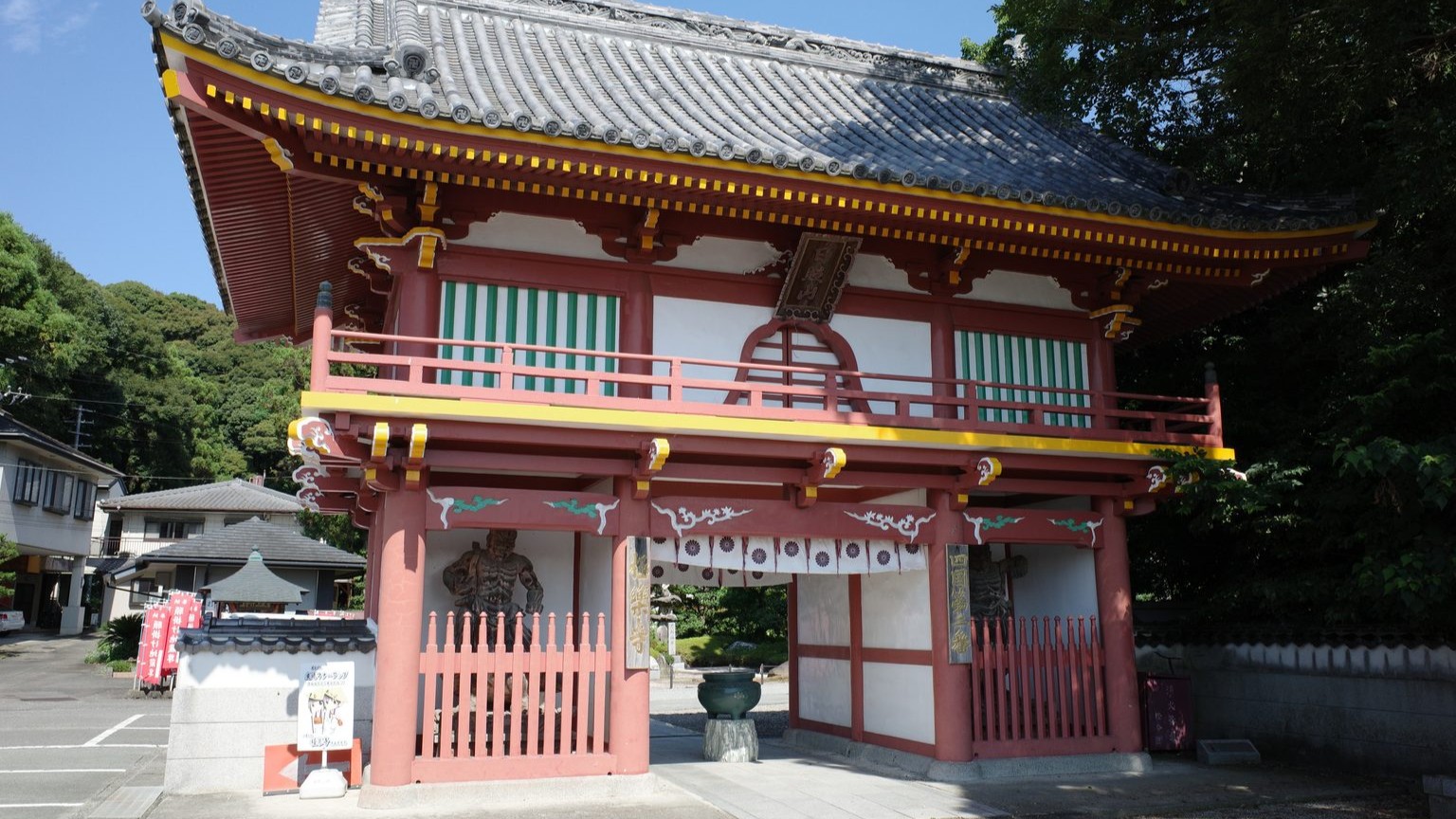
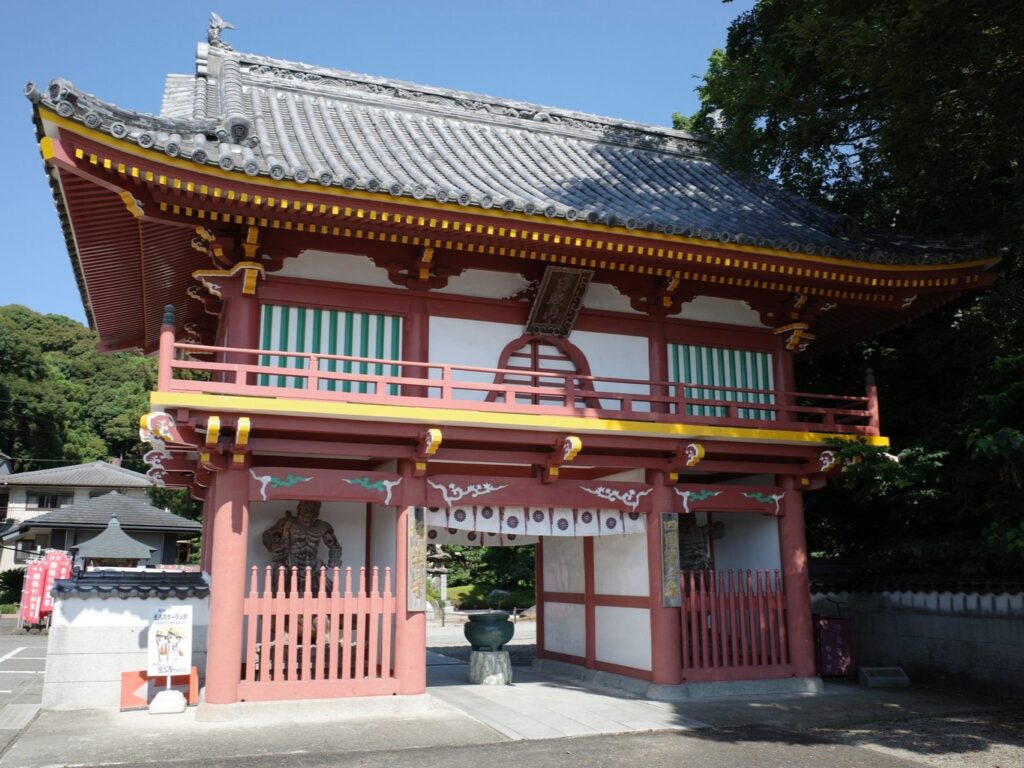
Just off a busy prefectural highway, a brilliant vermillion gate leads into an oasis of calm. Welcome to Gokuraku-ji, the Temple of Profound Bliss, Temple 2 of the Shikoku Pilgrimage.
Gokuraku-ji Origins and History
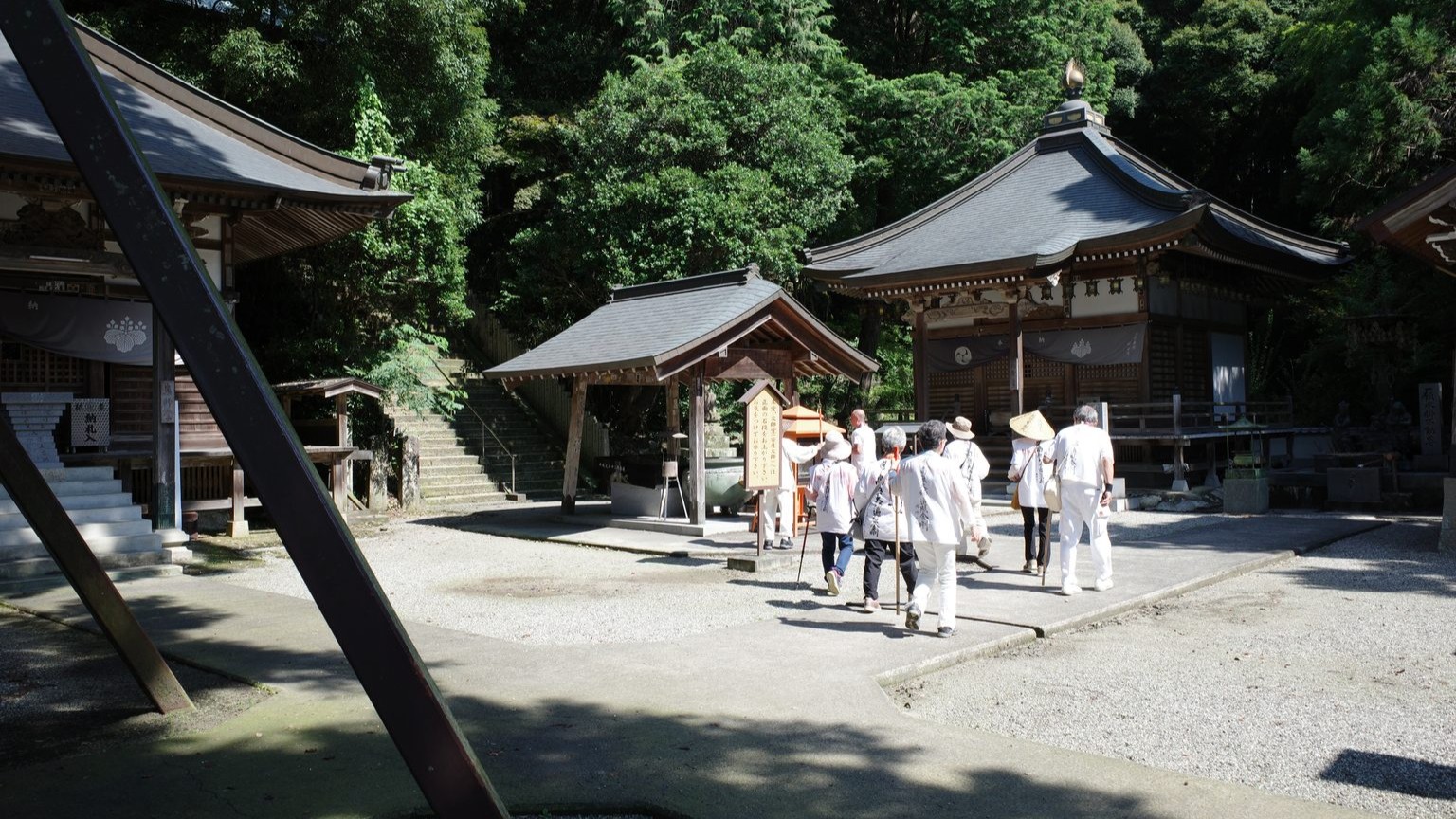
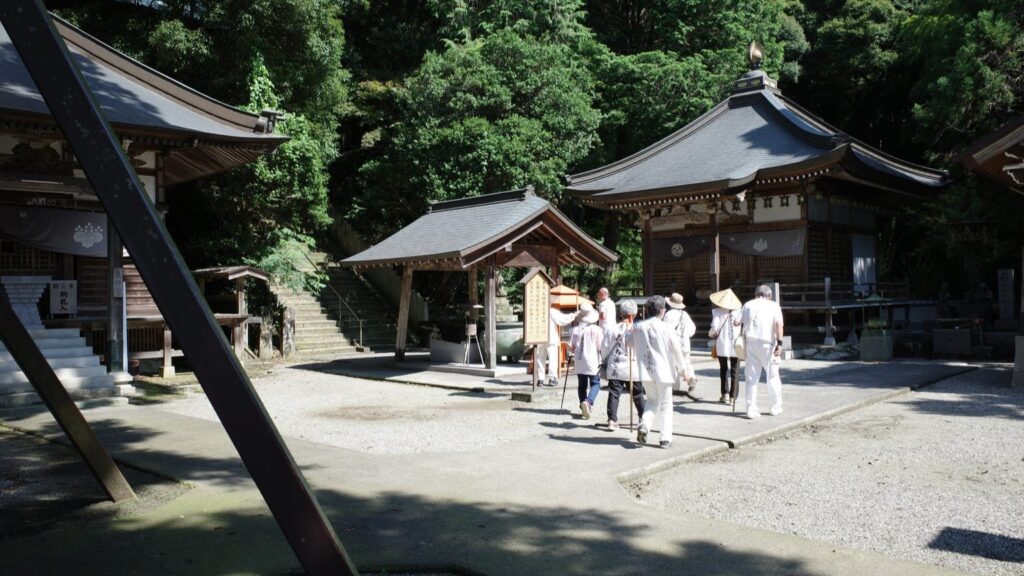
Gokuraku-ji is said to have been established by Gyōki, a famous monk of the 8th Century. Gyōki practiced a humanitarian Buddhism focused on aiding the poor and sick. His huge popularity led to the emperor calling on him to raise funds for the Great Buddha of Tōdai-ji in Nara.
Temple legend holds that a generation later, Kūkai shut himself away in the temple to chant scriptures of the Buddha Amida. Amida is one of Japan’s most popular deities and one of the most common on the Shikoku Pilgrimage. He rules over a Pure Land, a sort of Buddha-heaven, called “The Land of Profound Bliss.” Eventually this Buddha appeared to Kūkai, and he carved an image of his vision.
Gokuraku-ji and other Tokushima temples became extremely rich by the middle ages, and represented a threat to samurai warlords. The samurai who briefly united Shikoku, Chōsokabe Motochika, burned many of the region’s temples in the 16th century–Gokuraku-ji included. A later group of rulers rebuilt the halls in the 17th century. It’s this period, too, when the Henro really took off.
What to See at Gokuraku-ji
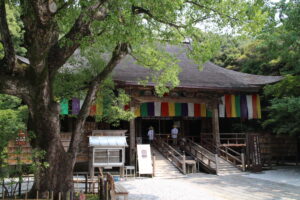
In spite of the destruction, a titanic millennium-old cedar tree still hovers over the halls. Be sure to stop at this living relic of the temple’s origins on your way to the temple office.
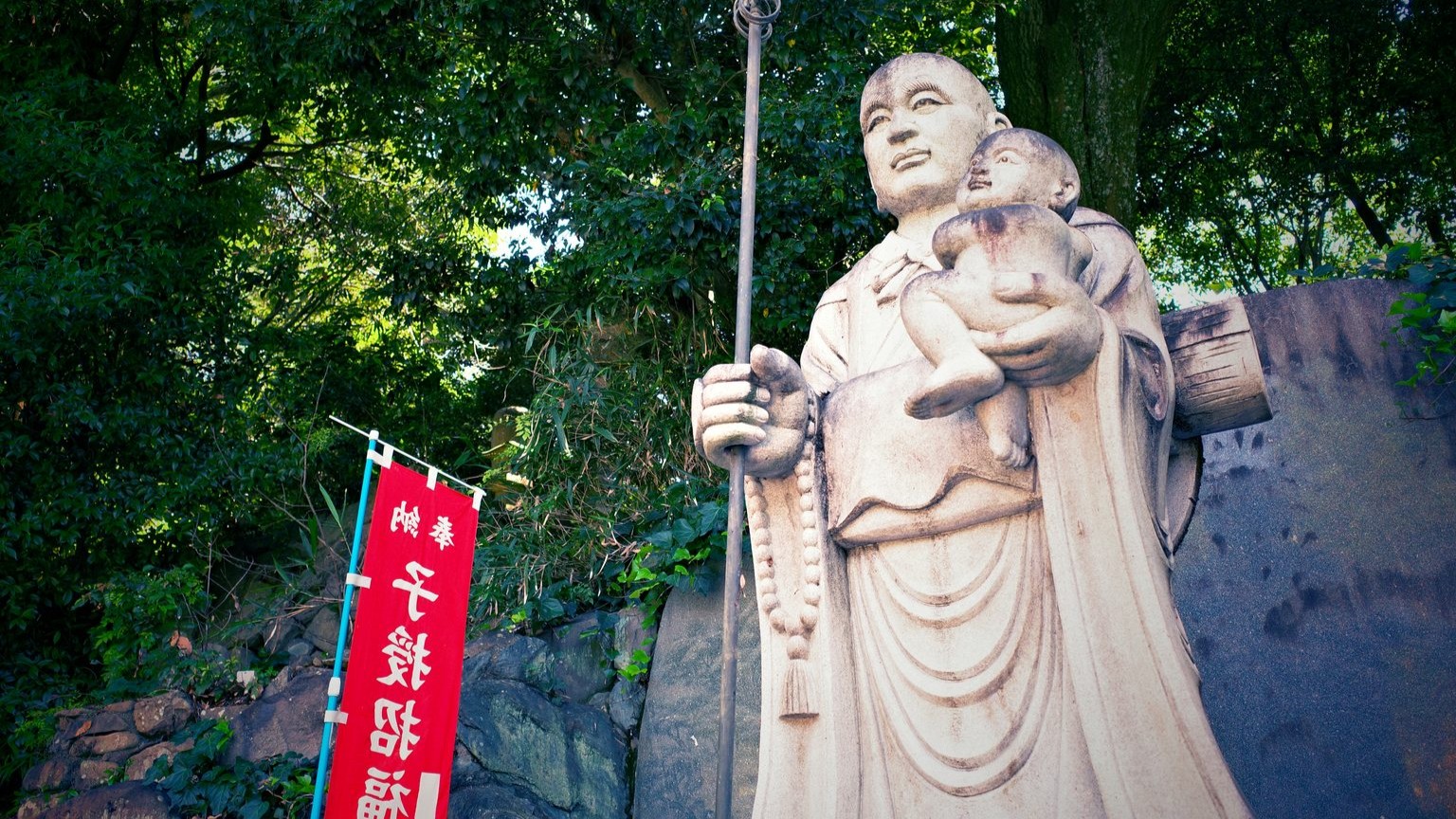
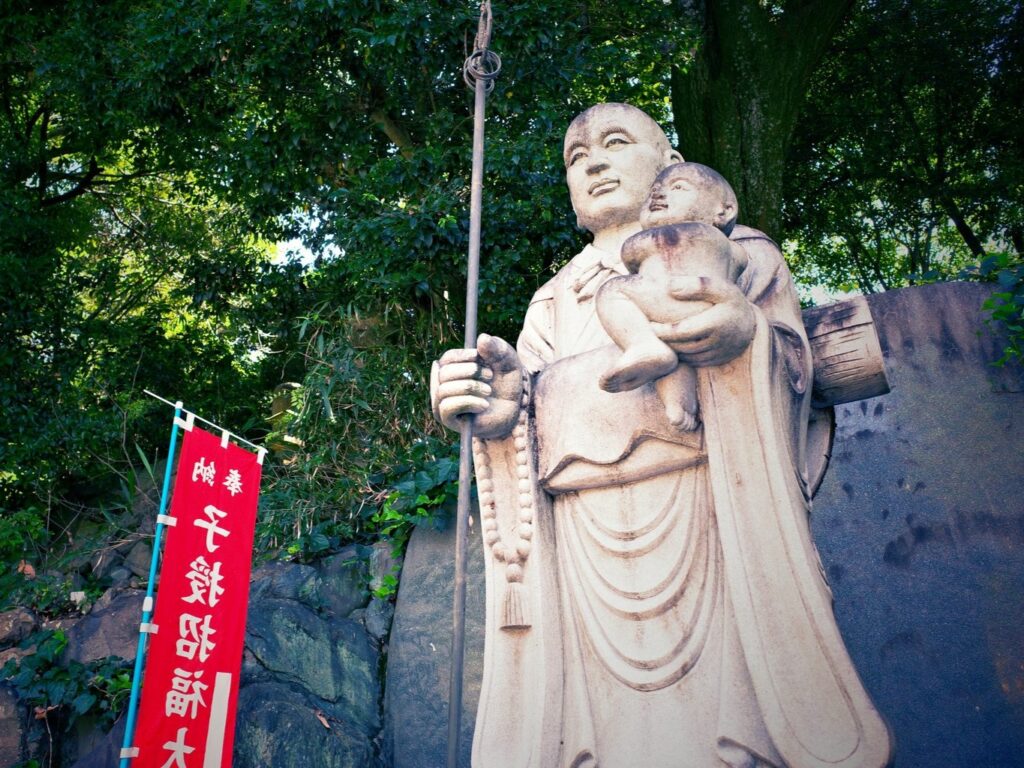
Apart from the titanic tree, Gokuraku-ji features one of the most touching traditions of the Tokushima temples. Just beside the Daishi hall is a stone statue of Kūkai called the Anzan Daishi, “The Great Teacher of Safe Childbirth.” Pregnant women come to the temple to buy a protective amulets. Just in front of the statue is a rack where women who have safely given birth return the amulets–along with the name of their healthy child. The rack is always full.
Beside this rack is yet another adorable tradition—a child-like statue, known as Dakkō or “uppy!” Jizō. Pilgrims lift the image and give it a hug. If the statue feels light, local lord holds you don’t have much bad karma. If it feels heavy…well, it’s worth offering an extra prayer at the nearby Daishi hall.
Breathe Easy at Gokuraku-ji
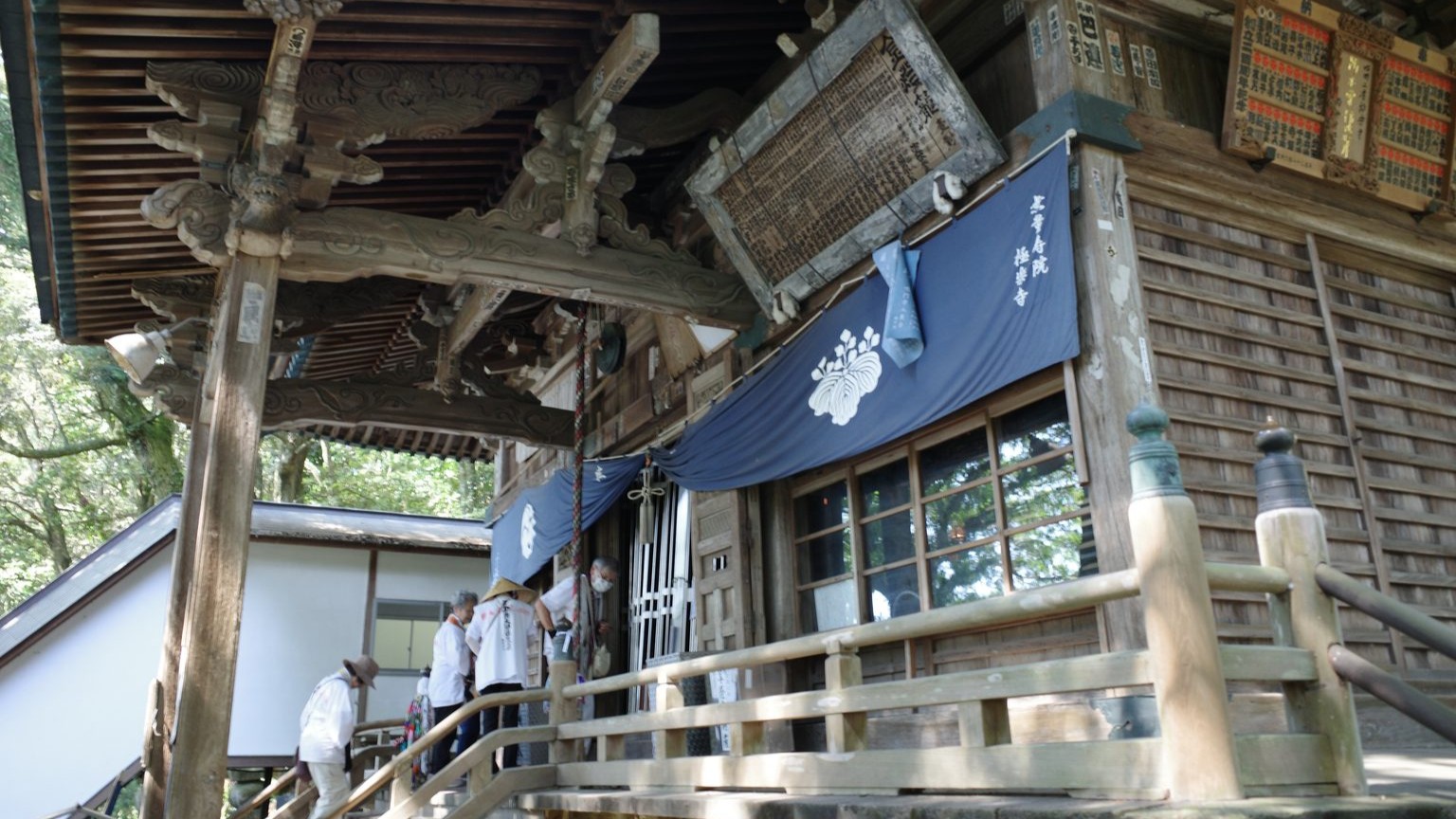
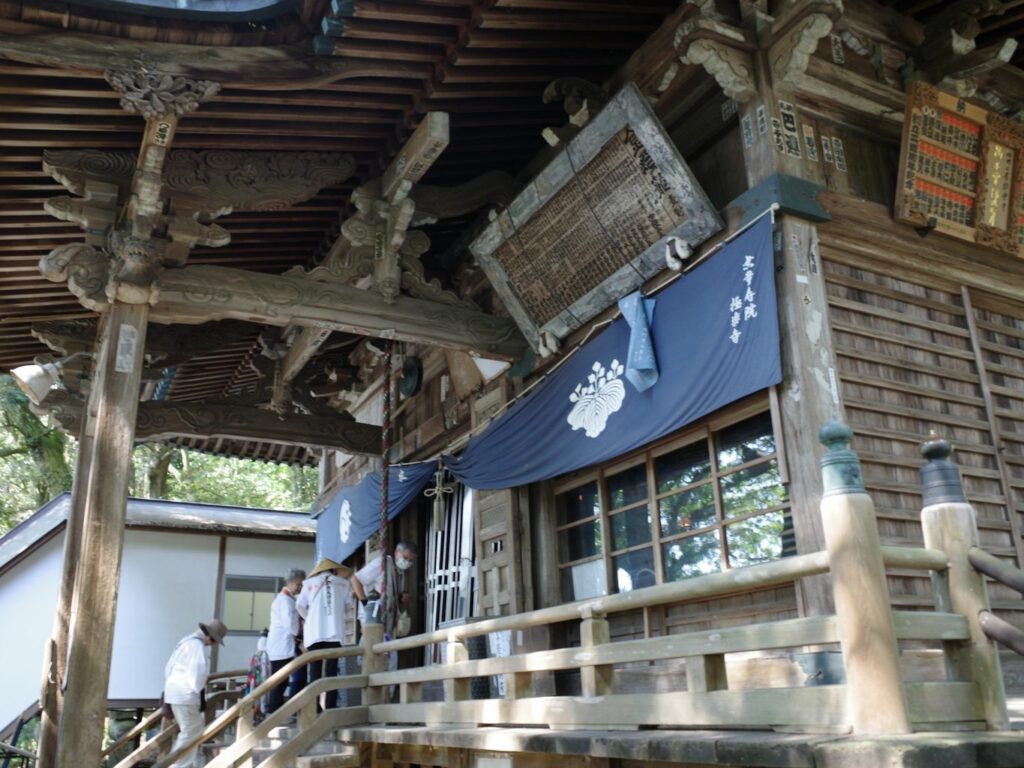
The walk from Temple 1, Ryōzen-ji, to Temple 2, Gokuraku-ji is just 2 kilometers. Though short, it passes by fascinating artifacts of Shikoku history, from ancient layers of nature veneration to important episodes in Japan-German relations. It’s the perfect gentle introduction to the Henro, and to Tokushima, for those interested in experiencing the prefecture on foot.
And at the end, Gokuraku-ji’s quiet grounds, cooled by shady trees and populated by birds and monkeys, demonstrate the enduring charm of the pilgrimage—amidst the noise and stress of normal life, the pilgrimage temples and tales represent moments of ease.
Tours Including Gokuraku-ji
- 88 Temple Pilgrimage Tour by Private Car (with Mt. Koya)
- Guided Walking Pilgrimage Tour in Tokushima
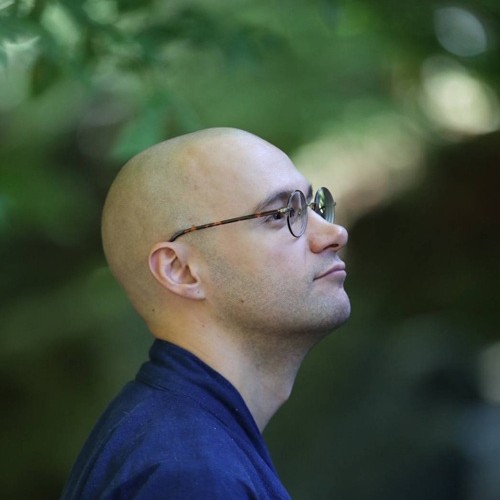
■Role:
Shikoku Travel Specialist, Tour Coordinator, and Shingon Buddhist Priest
■Experience:
10 years of lived experience in Japan, including over 6 years of in-depth study and practice in Japan’s religious traditions, particularly Buddhism, Shugendō, and Shinto.
I became a guide after experiencing firsthand how an understanding of Japan’s religious and cultural history can reveal deeper layers of meaning in even the simplest places. My aim is to help travelers connect with Shikoku not just as a destination, but as a living spiritual landscape, and to support them in discovering a more meaningful and personal journey.
■Role:
Shikoku Travel Specialist, Tour Coordinator, and Shingon Buddhist Priest
■Experience:
10 years of lived experience in Japan, including over 6 years of in-depth study and practice in Japan’s religious traditions, particularly Buddhism, Shugendō, and Shinto.
I became a guide after experiencing firsthand how an understanding of Japan’s religious and cultural history can reveal deeper layers of meaning in even the simplest places. My aim is to help travelers connect with Shikoku not just as a destination, but as a living spiritual landscape, and to support them in discovering a more meaningful and personal journey.