Some pilgrimages you make on a train. This one you make on your knees, more or less — a stone staircase climbing up the side of a sleepy Kagawa mountain toward a shrine that has been catching the prayers of sailors, fishermen, and sake brewers for over a thousand years. And somewhere near the top, according to legend, one of Japan’s most feared ghosts is still sleeping off a grudge.
A Shrine for the Sea and Vengeful Ghosts
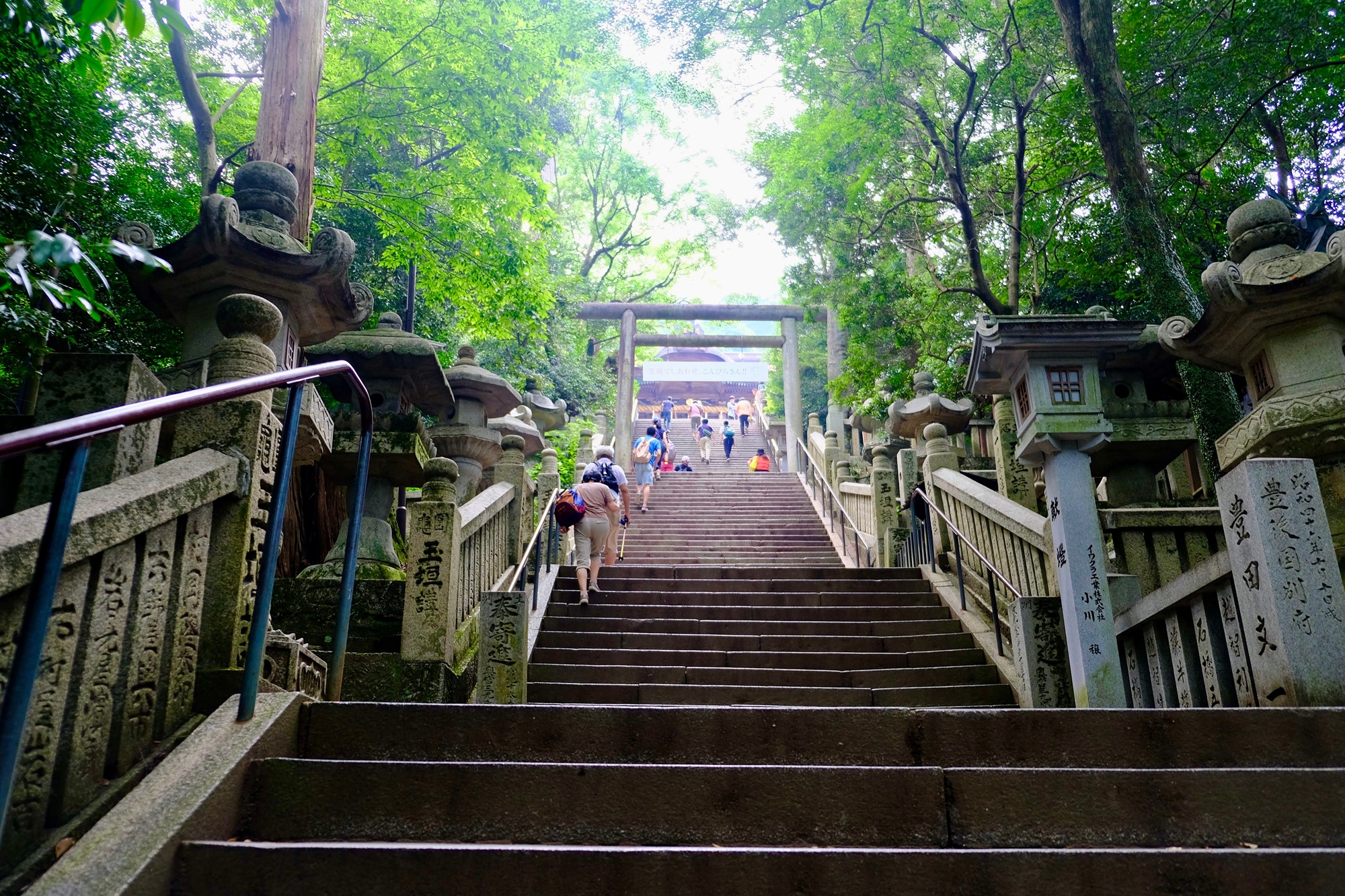
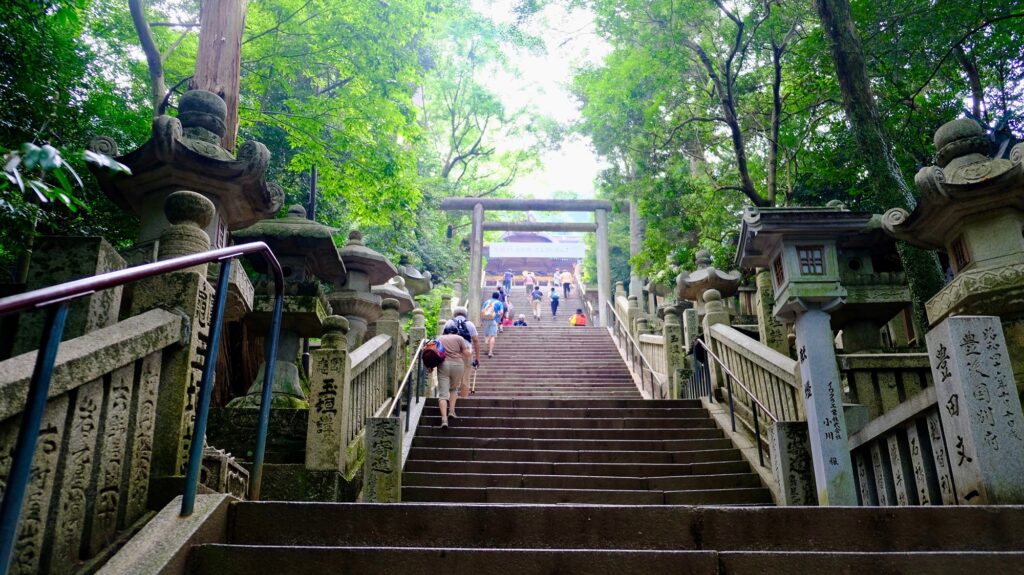
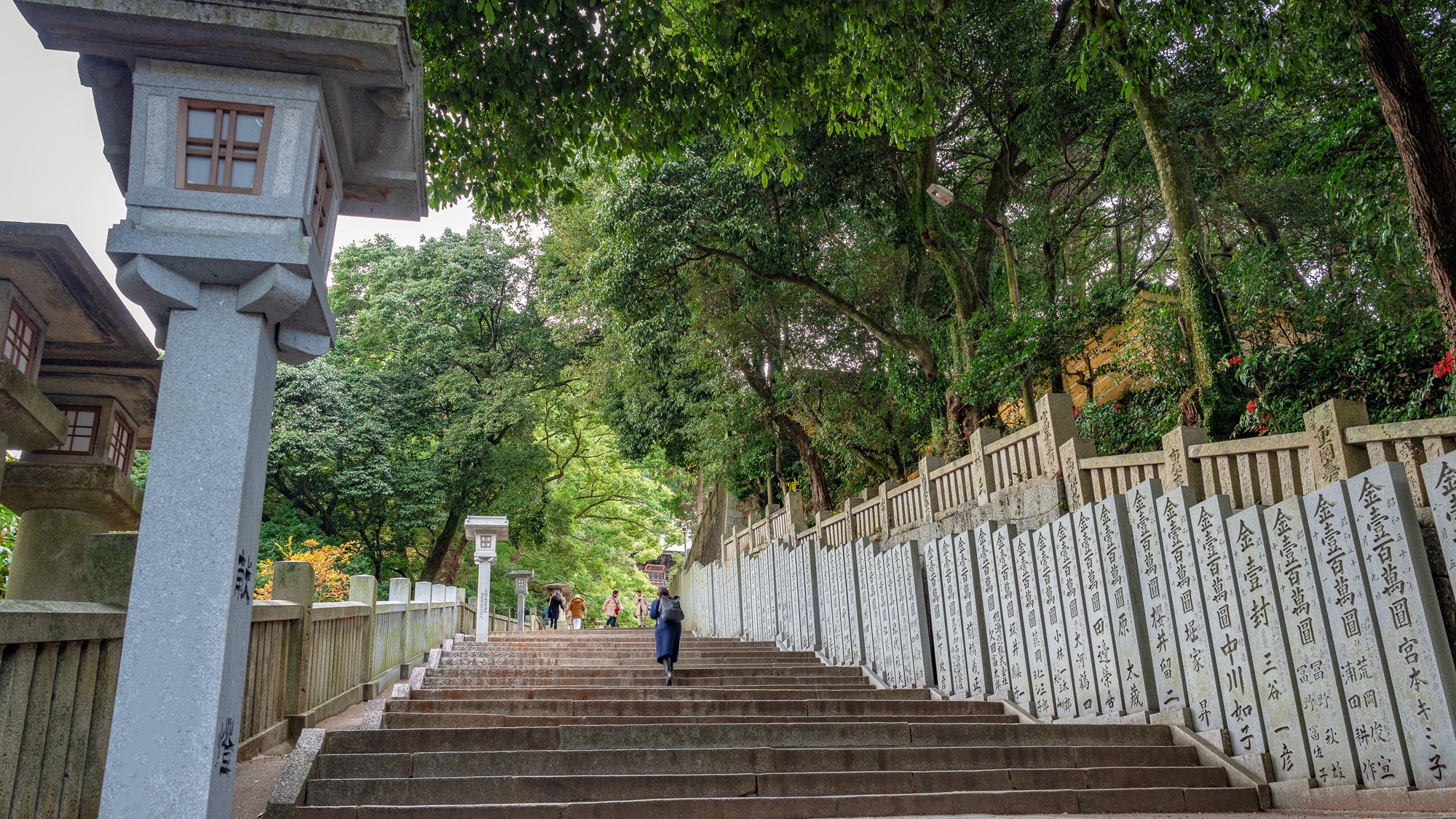
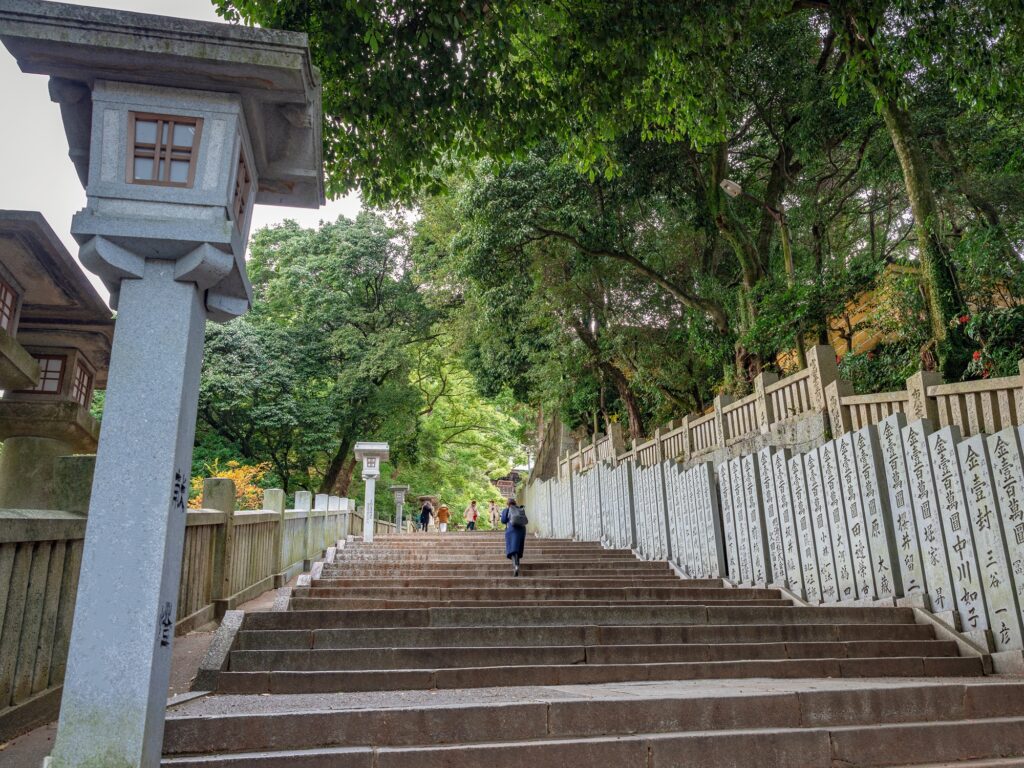
How many steps would you climb to be blessed by a sea god? Well, if you’re really devout, then about 1,363. That’s how many steps it takes to get to the top and main shrine of Kotohira-gu.
Kagawa is known for many things; it’s the best place to grab some delicious udon and is the hometown of Pokémon’s most adorable pink sloth character, Slowpoke. But my favorite thing about Kagawa is the massive stone staircase that leads to the top of Kotohira-gu, where sailors and fishermen pray, and a vengeful ghost sleeps.
Kotohira-gu, known colloquially as Konpira-San, houses the god Ōmononushi, the ancient deity of nation-building, agriculture, business, medicine, brewing, and seafaring. He’s also closely connected to Mount Miwa. Known to be kind but stern, in Japanese Mythology, fishermen and brewsters alike have made the pilgrimage to Konpira-San for over 1,000 years, climbing the 1,300+ steps to make their offerings.
But there’s also a more malevolent spirit residing in the shrine, that of the vengeful ghost of Emperor Sutoku. Known as one of the three most dangerous onryo of Japan, Sutoku was banished to Kagawa, never to return to his beloved capital city, and cursed to wander the land of eternity. Which may be a story for another time!
Not All Steps and Shrines
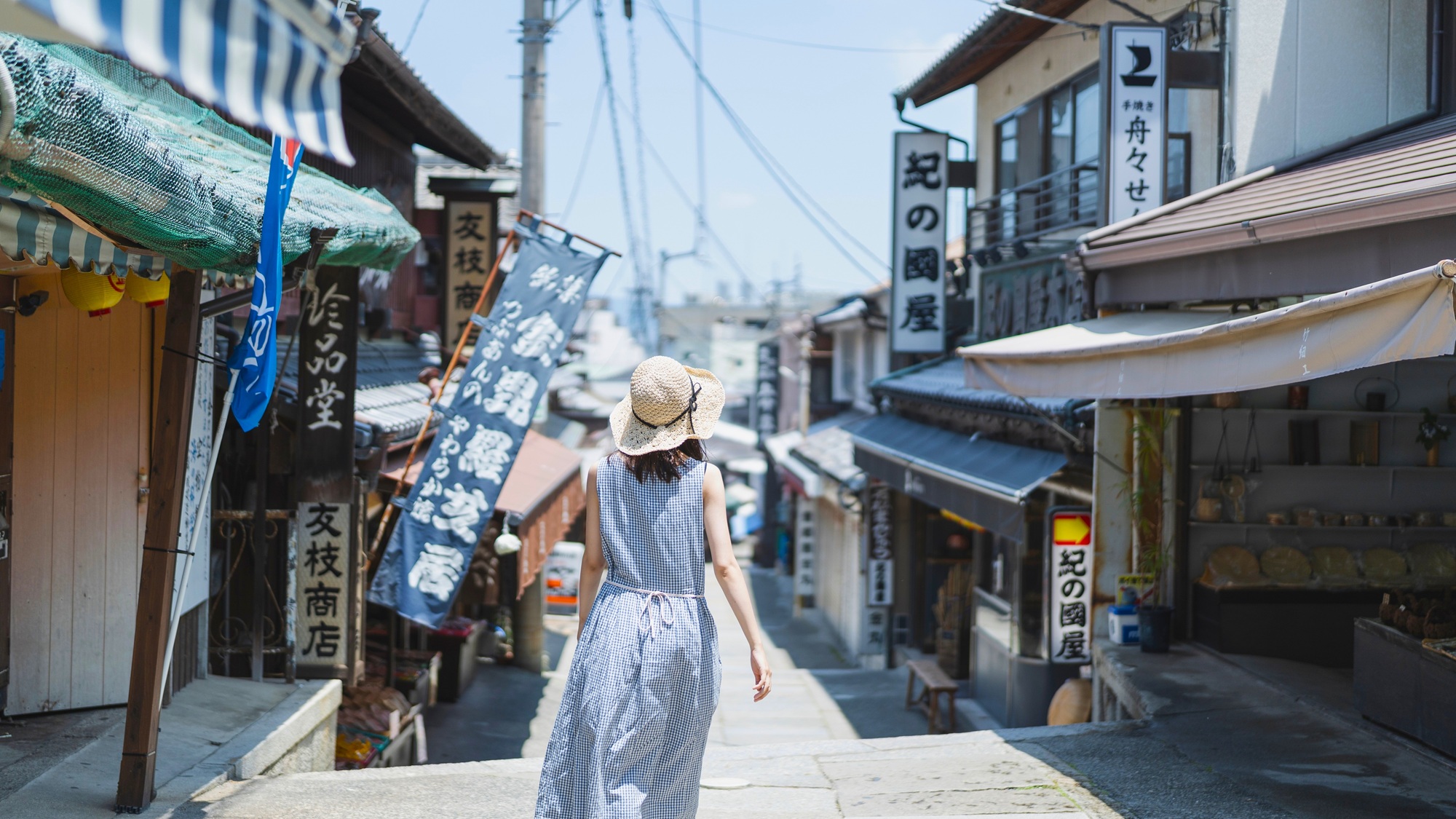
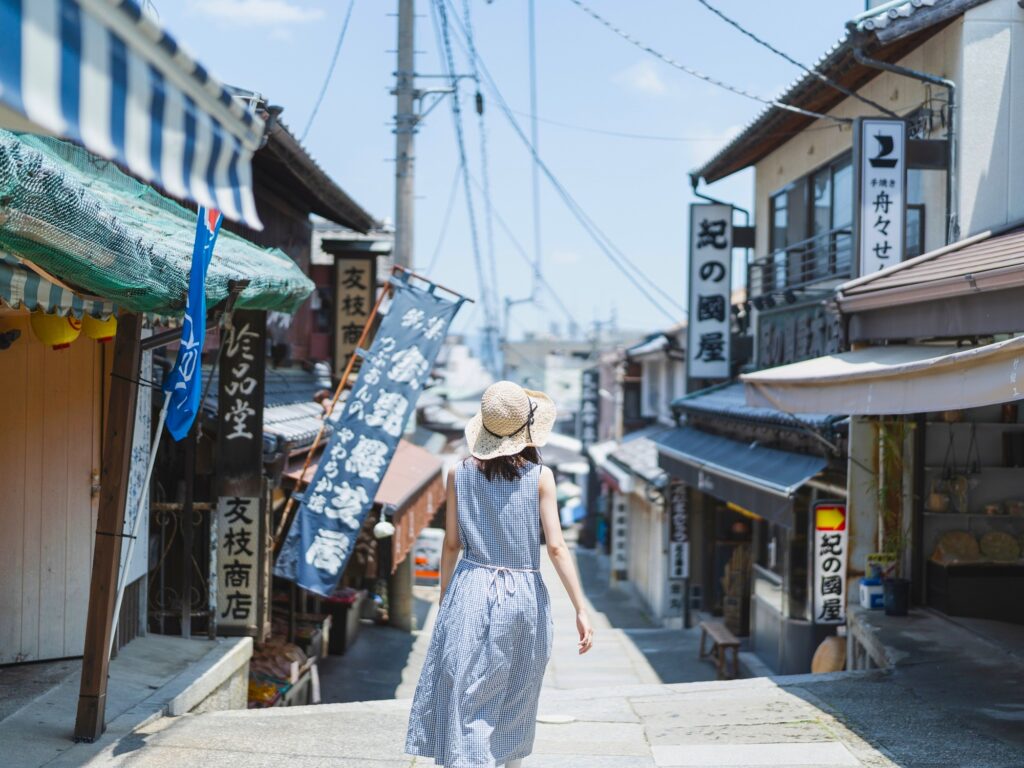
While climbing 1,363 steps doesn’t sound like the most exciting pilgrimage in the world, trust me when I say that along the path you’ll find treasures, art, and desserts that make the trip to the top worth it!
In addition to being home to vengeful ghosts in the sea, loving God Konpira-san also houses incredible pieces of Important Cultural Property. On your way to the top, you can find the Omote-Shoin sliding paper doors painted by the renowned Edo-era artist, Maruyama Okyo (1733~1795), as well as many other beautiful paintings available for viewing on seasonal rotation. Some of Japan’s most prized pieces of artwork are here on this sleepy mountain.
After you work yourself up an appetite, climbing the stairs and looking at beautiful art, you can stop by and have a delicious parfait or full meal at a 230-year-old tea room! Located at the 500th step, Kamitsubaki is a delightful and delicious cafe that has been in operation on the mountain since the 1700’s! For a lighter treat, I recommend this seasonal parfait, which uses local ingredients and the best fruit! My favorite is the winter strawberry and chocolate! But if you’re in the mood for an actual meal, you can head to the restaurant side and get yourself some incredible French and Japanese fusion food.
Know Before You Go!
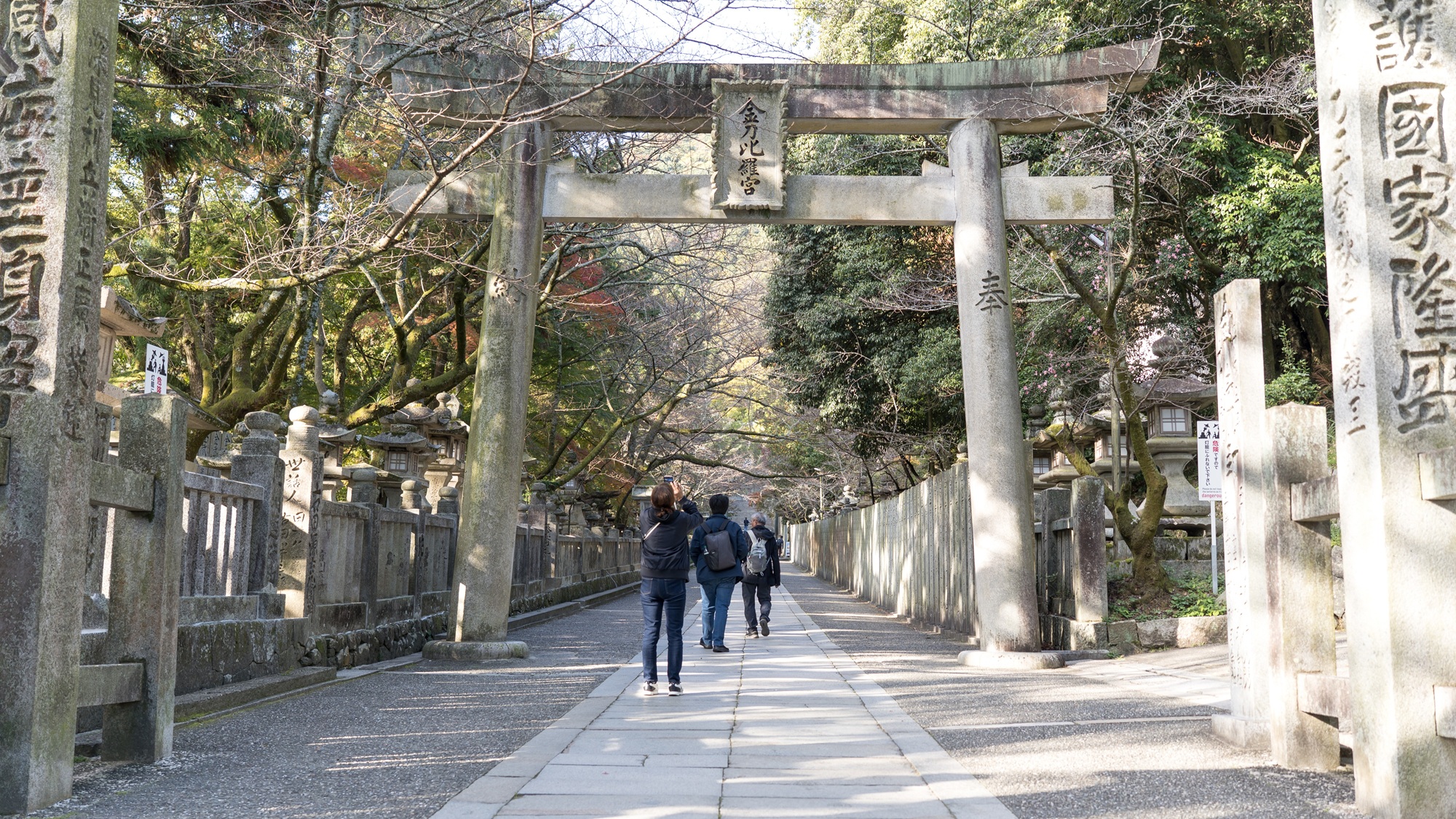
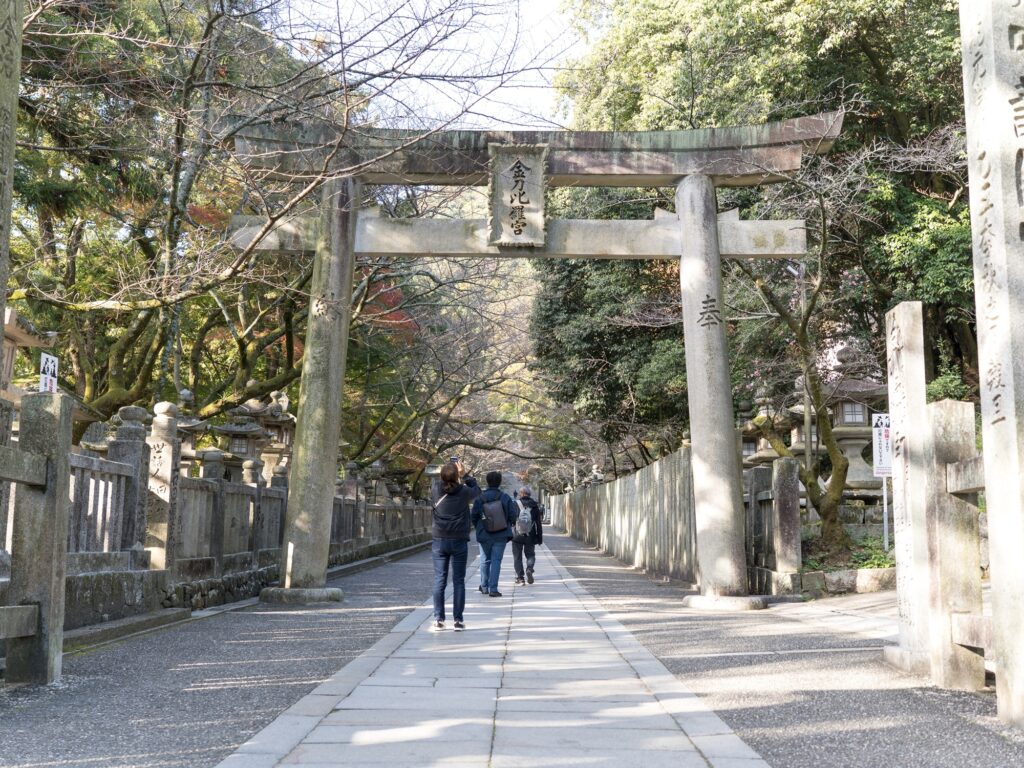
- A good pair of shoes is a must!
- If walking isn’t your thing, there is plenty to do at the bottom of the mountain, like mini shrines, souvenir shops, and cafes!
- Bring lots of coins and cash because most places only accept that on the mountain!

■Role:
Shikoku Tours Social Media Manager & Historian specializing in Japanese History
■Experience:
10 years of living in Japan, specifically in the Ehime area. I also have 8 years of experience in social media content creation, specifically in the areas of niche travel and History.
Hello! I’m Tehya, a historian with a passion for social media and using it as a tool for education. My goal is to help people discover the amazing and historical places Shikoku has to offer!
■Role:
Shikoku Tours Social Media Manager & Historian specializing in Japanese History
■Experience:
10 years of living in Japan, specifically in the Ehime area. I also have 8 years of experience in social media content creation, specifically in the areas of niche travel and History.
Hello! I’m Tehya, a historian with a passion for social media and using it as a tool for education. My goal is to help people discover the amazing and historical places Shikoku has to offer!