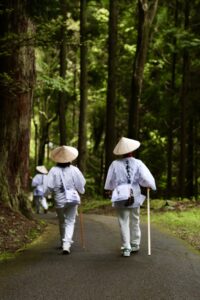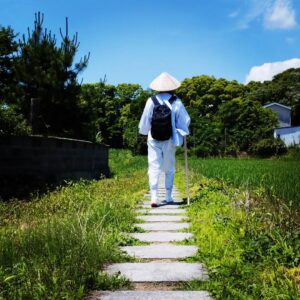
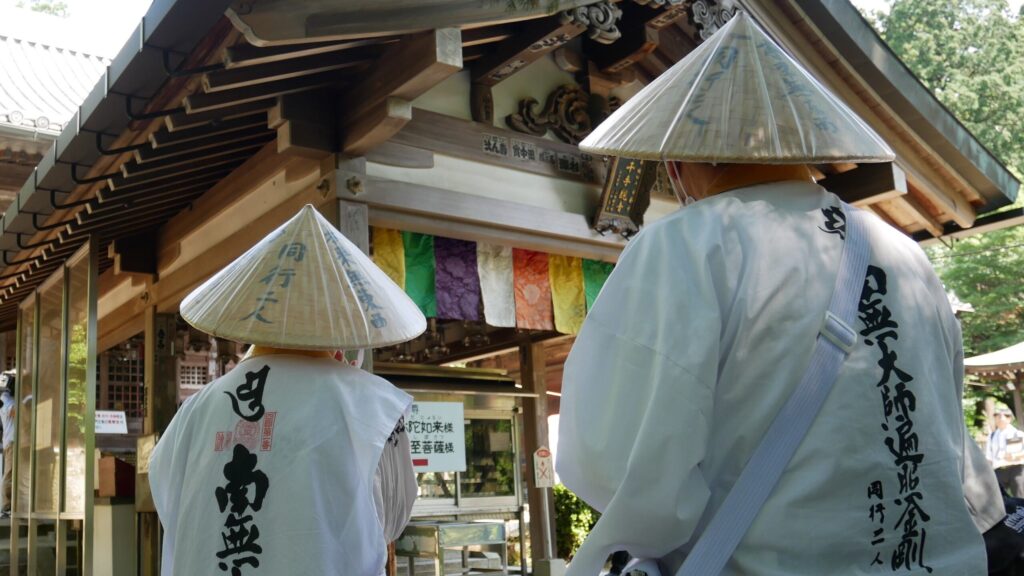
Pilgrims on the Shikoku Henro are instantly recognizable by their unique attire. Every element of pilgrimage gear has both a real-world function and rich symbolic meaning. Let’s take a quick look at some of the representative swag a Henro might don on their journey.
The Sedge Hat (Sugegasa)
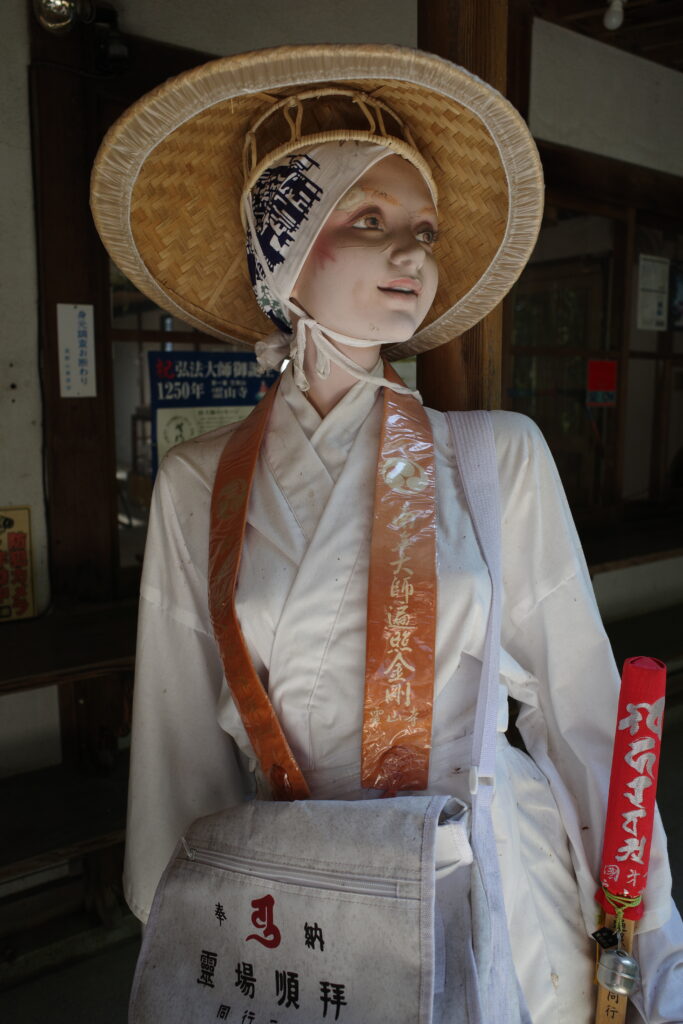
Conical sedge hats were once standard fashion for anyone headed outdoors in Japan. They offer effective protection from sun, rain, and unwanted encounters with branches and spiderwebs. Pilgrims in Shikoku and elsewhere would write Chinese or Sanskrit characters on their hats to distinguish hats used as pilgrimage gear from secular ones used in farming or forestry. The characters on the Henro sugegasa translate as follows:
“Confused, the world appears as an impenetrable fortress.
Awakened, the four directions are like the open sky.
Originally there is neither east nor west.
Why, then, would there be north or south?”
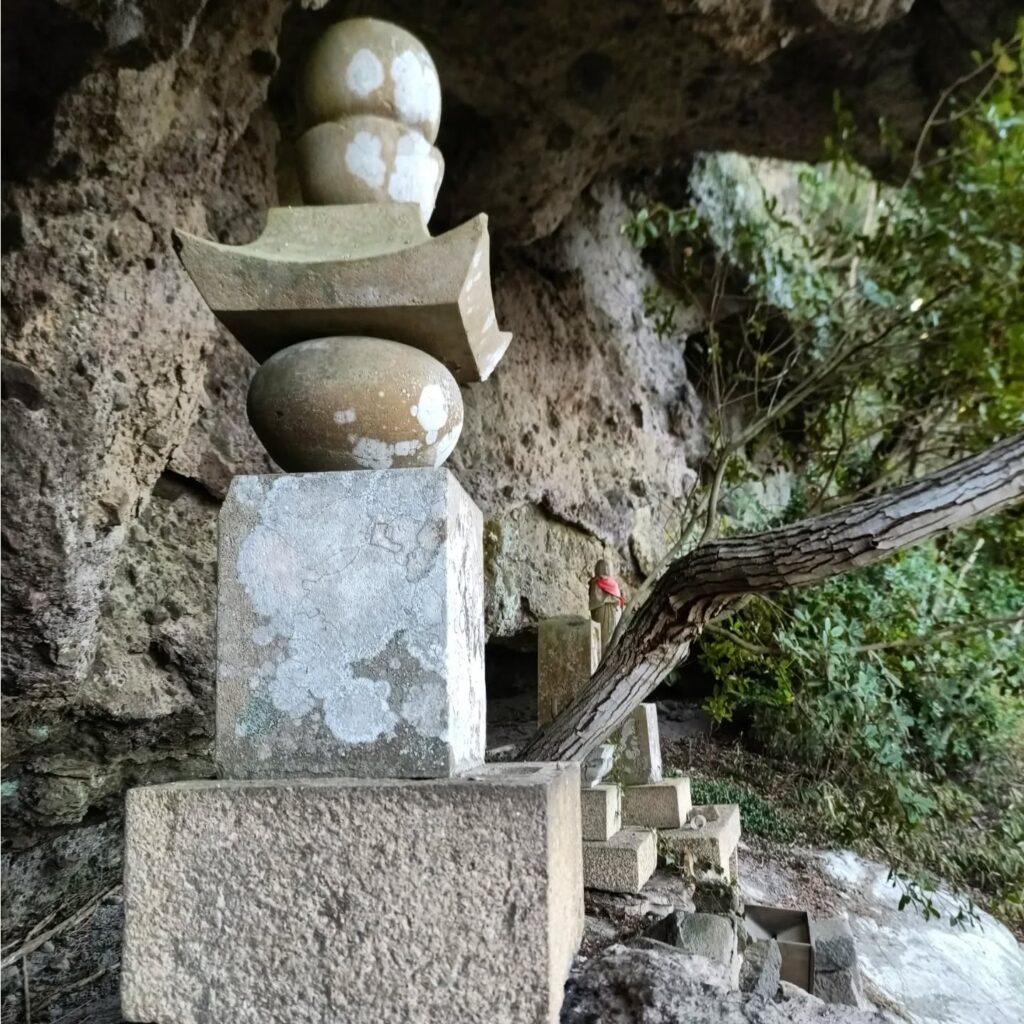
These haunting lines originally adorned the canopy hung over a deceased person Buddhist funerals. The hat symbolizes a pilgrim’s readiness to give up their live during their journey. In rough-and-tumble medieval Japan this was no empty promise. The small stone pilgrim graves that line the trail are testament to the numbers of faithful who passed away mid-journey.
Apart from the poem, the hat bears the Sanskrit syllable Yu, which represents Kobo Daishi Kukai. Opposite it is the phrase Dogyo Ninin, meaning “Same Practice, Two People.” This ubiquitous Henro slogan reflects the belief that Kukai himself accompanies pilgrims on their journey.
The Staff, (Kongo-zue)
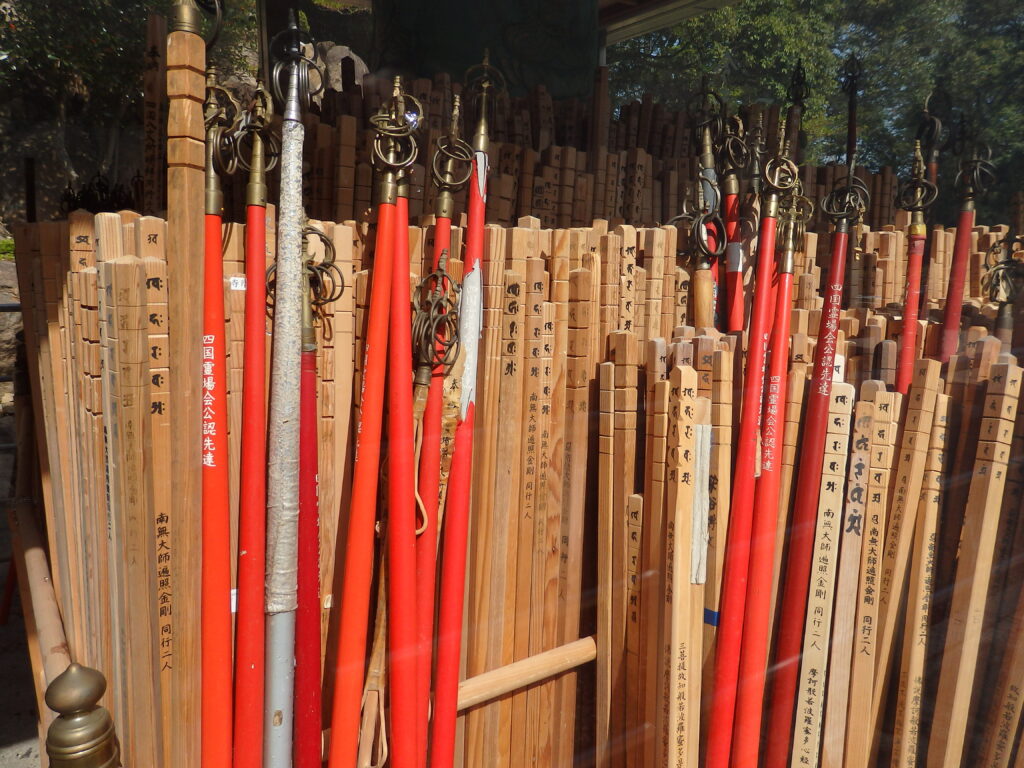
Pilgrims carry a wooden staff called a Kongo-zue, which means “Vajra Staff.” A Vajra is a Buddhist symbol of wisdom and enlightenment. The top of the staff is covered with a brocade pouch. Beneath the pouch you’ll find a series of notches carved into the staff separating it into five sections, sometimes with Sanskrit characters written on them. These five sections symbolize the Five Elements of Earth, Water, Fire, Wind, and Space which, according to esoteric Buddhism, comprise the entire universe. The staff symbolizes our union with Kukai and the other Buddhas throughout the universe.
The staff’s shape also evokes Buddhist tombstones, which represent the five elements. If a Henro died on their journey, the staff would serve as their gravestone. Along with the sugegasa hat, the staff means pilgrims are identifiable even at a distance, making it easy for locals to spot when a pilgrim appears in need.
Pilgrims and Shikoku locals treat the staff as an embodiment of Kukai himself accompanying them on their way. At traditional pilgrim inns, proprietors will often wash the “foot” of the staff and place it in a special receptacle near the door. Tradition also forbids pilgrims ffrom tapping the staff on bridges—a reminder of a legend from Ehime prefecture about Kukai resting under a bridge.
The Stamp Book, or Nokyo-cho
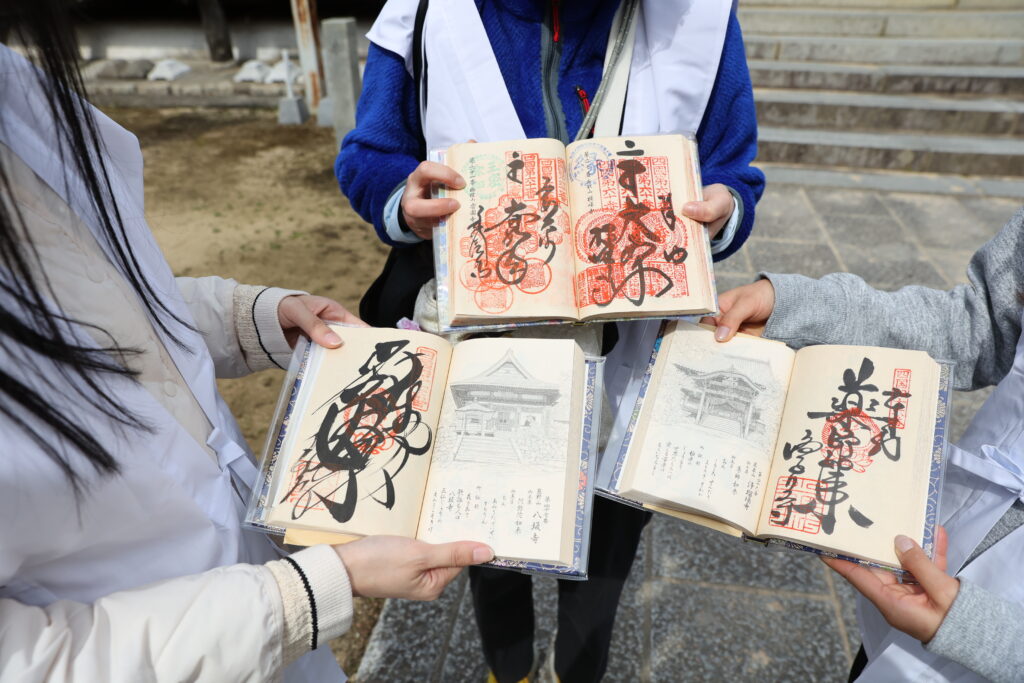
One of the charms of the Henro is receiving the beautiful commemorative stamps and calligraphy available at each temple in a book called a Nokyo-cho. Originally, this was a kind of receipt book for donations at pilgrimage temples. It functioned as a passport at government checkpoints in days when travel was allowed only for pilgrimage and government business. Nowadays completed books are cherished mementos of a sacred journey for pilgrims.
The White Vest (Haku-e)
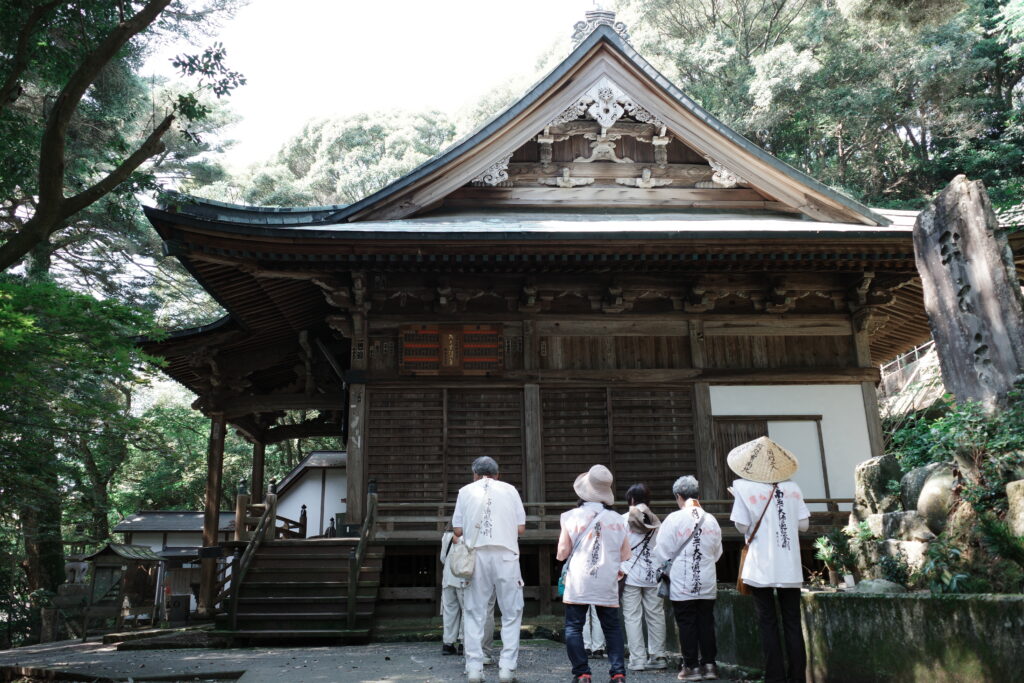
The white vest, or haku-e, is the most common Henro clothing seen today. Inspired by the white attire of pilgrims in other regions of Japan, it became widespread in Shikoku when group pilgrimages by bus became popular after World War II. The vest bears the prayer Namu Daishi Henjo Kongo, a prayer of refuge to Kobo Daishi. Some pilgrims have their vest stamped at each temple, later wearing it at their funeral to display their spiritual merit.
The Stole (Wagesa)
Derived from the yellow robes of Buddhist monks, the wagesa has become a standard element of Henro clothing for pilgrims of all kinds. These stoles now come in a variety of colors and designs, serving as both a spiritual garment and a decorative accessory.
The Bag (Zutabukuro)
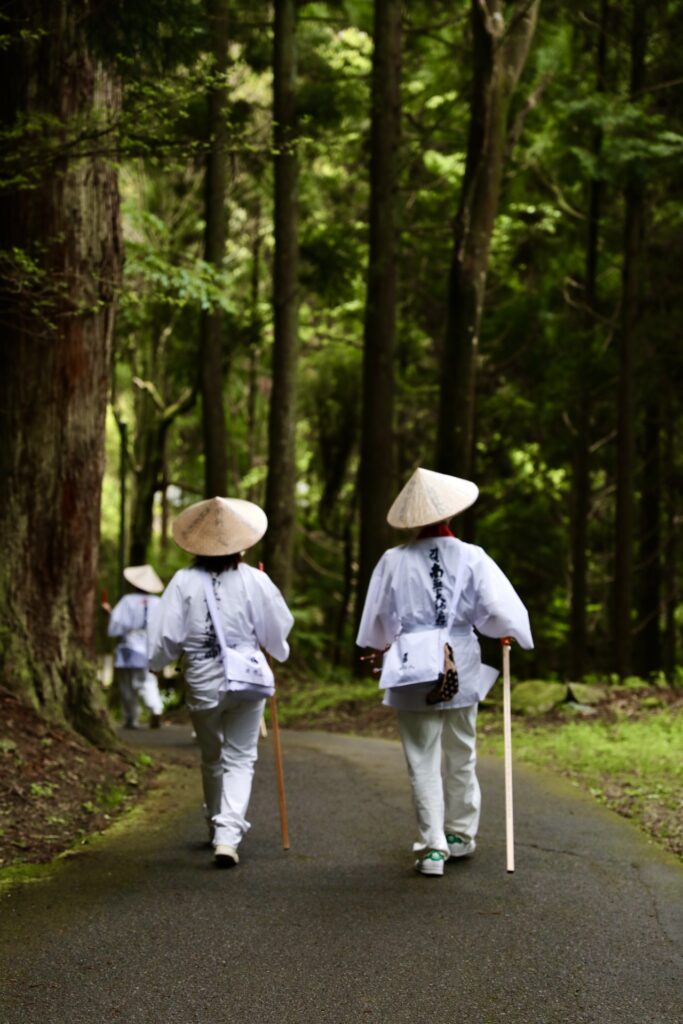
A zutabukuro is a practical shoulder bag used by pilgrims to carry essential items: name slips, incense, candles, prayer books, a lighter, a bell, maps, and of course the Nokyo-cho. Many find it easier to access than a backpack during temple visits.
Buddhist Prayer Beads (Nenju)
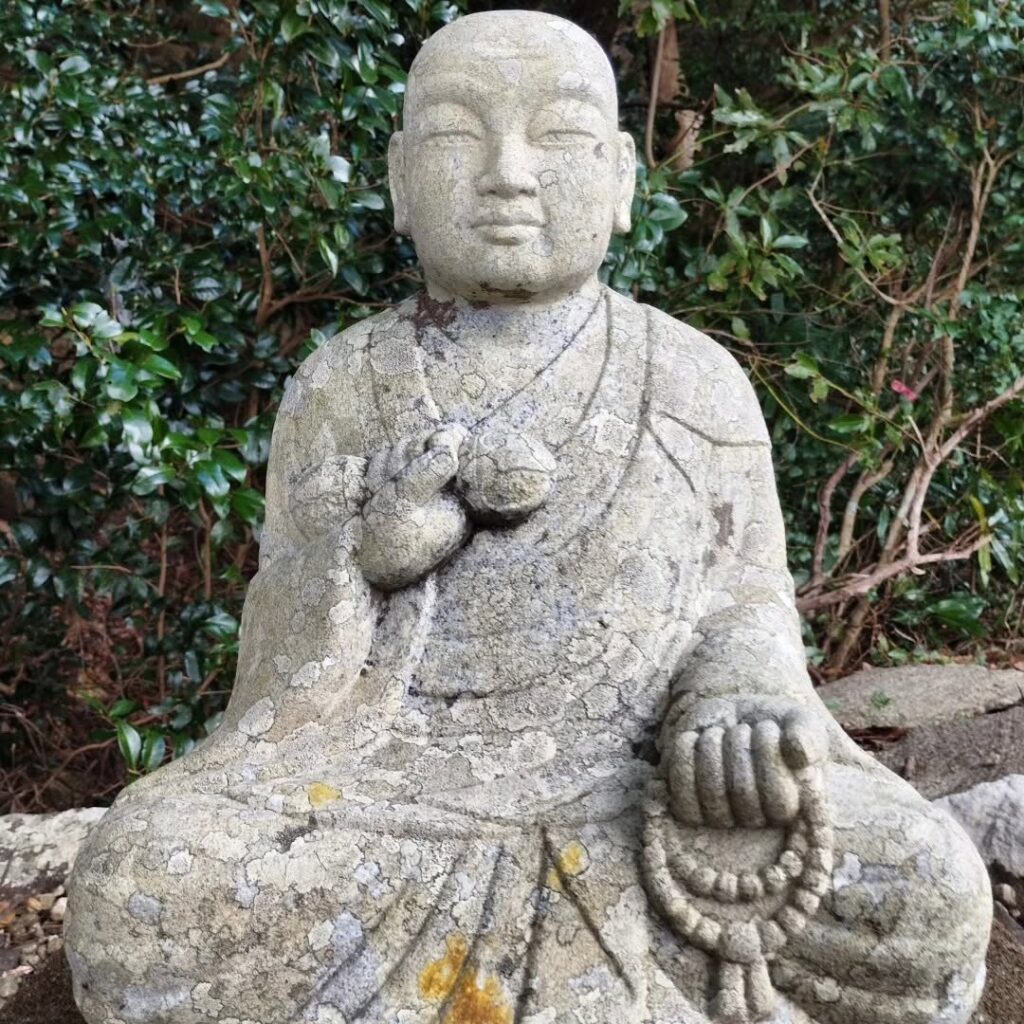
Many pilgrims carry a string of 108 beads called a nenju. Used by the faithful to count their recitations, just carrying it is said to have protective effects, and the sound of rubbing the beads together is said to scare off evil spirits and draw the blessings of the Buddhas.
Name Slips (Osame-fuda)
Osame-fuda are colored slips that bear an image of Kobo Daishi, prayers in Chinese characters, and a space for pilgrims to write their name. These slips function as something like a business card. Their name, meaning “offering slip,” comes from their use at each temple. Pilgrims put a slip in a special box before praying at each temple to let the deities there know who they are. Pilgrims also traditionally offer a name slip to people with whom they form a connection, like accommodation owners, people who give osettai (gifts to pilgrims), and others.
Pilgrims use different color name slips depending on how many times they’ve done the pilgrimage.
- 1-4 times: white
- 5-6 times: green
- 7-24 times: red
- 25-49 times: silver
- 50-99 times: gold
- more than 100 times: brocade
As you might suspect, brocade osamefuda are rare, and locals consider receiving one a great honor. If you poke your head in the name slip box, you’ll get a good idea of the breakdown of each category.
Where to Buy Pilgrimage Gear?
All the pilgrimage gear listed here, and more, can be bought at shops along the pilgrimage route. See some recommendations below:
- The Temple Shop at Ryozen-ji in Naruto, Tokushima
- Sumotoriya Asano, Shikoku’s oldest pilgrimage gear shop, in Awa, Tokushima (near Temple 10).
- This is our recommendation. The owner is proficient in English and carefully answers any questions pilgrims have. Shopping here is an experience in itself, and the goods are diverse and of high-quality. You can get the basics at Temple 1 and save your other purchases for Sumotoriya, which you’ll visit on your second day.
- Matsuchika Pilgrimage Shop in Matsuyama, Ehime.
See our Shikoku Pilgrimage Cost Planning Guide for more information on gear, accommodation, and more.
Ready to gear up and start your own pilgrimage with the help of expert guides who can help you find the right gear for you? Contact us today to start planning your perfect Henro.